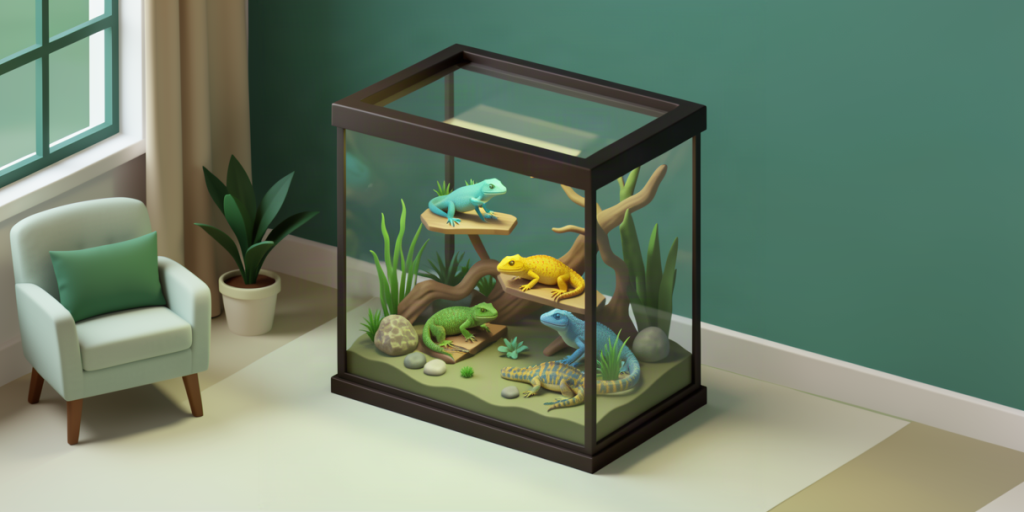
Choosing the perfect location for a terrarium is one of the key aspects of creating a comfortable environment for exotic reptiles. Proper placement not only ensures the health and well-being of your pets but also allows you to fully enjoy their lives. In this article, we will share useful tips on setting up a terrarium so you can create optimal conditions for your exotic friends.
When selecting a spot for the terrarium, it is important to consider many factors such as lighting levels, temperature and humidity, as well as safety and accessibility for maintenance. We will discuss what to pay attention to and what mistakes to avoid so that your terrarium becomes a true corner of nature in your home.
Choosing a Spot for the Terrarium
Choosing a spot for the terrarium is one of the key stages in creating a comfortable space for your exotic reptiles. First and foremost, it is important to avoid high-traffic areas. The location where the terrarium will be installed should be calm and protected from frequent movement by people and pets. This will allow your pets to feel secure and reduce the stress that may arise from constant external influences.
It is also essential to consider the level of lighting. When placing the terrarium, avoid direct sunlight, as it can significantly raise the temperature inside and create unfavorable conditions for your reptiles. The optimal distance from the window is at least one meter. This will provide enough light while protecting against overheating. Remember that stable temperature and humidity conditions are crucial for the health of exotic animals.
Placing the terrarium at a height of about one meter is also a good practice. This not only provides a better view for you but also allows your pets to feel more confident, being at a level closer to their natural habitat. Additionally, this height makes it easier to care for the terrarium and its setup, as you won’t have to bend down or crouch too low.
To create the ideal spot for the terrarium, consider the following recommendations:
- Avoid places with bright sunlight.
- Maintain a minimum distance from the window of at least 1 meter.
- Install the terrarium at a height of about 1 meter for convenient viewing.
- Do not place the terrarium near heating appliances and other heat sources.
Following these tips will allow you to create a comfortable and safe space for your exotic reptiles, which will undoubtedly have a positive impact on their health and well-being.
Setting Up the Terrarium: Important Aspects
Setting up a terrarium for exotic reptiles requires careful attention to several key aspects. First, it is necessary to maintain a stable temperature and humidity within the ranges suitable for the specific species of your pet. For this, it is recommended to use thermometers and hygrometers that will help you accurately monitor these parameters. Typically, for lizards and snakes, a temperature range of 24-30°C in the warm corner of the terrarium and no lower than 18-22°C in the cold area is required. Humidity varies by species, but many exotic reptiles require humidity levels between 40% and 70%. Regular misting and the use of specialized humidifiers will help achieve the desired levels.
Another important aspect is the choice of suitable substrate. Coconut fiber has become a popular choice due to its ability to retain moisture and create natural living conditions for reptiles. It is also safe for animals and does not cause allergies. In addition to coconut fiber, you can consider using peat, bark, or special terrarium sand, depending on your pet’s preferences. When choosing a substrate, it is important to consider its texture to avoid injuries to reptiles, especially those that lead an active lifestyle.
It is equally important for the terrarium to be well-ventilated. This will help prevent stale air and avoid the development of mold and other pathogenic microorganisms that can harm your pet. Good ventilation can be achieved through special grids or holes in the lid and walls of the terrarium. Ensure that they are positioned to avoid drafts while providing adequate air exchange.
In conclusion, setting up a terrarium is a complex process that requires attention to detail. It is important to create comfortable conditions for your pet by balancing temperature, humidity, and ventilation, as well as choosing suitable materials for setup. A proper approach to each of these aspects will help your exotic friend feel comfortable and healthy.
Optimal Conditions for Different Species of Reptiles
To successfully keep exotic reptiles, it is important to create optimal conditions that meet the needs of each species. Different groups of reptiles have their specific requirements for temperature and humidity, which must be considered when setting up the terrarium.
Lizards generally prefer temperatures between 26-30°C and humidity around 40-60%. These animals are active and need a sufficiently warm space to maintain their activity and metabolism. When choosing a place for the terrarium, avoid direct sunlight, which can lead to overheating, and also avoid drafts that may cause stress to the pet. Using coconut fiber or another suitable substrate will help create a comfortable environment and maintain the necessary humidity level.
Snakes require higher temperatures, typically around 28-32°C. Proper temperature gradient in the terrarium will help them regulate their thermoregulation. It is important to provide hiding spots where snakes can retreat and feel safe. Ensure that the humidity in the terrarium corresponds to the specific needs of the particular species of snakes, as some prefer a more humid environment.
Amphibians, such as frogs and salamanders, have different requirements: they need high humidity reaching up to 80%. Creating such conditions requires the use of special humidifiers or regular misting to maintain the necessary humidity. It is also important to provide ponds and hiding spots in the terrarium so that amphibians can move comfortably and find safe places to rest.
Adhering to these recommendations will help create a harmonious environment for your exotic reptiles, which in turn will ensure their health and well-being.
Decor and Hiding Spots for the Terrarium
When setting up a terrarium for exotic reptiles, it is important to create a comfortable and safe environment that promotes their well-being. One of the key aspects is using natural materials such as driftwood, rocks, and live plants. These elements not only add aesthetic appeal but also create a more natural habitat for your pets. Driftwood can serve not only as hiding spots but also as climbing areas, which is especially important for lizards that love to explore their space.
Creating hiding spots for reptiles is another important step in setting up the terrarium. Hiding spots help reduce stress levels in animals by providing them with safe places where they can hide and rest. This is particularly relevant for species sensitive to their surroundings. Hiding spots can be made from various materials: rocks, driftwood, or special plastic houses. The main thing is that they should be spacious enough for comfortable accommodation of the animal and easy to clean.
Do not forget about the necessity of creating vertical spaces for climbing. Lizards, such as geckos and agamids, need places where they can ascend, which helps them maintain physical activity and strengthen muscles. For this, you can use special structures or simply place branches and driftwood at different angles so that the animals can easily move between them.
Additionally, it is important to provide access to fresh water and consider that some plants may be toxic to reptiles. Therefore, choose only safe plant species and closely monitor the condition of the terrarium. As a result, well-chosen decorations and hiding spots will not only make your terrarium beautiful but also create conditions for a healthy life for your exotic pets.
Lighting the Terrarium
When setting up a terrarium for exotic reptiles, lighting plays a key role in creating a comfortable and healthy environment for pets. Artificial lighting with UVB lamps is an essential element in every terrarium. UVB lamps provide the necessary level of ultraviolet radiation, which is crucial for the metabolism of reptiles. They aid in the synthesis of vitamin D3, which in turn helps absorb calcium, thus preventing various diseases associated with a deficiency of this important mineral.
The arrangement of lighting should consider not only the needs of the animals but also avoid overheating in the terrarium. Proper placement of lamps and their selection will help create optimal temperature. It is recommended to install lamps at a sufficient distance from the substrate and objects to eliminate the possibility of overheating. Using thermostats to control temperature can also significantly ease this process, allowing you to maintain stable conditions.
Another important aspect is maintaining a daylight cycle. For most reptiles, it is recommended to provide 12 to 14 hours of light per day. This helps them maintain natural biorhythms and promotes their active behavior. Timers can be used to automate the on and off cycles of the light, simplifying the process of caring for the terrarium and making it more convenient for the owner.
In conclusion, proper lighting of the terrarium is not just an aesthetic element but an important component of the health and well-being of your exotic reptiles. By providing them with the necessary level of light and heat, you create conditions for their comfortable existence and active lifestyle.
Caring for the Terrarium
Caring for the terrarium is an integral part of keeping exotic reptiles. Proper maintenance not only ensures a healthy habitat for your pets but also contributes to their overall well-being. It is important to regularly check the humidity and temperature levels in the terrarium, as these parameters are critically important for the health of reptiles. Use thermometers and hygrometers for precise monitoring of climatic conditions. Maintaining stable temperature and humidity will help avoid stress in animals and improve their overall condition.
Cleaning the terrarium is another important aspect of care. It is recommended to clean the terrarium at least once a week. This includes removing food remnants, feces, and debris that can accumulate over time. Use animal-safe cleaning agents to avoid harming your pets. Regular cleaning will help prevent the development of bacteria and infections, which is especially important for the health of exotic reptiles.
You should also closely monitor the condition of the substrate. The substrate can lose its beneficial properties over time, so it needs to be replaced as necessary. Depending on the type of reptiles and their needs, choose the appropriate substrate — this can be coconut fiber, peat, or another material. Pay attention to its condition and replace it if it becomes too dirty or wet. This will not only improve the living conditions for the reptiles but also create a more natural environment.
It is important to remember that caring for the terrarium is not just a routine task, but a part of love and responsibility for your exotic friends. Timely maintenance and attention to detail will help create a comfortable and safe space for your pets, which in turn will ensure their health and well-being.
Common Mistakes When Setting Up a Terrarium
Common Mistakes When Setting Up a Terrarium
When setting up a terrarium for exotic reptiles, many owners make common mistakes that can negatively affect the health and well-being of their pets. One of the most serious mistakes is choosing the wrong substrate. Some materials, such as regular sand or low-quality wood shavings, can be toxic to reptiles. They can cause allergic reactions or even poisoning if a pet accidentally ingests them. The optimal solution is to use a safe substrate, such as coconut fiber, which is not only safe but also provides the necessary moisture and comfort for reptiles.
Another common mistake is inadequate ventilation in the terrarium. Reptiles need fresh air, and if the terrarium is too airtight, it can lead to the accumulation of carbon dioxide and increased humidity levels, which in turn creates favorable conditions for the development of bacteria and fungi. It is important to ensure a sufficient number of ventilation openings to provide air circulation, especially in closed terrariums.
Owners also often ignore the specific needs of individual species of reptiles, which can lead to stress and diseases. For example, some species require specific temperatures and humidity levels that can differ significantly from one another. Before setting up the terrarium, be sure to study the requirements of your pet to create optimal conditions for them. This includes choosing the right lighting, temperature, and humidity levels, which will help avoid health problems and ensure a comfortable existence for your exotic friend.
To avoid the mistakes mentioned above, you should:
- Research your pet’s needs: gather information about the specific species of reptiles and learn what conditions are optimal for them.
- Choose a safe substrate: only use verified and safe materials such as coconut fiber.
- Ensure good ventilation: monitor the levels of oxygen and humidity in the terrarium to avoid over-humidification and carbon dioxide accumulation.
By following these recommendations, you can create a comfortable and safe environment for your exotic reptiles, which will undoubtedly benefit their health and longevity.
Environmental Aspects of Keeping Reptiles
Environmental Aspects of Keeping Reptiles
When setting up a terrarium for exotic reptiles, an important aspect is the use of environmentally friendly and safe materials. Local materials such as wood or stone not only fit better into the natural habitat of the pet but also reduce environmental impact. For example, using tree bark or natural substrates like coconut fiber can be an excellent solution for creating a comfortable and safe environment for your beloved pet. Such materials provide the necessary conditions for moisture retention and temperature maintenance, which is critically important for the well-being of reptiles.
Plastic decorations, despite their availability and variety, can pose health risks to reptiles. They can release harmful substances and do not provide the necessary ecosystem required for the normal existence of animals. Instead, it is worth focusing on natural elements such as driftwood, rocks, and live plants that can not only enhance the appearance of the terrarium but also create more natural living conditions for your pet. Live plants, for example, can help maintain the necessary humidity level and provide hiding spots for reptiles.
It is also important to understand the ecosystem in which your reptiles live. Each animal has its specific requirements for temperature, humidity, and lighting. Creating optimal conditions will not only help your pet feel comfortable but also prevent many diseases. Regularly check the parameters of the habitat in the terrarium to ensure they meet the needs of your reptile. This includes maintaining stable temperature, humidity, and lighting levels.
In conclusion, when caring for reptiles, it is important to remember that their comfort and health directly depend on the conditions you create. Using local materials and avoiding plastic decorations contribute not only to the well-being of the pet but also to environmental protection. Pay attention to its natural needs, and your terrarium will become a true oasis for your exotic friend.
Frequently Asked Questions
What substrate is best for a terrarium?
How to provide proper lighting for reptiles?
How often should the terrarium be cleaned?
Key Takeaways
- The choice of location for the terrarium affects the comfort of reptiles.
- Maintaining temperature and humidity is key to the health of exotic animals.
- Proper decor helps reduce stress in pets.