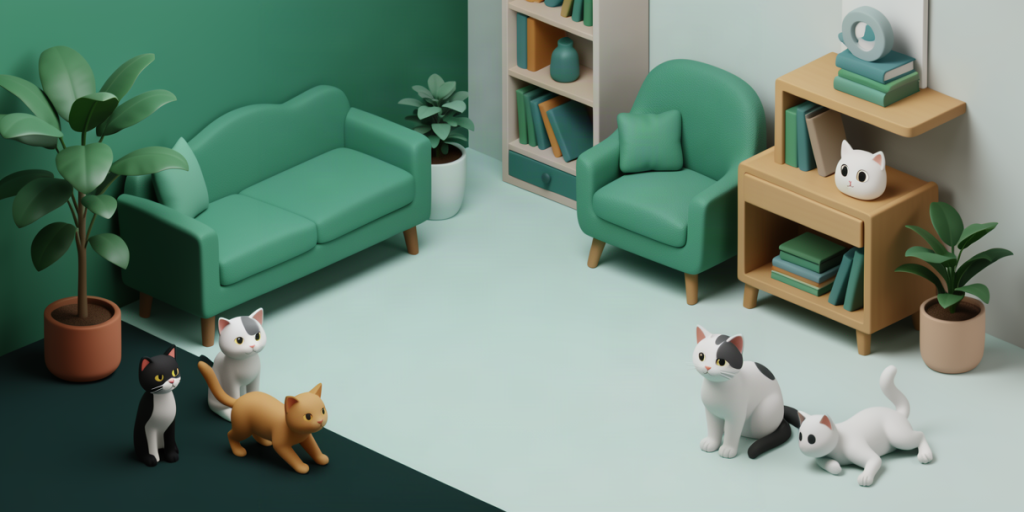
Physical activity for cats plays a key role in their health and well-being. While many pets prefer to spend time in a cozy corner, regular exercise and play help prevent obesity, maintain muscle tone, and improve mood. In this article, we will discuss how to organize physical activity for cats so they stay active and happy.
There are many engaging exercises and games that can be a great way to entertain your pet. We will review the best options suitable for different ages and activity levels, as well as share useful tips for creating a comfortable and safe environment for physical exercise. Start today to ensure your cat is not only healthy but also joyful!
Why Do Cats Need Physical Activity?
Physical activity for cats plays an important role in their health and well-being. One of the main benefits of regular exercise is the prevention of obesity and related diseases. Cats that do not get enough physical activity are at risk of becoming overweight, which can lead to heart, joint, and other organ problems. Regular play sessions help maintain an optimal weight and strengthen muscles, which in turn affects the overall vitality of the pet.
Additionally, physical activity stimulates hunting instincts. Playing with interactive toys, laser pointers, or even simple items like balls allows cats to showcase their natural hunting skills. This not only entertains them but also helps prevent boredom, which can lead to destructive behavior. Cats are natural predators, and providing them with opportunities to play satisfies their instincts.
Equally important is the impact of physical exercise on the pet’s psycho-emotional state. Active play promotes the release of endorphins, which improves mood and overall well-being. Cats that play actively are less prone to stress and anxiety. They become more sociable and friendly, strengthening the bond between the pet and its owner.
It is important to remember that each cat is unique, and its activity needs may vary depending on age, breed, and individual characteristics. Therefore, owners should be attentive to their pet and adapt the physical activity regimen according to its needs. Regular play sessions not only support the cat’s health but also make its life richer and more interesting.
How to Choose Toys for Cats?
Choosing toys for cats is an important aspect of organizing their physical activity and mental comfort. The right toys can significantly enhance your pet’s quality of life and help it stay active and healthy.
First of all, always pay attention to the safety of materials. Toys should be made from non-toxic and durable materials to avoid the risk of injury or poisoning. Avoid small parts that your cat might swallow and choose items that are easy to clean. Safety is not just about the absence of sharp edges, but also about avoiding potentially dangerous elements like cords or small details.
The next important point is to select toys that stimulate cats’ hunting instincts. Cats are natural hunters, and toys that mimic the movements of prey, such as mice or birds, will be particularly appealing. Toys that move, make sounds, or have unusual textures will help attract your pet’s attention and encourage active play. This is not only entertaining but also beneficial, as such activities maintain your cat’s physical condition and health.
You should also pay attention to interactive and multifunctional toys. These allow owners and cats to interact, which helps strengthen the bond between them. For example, toys with laser pointers or automatic balls that move on their own can be great choices. Such toys not only engage but also allow cats to exercise without requiring constant involvement from their owners, which is especially useful if you are busy or away from home.
In summary, choosing toys for cats is not just about buying fun items but is also a crucial step in ensuring their health and well-being. Consider safety, hunting instincts, and interactivity to keep your furry friend active and happy.
The Best Exercises for Indoor Cats
Physical activity plays a key role in the lives of indoor cats, ensuring their health and good mood. One effective way to organize active play for your furry friend is by using target toys. These toys trigger cats’ hunting instincts, allowing them to chase and catch an object, which makes playtime exciting and stimulating. You can use special toys or even create your own, for example, by tying a toy to a string and maneuvering it in front of your pet. This not only entertains but also helps maintain your cat’s physical shape.
Another interesting option is to organize a mini agility obstacle course. For this, you will need simple and safe items such as boxes, tunnels, and even jumping mats. By training your cat to overcome obstacles, you not only develop its physical activity but also strengthen your bond. Gradually complicate the tasks by adding new elements to keep your pet’s interest and motivation alive.
Don’t forget the importance of mental activity. Hide and seek is a wonderful way to develop your cat’s cognitive abilities. Hide in a room and call her, and when she finds you, praise her and give her a treat. This game helps develop orientation skills and strengthens trust between you and your pet.
Regular physical exercise helps prevent obesity, increases energy levels, and improves overall well-being. Try to dedicate time for active play every day to keep your cat happy and healthy. Interactive and varied activities will help avoid boredom and make your fluffy friend’s life more fulfilling.
How to Organize Playtime?
Organizing playtime for your cat is one of the key aspects that helps maintain its physical activity and emotional well-being. It is important to establish a regular playtime so your pet becomes accustomed to the routine. For example, you can set aside time in the morning and evening to dedicate these moments to play. Regularity will help your cat understand that during those times, she can expect active interaction with you, which also strengthens the bond between you and your pet.
It is recommended to play with your cat for 5-10 minutes several times a day. Short but intense play sessions will help maintain her interest and prevent her from getting tired. It is important to remember that cats are usually active at certain hours, so it is best to adjust playtime to their natural rhythms. For example, many cats are most active in the morning and evening, making these the best times for shared fun.
Also, provide your cat with the opportunity to choose when to play. This can be done through interactive toys that the cat can use at her discretion. If you have access to special toys that move or make sounds, this will attract your pet’s attention and give her the chance to explore and play at her convenience. It is essential to create an environment where the cat feels comfortable and interested, allowing her to exhibit activity on her own terms.
In conclusion, regular play and active engagement with your cat not only contribute to her physical health but also make her happier. Organize playtime, stick to a routine, and give her the freedom to choose — and you will see how your cat becomes more energetic and playful.
Interactive Games with Cats
Interactive games with cats are an excellent way to organize physical activity and develop your pet’s mental abilities. One of the most popular tools for such games is laser pointers. They grab the attention of cats, encouraging them to follow the moving dot. This not only stimulates hunting instincts but also helps maintain physical fitness. When using laser pointers, it is crucial to finish the game with a real toy, so the cat can