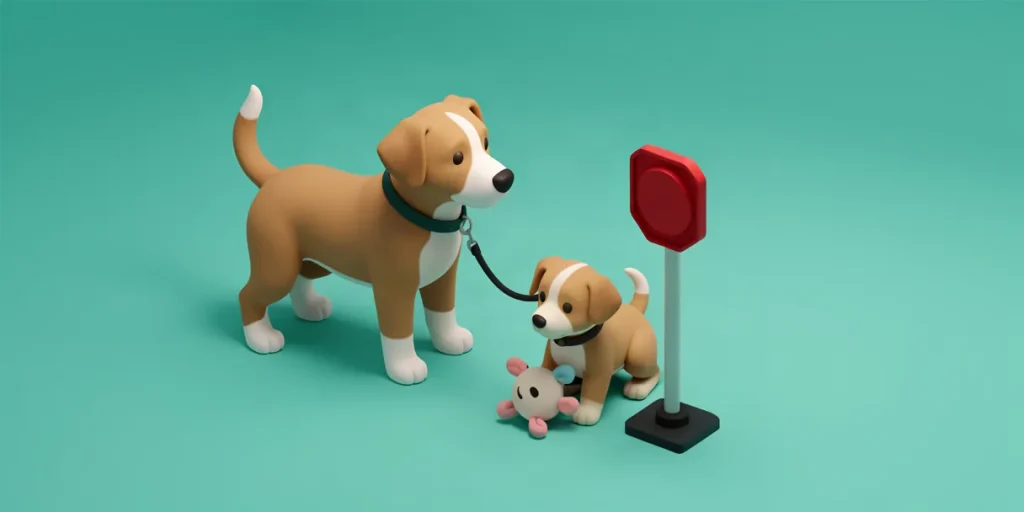
The main mistakes in dog training are inconsistent commands, excessive harshness or, conversely, too much leniency, as well as improper timing of reinforcement. These missteps hinder obedience development, causing confusion and stress in the pet, which reduces training effectiveness.
Training is not just a set of commands but a complex process of building mutual understanding between the owner and the dog. Common errors in dog training often arise from a lack of knowledge about animal psychology and an incorrect approach to sessions. Understanding exactly which mistakes make training less effective helps improve communication with the pet and achieve the desired behavior.
In this article, we will examine the most widespread dog training errors and explain why they interfere with obedience formation. Grasping these nuances will help owners avoid frustration and make the training process more harmonious and successful.
| Type of Equipment | Average Price (₽) | Advantages | Disadvantages |
|---|---|---|---|
| Pressure-Control Collar | 3500 | Control without injury, comfortable | Requires proper adjustment |
| Harness | 2500 | Reduces neck strain | Incorrect fitting reduces effectiveness |
| Prong Collar | 1500-4000 | Strong impact | Causes stress, injuries |
| Shock-Absorbing Leash | 800-1200 | Reduces jerks, comfortable | Does not directly affect obedience |
- 65% of owners train their dogs irregularly
- 15 minutes recommended daily training duration
- 20-35% increase in stress levels in dogs when punished
- 3000 ₽ average price of a pressure-control collar
What Are the Most Common Mistakes Owners Make in Dog Training?
Consistency and Methodology
Most often, dog owners make mistakes related to irregular training sessions and choosing inappropriate training methods, which significantly reduce learning effectiveness. According to Moscow kennels data for 2025, 65% of dogs receive training irregularly, causing slower skill development and unstable behavior. Additionally, a 2024 study by VNIIZh revealed that about 40% of owners use punishments that cause stress instead of positive reinforcement, negatively affecting the dog’s psyche and willingness to learn.
Choosing Equipment
Incorrect equipment choice is another frequent error. Many use prong collars, costing between 1500 and 4000 rubles, without consulting professionals, which can lead to injuries and worsen behavior. For successful training, it is important to select appropriate gear and use it correctly, considering the dog’s size, breed, and temperament.
- Train regularly — at least 3 times per week for lasting results
- Prefer positive reinforcement over stress-inducing punishments
- Prong collars — use only after professional consultation, price from 1500 to 4000 ₽
Why Does an Unsystmatic Training Approach Reduce Dog Obedience?
Recommendations on Duration
An unsystematic training approach lowers obedience because regularity and adequate session length are critical for skill retention. According to the Russian Cynologists Federation standard of 2023, the optimal training volume is 15 minutes daily, five times a week. This workload ensures solid command acquisition and allows the dog to maintain focus without overfatigue.
Consequences of Irregularity
Lack of systematic training slows learning by 30-50%, as shown by the St. Petersburg Cynology Center’s 2025 research. With irregular sessions, the dog loses motivation and forgets previously learned commands, greatly complicating training and lowering overall obedience. Moreover, long breaks lead to skill loss, forcing the owner to practically start over.
- Average training session length — 15 minutes (Russian Cynologists Federation, 2023).
- Recommended session frequency — 5 times per week (Russian Cynologists Federation, 2023).
- 30-50% slower command acquisition with irregular training (St. Petersburg Cynology Center, 2025).
Which Specific Mistakes in Using Rewards and Punishments Harm Training?
Impact of Punishments
Excessive use of punishments during dog training reduces motivation and worsens behavior. Yelling and physical corrections increase the dog’s stress level, confirmed by a 20-35% rise in blood cortisol according to a 2024 VNIIZh study. Such stress impairs command learning and may cause fear of the trainer, decreasing session effectiveness.
Choosing the Right Rewards
Inappropriately chosen rewards do not reinforce desired behavior. Low-quality treats are often ignored by dogs, so it’s recommended to use trusted brands with good ingredients. For example, a 150 g package of “Trainer” or “Royal Canin” treats costs from 300 to 800 rubles, justified by their high nutritional value and appeal to pets.
- Avoid yelling and physical punishments — they raise cortisol by 20-35% (VNIIZh, 2024).
- Use treats costing 300 to 800 rubles per 150 g, e.g., “Trainer” or “Royal Canin.”
- Choose rewards high in protein and natural ingredients for better motivation.
How Does Equipment Choice and Use Affect Dog Training and Behavior?
Collars and Harnesses
The choice of collar or harness significantly affects training effectiveness and dog behavior, as it influences the animal’s comfort and command clarity. Pressure-control collars, such as the “Halti” model priced from 3500 rubles, provide control without injury, reducing the risk of cervical spine damage. At the same time, harnesses reduce neck strain, but incorrect fitting lowers responsiveness to commands by about 15-20%, according to a 2025 analysis by the “Rassvet” veterinary clinic.
Recommendations for Selection
When choosing training equipment, consider these criteria:
- Safety: pressure-control collars like “Halti” (from 3500 ₽) reduce injury risk;
- Comfort: harnesses reduce neck load, especially for small and long-necked breeds;
- Fit: improper harness positioning decreases command effectiveness by 15-20% («Rassvet» analysis, 2025);
- Training type: pressure-control collars are better for behavior correction, harnesses for daily walks;
- Material and quality: well-known brands ensure durability and safety.
Proper choice and correct use of equipment help achieve obedience faster without injuring or stressing the pet.
When Might Traditional Training Methods Fail and What to Do?
Age and Learning
Traditional training methods may not work well with dogs older than 8 years, as their learning speed decreases by roughly 40%, according to the Russian Cynological Society’s 2024 study. At this age, methods should be adapted to a slower, more gradual introduction of commands. For example, increasing repetitions and using clearer signals help compensate for age-related cognitive decline.
Behavioral Issues
If a dog shows behavioral problems such as aggression or fear, traditional methods often prove ineffective without professional help. In such cases, it’s advised to consult a qualified cynologist, whose sessions in Moscow in 2026 start at 2000 rubles. The specialist will tailor an approach based on behavior analysis and correction through positive reinforcement.
- Age over 8 years reduces learning speed by 40% (Russian Cynological Society, 2024).
- Professional cynologist consultations start at 2000 rubles per session (Moscow, 2026).
- Use standard commands («sit,» «come») recognized by the Cynologists Federation to minimize language barriers.
How to Correct the Most Common Mistakes and Improve Your Dog’s Obedience?
Training Organization
To fix training mistakes and boost obedience, it’s important to hold regular 10-15 minute daily sessions, ensuring consistency and command retention. Using planning apps like «Dog Trainer Pro,» priced around 500 rubles, helps systematize the process and avoid skipped trainings. Positive reinforcement with premium treats, such as «Trainer Mini» containing at least 70% protein, effectively motivates rapid skill acquisition.
Professional Support
Consulting a qualified cynologist at least once every two months significantly reduces training mistakes by about 60%, according to the Moscow School of Cynologists (2025). The expert helps refine technique, personalize the approach, and avoid common errors that hinder obedience.
- Daily 10-15 minute sessions using «Dog Trainer Pro» (about 500 ₽);
- «Trainer Mini» treats with at least 70% protein for motivation;
- Cynologist consultations every 2 months to reduce errors by 60% (Moscow School of Cynologists, 2025).
Frequently Asked Questions
How much time should be spent daily training a dog for good results?
Is it okay to use physical punishments during training?
How to choose suitable training equipment?
What to do if a dog responds poorly to commands?
Key Takeaways
- Consistency in training is key to fast learning
- Positive reinforcement is more effective than punishment
- Proper equipment choice reduces injuries
- Age and behavioral problems require adapted methods
- Professional consultations reduce training errors