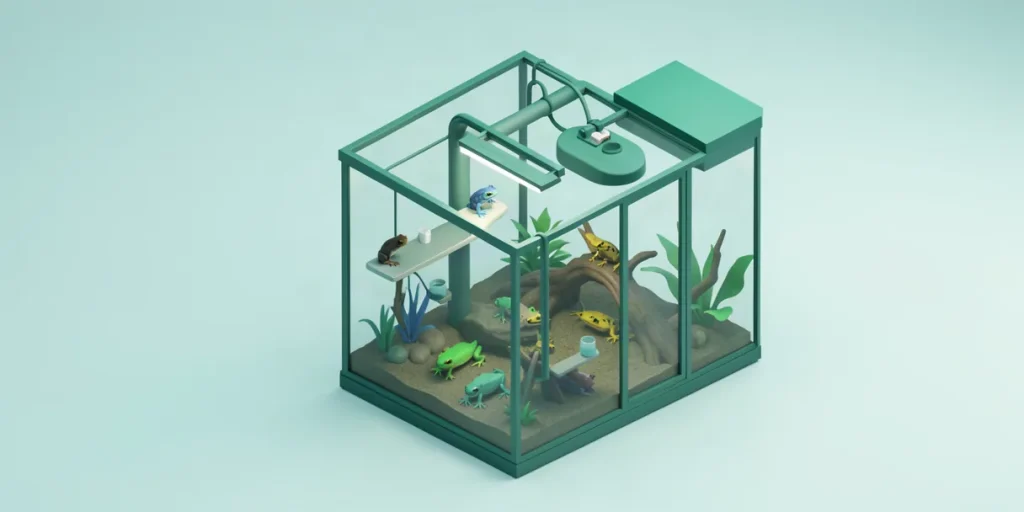
Typical mistakes in keeping exotic amphibians are related to improper care, unsuitable microclimate and nutrition, as well as insufficient knowledge of species-specific traits. To avoid problems, it’s important to thoroughly study the pet’s biology and provide optimal living and feeding conditions.
Keeping exotic amphibians requires special attention and responsibility. These animals are highly sensitive to environmental parameters, and even minor deviations can lead to stress or disease. In this article, we will thoroughly examine the most common mistakes made by owners and explain how to prevent them.
Understanding common mistakes when keeping exotic amphibians helps preserve pet health and extend their lifespan. We will cover key aspects of care—from choosing the right terrarium, controlling humidity and temperature to proper feeding and disease prevention. This material will be useful for both beginners and experienced breeders.
| Model | Price (₽) | Hygrostat Included | Recommended Terrarium Size |
|---|---|---|---|
| MistKing MicroFogger | 7 500 | Yes | up to 60 l |
| Zoo Med Repti Fogger | 4 200 | No | up to 40 l |
| Exo Terra Monsoon | 10 000 | Yes | up to 100 l |
| Handheld Sprayer | 300 | No | up to 20 l |
- 70–85 % Optimal humidity for tropical amphibians
- 22–26 °C Recommended temperature for Dendrobates tinctorius
- 30 days Recommended quarantine period for new amphibians
- 12 000 ₽ Average price of Exo Terra 45×45×60 cm terrarium in 2026
Which microclimate mistakes most often cause amphibian diseases?
Humidity and its control
The most frequent cause of amphibian diseases is disruption of the optimal humidity level in the terrarium, which for most tropical species should be 70–85%. Humidity below 70% leads to skin drying and reduced protective functions, while exceeding 85% promotes skin infections and fungal growth.
For accurate humidity control, it is recommended to use humidifiers with a hygrostat, such as the Exo Terra Monsoon model priced around 7000 rubles. Using cheaper devices without automatic humidity regulation often results in sharp microclimate fluctuations, negatively affecting pet health.
Temperature and light
Temperature regulation is another common mistake. For Dendrobates tinctorius, the optimal temperature range is 22–26 °C. Deviations greater than 3 degrees sharply weaken the animals’ immune system, increasing the risk of infectious diseases. For example, below 19 °C, amphibians experience slowed metabolism and reduced resistance to pathogens.
Lack of quality UVB 5.0 ultraviolet lighting also contributes to metabolic disorders and calcium deficiency. It is advisable to use Arcadia D3+ UVB 5.0 lamps costing about 3500 rubles, which provide the necessary radiation level for proper metabolism and bone strengthening.
- Humidity: 70–85% for tropical species;
- Temperature: 22–26 °C for Dendrobates tinctorius;
- Ultraviolet lighting: UVB 5.0 (e.g., Arcadia D3+);
- Humidifiers with hygrostat: Exo Terra Monsoon (~7000 ₽).
How to avoid mistakes in feeding exotic amphibians?
Diet and supplements
For successful feeding of exotic amphibians such as Axolotl mexicanum, it is important to use live food like bloodworms or cyclops, since dry foods reduce their vitality and may cause health problems. Avoid excessive calcium supplements because too much calcium leads to tissue calcification, as confirmed by veterinary observations of these amphibians.
- Live food: bloodworms and cyclops are the best choice for Axolotl mexicanum;
- Dry foods reduce amphibian activity and health;
- Calcium supplements—do not exceed recommended dosage to avoid calcinosis.
Feeding frequency and quality
Young exotic amphibians require feeding 3–4 times a week, adults 1–2 times, ensuring a balance between nutrition and digestion. It is important to purchase insects from certified suppliers to eliminate the risk of parasitic infections. For example, vendors in specialized Moscow pet stores offer verified live food starting at 300 ₽ per 100 g, guaranteeing quality and safety.
- Feeding frequency: young — 3–4 times per week, adults — 1–2 times;
- Food from certified suppliers minimizes parasite risk;
- Cost of live food — from 300 ₽ per 100 g in trusted pet shops.
Which sanitation and care mistakes contribute to amphibian stress and infections?
Sanitation and care errors, such as infrequent terrarium cleaning and use of harsh chemicals, directly increase stress and infection risk in amphibians. Lack of ventilation and absence of quarantine for new pets create favorable conditions for fungal and bacterial diseases, worsening animal health and lowering immunity.
Cleaning schedule
Rare or irregular cleaning leads to pathogen buildup and worsened microclimate. It is recommended to perform wet cleaning of the terrarium at least once a week and full surface disinfection once a month. Failure to meet these intervals increases the risk of fungal infections due to moisture and organic residue buildup. Additionally, insufficient ventilation where air inside the terrarium is not regularly refreshed promotes growth of harmful microorganisms.
Safe disinfectants
Using chlorine-containing and aggressive chemical agents causes skin burns in amphibians and disrupts their natural protective barrier. Instead, specialized products such as F10SC Veterinary Disinfectant are recommended, widely recognized in veterinary practice and safe for exotic amphibians. Quarantine for new pets for at least 30 days is also essential to reduce the risk of introducing fungal and bacterial infections into the main habitat.
- Wet cleaning: at least once a week;
- Full disinfection: at least once a month;
- Quarantine for new amphibians: minimum 30 days;
- Safe disinfectant: F10SC Veterinary Disinfectant.
When standard care methods fail and what to do then?
If standard care methods for exotic amphibians fail and the animal shows lethargy or refuses food for more than 5 days, immediate consultation with a herpetological veterinarian is necessary. Self-treatment, especially with antibiotics without accurate diagnosis, can worsen the condition and cause complications.
When veterinary help is needed
Loss of appetite and reduced activity lasting over 5 days require specialist consultation. A herpetological vet will perform microbiological testing of samples and prescribe treatment considering pathogen specifics. Self-administering antibiotics without analysis may lead to dysbiosis and development of resistant bacterial strains.
Species-specific features
Some amphibian species require special conditions, and violations provoke stress and illness. For example, Ceratophrys ornata needs air temperature between 24–28 °C and high humidity of about 80–90%. Unsuitable substrate, such as fine bark, can cause digestive tract blockage and should be replaced with safer materials like coconut substrate or specialized peat soil.
- Lethargy and food refusal over 5 days — reason to see a vet;
- Temperature for Ceratophrys ornata — 24–28 °C;
- Humidity for Ceratophrys ornata — 80–90%;
- Safe substrate — coconut substrate or peat soil instead of fine bark;
- Microbiological testing before prescribing antibiotics.
What costs are associated with proper care of exotic amphibians?
Equipment
Proper care of exotic amphibians requires significant investment in specialized equipment that ensures optimal living conditions for pets. The cost of a quality medium-sized terrarium, such as the Exo Terra 45×45×60 cm model, is about 12,000 ₽ in 2026. An important element is a humidifier with a hygrostat that maintains stable humidity levels vital for amphibian health; reliable models like MistKing and Zoo Med are available starting at 3,500 ₽. Without these devices, maintaining the necessary microclimate is nearly impossible, increasing the risk of diseases and stress.
Expenses for food and veterinary care
Feeding exotic amphibians usually involves live insects, requiring regular costs for purchase and maintenance. Average monthly expenses for feeding one adult animal are about 1,500 ₽. Additionally, periodic veterinary check-ups with exotic animal specialists are needed, starting at 2,000 ₽ per visit. Regular health monitoring helps prevent serious illnesses and supports amphibians’ long life.
- Exo Terra terrarium 45×45×60 cm — about 12,000 ₽;
- Humidifier with hygrostat MistKing or Zoo Med — from 3,500 ₽;
- Feeding live insects — about 1,500 ₽ per month per adult;
- Veterinary visit with exotic animal specialist — from 2,000 ₽ per appointment.
Frequently Asked Questions
How often should axolotl water be changed?
Can regular lamps be used to light a terrarium?
What to do if an amphibian has shed skin but refuses to eat for several days?
How to properly organize quarantine for a new amphibian?
Key Takeaways
- Maintain humidity at 70–85% for tropical amphibians.
- Use specialized UVB lamps to prevent metabolic diseases.
- Feed amphibians live insects 1–4 times a week depending on age.
- Perform wet terrarium cleaning at least once a week and disinfection once a month.
- Invest in quality equipment: Exo Terra terrarium and humidifier with hygrostat.