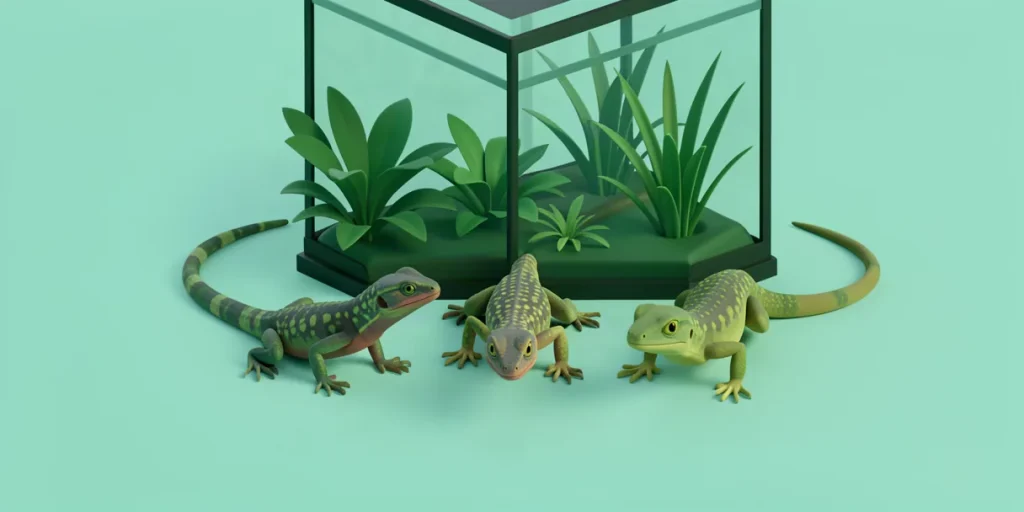
Popular exotic lizard species for home keeping include bearded dragons, tokay geckos, and anoles, known for their relatively simple care, availability, and striking appearance. Each species has its own characteristics that are important to consider when choosing a pet.
Exotic lizards are becoming increasingly popular among enthusiasts of unusual pets. Their diversity is impressive — from vivid colors to varying sizes and behavioral traits. However, to ensure that keeping a pet is enjoyable and safe for both animal and owner, it is necessary to carefully compare popular exotic lizard species and understand which one suits you best.
In this article, we will examine the main lizard species most commonly chosen for home keeping in 2026, analyze their care requirements, housing conditions, and temperament, to help readers make an informed choice and provide their exotic pet with comfort and health.
| Species | Terrarium Volume | Temperature (°C) | Purchase Price (₽) | Care Features |
|---|---|---|---|---|
| Bearded Dragon | from 120 L | day 35–40, night 20–25 | 5000–9000 | calm temperament, Exo Terra SunRay 50 W |
| Tokay Gecko | from 60 L | 26–30 daytime, 21 at night | 7000–12000 | high humidity 60–80%, nocturnal lifestyle |
| Blue Skink | from 150 L | 28–35 daytime | 15000–25000 | requires experience, ReptiSun 10.0 26 W |
- 120 liters minimum terrarium volume for bearded dragon
- 60–80% humidity for tokay gecko
- 10 hours minimum daily UVB lamp operation time
- 5000–25000 ₽ price range of popular exotic lizard species
- 200 ₽ cost of 100 g of feeder insects
Which exotic lizard species are most often chosen for home keeping?
Popularity of species
The most popular exotic lizard species for home keeping in Russia are the bearded dragon, tokay gecko, and blue skink. According to the «ExoPet» store (2026), about 45% of lizard buyers choose the bearded dragon, making it the leader in popularity. Tokay geckos and blue skinks are less in demand but remain sought after due to their unique features and ease of care.
Purchase cost
Prices for popular exotic lizards vary depending on species and age. Bearded dragons cost between 5000 and 9000 ₽, making them a relatively affordable option for beginners. Tokay geckos are priced from 7000 to 12000 ₽, while the blue skink, being a rarer and larger species, ranges from 15000 to 25000 ₽. The price differences reflect the care requirements and rarity of each species.
- Bearded dragon — 45% demand, price from 5000 to 9000 ₽
- Tokay gecko — price from 7000 to 12000 ₽
- Blue skink — price from 15000 to 25000 ₽
What are the care and housing requirements for bearded dragons, tokay geckos, and blue skinks?
Bearded dragons, tokay geckos, and blue skinks have different needs regarding temperature, lighting, terrarium size, and humidity, which define their care and housing specifics. Bearded dragons require higher temperatures and bright UV lighting, tokay geckos need high humidity and moderate warmth, while blue skinks require a spacious terrarium with a temperature gradient and a powerful UV lamp.
Temperature and lighting
For bearded dragons, optimal daytime temperature is 35–40 °C, dropping to 20–25 °C at night, using an Exo Terra SunRay 50 W lamp to provide UV lighting. Tokay geckos require a milder temperature regime — 26–30 °C during the day and 21 °C at night — with high humidity being crucial. Blue skinks need a temperature gradient between 28–35 °C and UV radiation provided by a ReptiSun 10.0 26 W lamp.
Terrarium size and humidity
The minimum terrarium volume for bearded dragons is 120 liters, for tokay geckos — 60 liters, and for blue skinks — from 150 liters. Tokay geckos require 60–80% humidity, which is significantly higher than for bearded dragons and blue skinks, who are satisfied with normal humidity levels. When selecting equipment and housing conditions, these parameters must be considered for the animals’ health and comfort.
- Bearded dragon: terrarium from 120 L, daytime temperature 35–40 °C, Exo Terra SunRay 50 W lamp
- Tokay gecko: terrarium from 60 L, humidity 60–80%, temperature 26–30 °C day, 21 °C night
- Blue skink: terrarium from 150 L, temperature gradient 28–35 °C, ReptiSun 10.0 26 W lamp
How do the temperament and behavior of these lizard species differ in home conditions?
Behavioral traits
Bearded dragons have a calm and friendly character, quickly getting used to handling and actively interacting with their owners. Tokay geckos are nocturnal, active at dusk, often hiding and showing shyness, which requires patience and attentiveness from the owner. Blue skinks are large and powerful; if care conditions are not met, they may show aggression, especially under stress.
Suitability for beginners
Bearded dragons are an optimal choice for beginners thanks to their adaptability and friendliness, as confirmed by experienced breeders at «ReptiTerra.» Tokay geckos require more time and effort for taming, making them suitable for owners with patience and experience. Blue skinks need attentive care and experience, since their aggressive behavior can become a problem and demands special knowledge and skills.
- Bearded dragon — tames within 2–3 weeks, average price 3500–4500 ₽.
- Tokay gecko is active at dusk; taming may take up to 2 months.
- Blue skink can weigh up to 800 g and requires a large terrarium from 150 liters.
What are the feeding and dietary characteristics of these lizards?
Typical diet
Bearded dragons are omnivorous, consuming about 70% plant food and 30% insects. Their diet includes dandelion leaves, zucchini, and mealworm pupae. Tokay geckos are strictly insectivorous, requiring live cockroaches and crickets with a daily feeding weight of 5–10 g. Blue skinks mainly prefer insects and small vertebrates, eating up to 20 g of live food daily, occasionally supplemented with vegetables and fruits for balance.
Costs and supplements
The cost of feeder insects for bearded dragons is approximately 200 ₽ per 100 g, an important consideration for regular feeding. Tokay geckos require mandatory vitamin and calcium supplements to prevent deficiencies and maintain bone health. Blue skinks receive live food as well as occasional vegetables and fruits, which diversify their diet and improve nutrient absorption. When choosing food, it is important to consider not only the diet but also the need for vitamin-mineral supplements for each lizard species.
- Bearded dragon: 70% plant food, 30% insects, feeder insect cost ~200 ₽/100 g
- Tokay gecko: daily diet 5–10 g live cockroaches and crickets, mandatory vitamin-calcium supplements
- Blue skink: up to 20 g live food per day, supplemented with vegetables and fruits for balanced nutrition
What common mistakes and limitations should be considered when keeping exotic lizards?
Common care mistakes
Lack of ultraviolet lighting and failure to maintain a temperature gradient are key mistakes in exotic lizard care, leading to serious metabolic and immune disorders. By standards, a UVB lamp should operate at least 10 hours a day; otherwise, vitamin D3 and calcium deficiency develops, which is especially dangerous for young animals. Additionally, the absence of a temperature gradient with at least a 10 °C difference between warm and cool zones results in weakened immunity and digestive issues, as confirmed by reptile specialists’ recommendations.
Special requirements
Incorrect food choices and lack of vitamin supplements lead to rickets and calcium deficiency, especially in young individuals. For example, blue skinks require ample space — at least 1 m² per individual — and experience in care, as cramped conditions provoke aggression and stress. Ignoring these requirements can lead to treatment costs exceeding 15,000 ₽ per month. It is essential to use specialized vitamin-mineral complexes recommended by reptile veterinarians to avoid deficiencies and maintain pet health.
- UVB lamp operates at least 10 hours daily
- Temperature gradient of at least 10 °C
- Space for blue skink — minimum 1 m² per individual
- Treatment costs for errors — from 15,000 ₽ monthly
Frequently Asked Questions
Which lizard species is suitable for beginners?
How much does it cost to keep a tokay gecko per month?
Does the blue skink need a UV lamp?
How often should the terrarium substrate be changed?
Key Takeaways
- Bearded dragon – ideal for beginners
- Tokay gecko requires high humidity and nocturnal lighting
- Blue skink needs a large terrarium and experienced owner
- Ultraviolet lighting is essential for health
- Proper feeding and maintaining temperature gradient are keys to success