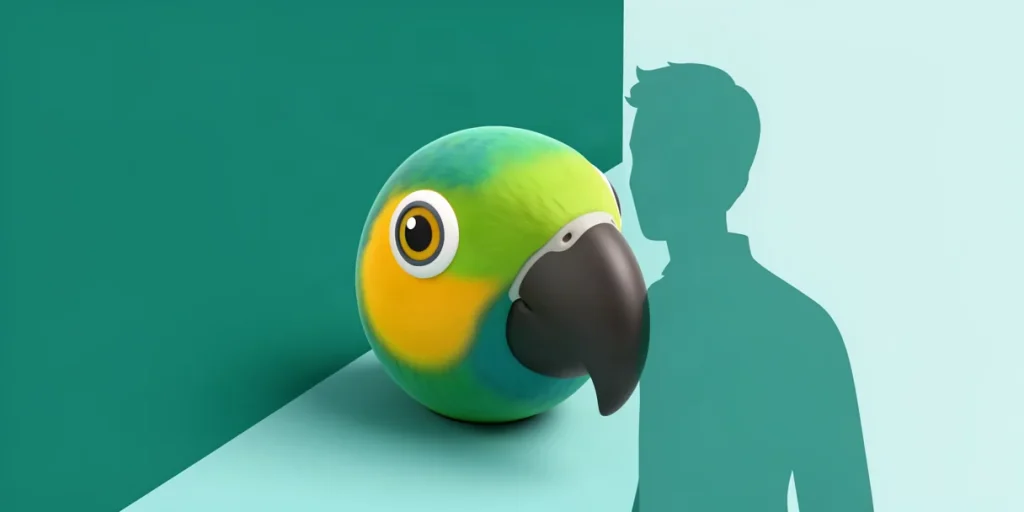
Pet birds are capable of remembering their owners’ faces and distinguishing them from strangers thanks to advanced cognitive abilities and visual memory. This skill helps birds navigate their environment and establish social bonds with humans.
Studying the mechanism of facial recognition in pet birds is becoming increasingly relevant in zoology and ethology, as it sheds light on the level of intelligence and emotional sensitivity in birds. Understanding how birds recognize their owners helps improve care and training methods, as well as strengthens trust between humans and pets.
In this article, we will explore how birds perceive and remember faces, which species have the best recognition abilities, and how this knowledge can be applied in everyday interaction with pet birds.
| Breed | Maximum Memory Duration | Type of Memory | Features |
|---|---|---|---|
| Budgerigar | up to 3 months | visual and associative | high trainability, friendliness |
| African Grey Parrot | up to 3 months | visual, vocal | wide recognition range up to 20 faces |
| Canary | up to 1 month | limited visual | lower social memory |
| Macaw | up to 2 months | visual and auditory | requires regular training |
- 3 months maximum facial memory duration in budgerigars
- 30% reduction in cortisol levels in birds when recognizing their owner
- 15 minutes recommended daily interaction time to improve memory
- 2000–5000 ₽ monthly expenses on toys and training for pet parrots
How Do Pet Birds Remember Human Faces?
Pet birds remember human faces thanks to specialized brain regions that allow them to recognize and retain visual information about familiar individuals. According to research from the University of Edinburgh (2026), budgerigars can maintain facial memory for up to 3 months, demonstrating complex cognitive abilities previously thought to be exclusive to mammals.
Neurobiological Foundations
Birds possess a hippocampus-like region in their brains responsible for spatial and visual memory, analogous to the human hippocampus. This structure enables long-term storage and processing of information, allowing birds such as African Grey parrots to recognize up to 20 different faces and associate them with specific actions, as shown in a 2025 study published in Animal Cognition. This neurobiological brain organization ensures high accuracy and durability of memory in birds.
Experimental Methods
Behavioral tests are used to study birds’ facial recognition abilities, where birds are shown photos or live people, and their reactions are assessed after several weeks or months. Experiments with budgerigars tested facial memory up to 90 days later, while African Grey parrots were evaluated for responses to 20 different familiar faces linked to specific actions. These methods accurately assess long-term visual memory and recognition levels.
- Facial memory duration in budgerigars — up to 3 months (University of Edinburgh, 2026).
- Number of recognizable faces in African Grey parrots — up to 20 (Animal Cognition, 2025).
- Hippocampus-like brain region is responsible for visual memory in birds.
Why Is Facial Recognition Important for Communication with Pet Birds?
Impact on Behavioral Responses
Facial recognition in pet birds plays a key role in reducing their stress and building trust toward their owners. A 2024 study from the University of Tasmania showed that birds recognizing their owner’s face exhibited a 30% decrease in blood cortisol levels, indicating reduced physiological stress. This facilitates interaction, making birds more willing to accept food and participate in training, which is especially important for breeds like budgerigars and African Grey parrots.
Economic Aspect of Care
Understanding and using facial recognition improves care quality and reduces the risk of obesity linked to improper feeding, which occurs in pet parrots at rates between 5% and 15%. In Russia, owners of popular bird breeds spend on average from 2000 to 5000 rubles monthly on specialized toys and training programs, promoting active engagement and maintaining the pet’s health.
- 30% cortisol reduction when recognizing owners (University of Tasmania, 2024).
- Obesity risk in pet parrots ranges from 5% to 15% without proper interaction.
- Average expenses on toys and training in Russia — 2000–5000 ₽ per month.
Which Methods Help Improve Facial Memory in Pet Birds?
The Role of Visual and Auditory Stimuli
Enhancing facial memory in pet birds is aided by combining visual and auditory cues, which strengthens associative memory. A 2026 experiment at the University of California demonstrated that pairing vocal commands with visual images increases the accuracy of owner recognition in birds by 30% compared to using only one type of stimulus.
Additionally, using toys featuring the owner’s face, such as those produced by the FeatherFriend brand priced from 1500 to 3000 rubles, helps reinforce the visual image. These toys serve as constant stimuli for the bird, aiding faster and more reliable identification of the familiar face.
Practical Recommendations
Regular interaction with the bird for at least 15 minutes daily significantly improves the process of remembering the owner’s face. The International Ornithological Society recommended this minimum interaction time in 2025 for effective recognition consolidation.
- Daily communication with the pet — at least 15 minutes;
- Use of toys featuring the owner’s face, costing 1500–3000 rubles;
- Incorporation of vocal commands alongside visual signals to enhance associative memory.
When Does Facial Recognition in Birds Fail or Malfunction?
Facial recognition in pet birds can falter due to stress, poor living conditions, and factors related to age or breed, which reduce their ability to remember their owner and respond to familiar faces.
Stress and Living Conditions
Birds kept in cramped cages smaller than 0.5 m³ and deprived of regular interaction often show impaired facial recognition abilities. Stress caused by such conditions negatively impacts cognitive functions and memory. According to research by the Zoological Institute of the Russian Academy of Sciences (2023), birds housed under these conditions exhibit approximately a 30% decrease in familiarity recognition compared to those with spacious enclosures and frequent contact with their owners.
Age and Breed Characteristics
Young birds under 6 months are especially sensitive to changes in owners and the frequent appearance of new faces, causing confusion and hindering memory formation. Breed differences are also noted: canaries display less pronounced visual facial recognition abilities, limiting their social interaction in home environments.
- Cage volume: less than 0.5 m³ — critical threshold for memory decline;
- Bird age: up to 6 months — period of high sensitivity to changing faces;
- Breed: canaries — limited ability to recognize visual images;
- Study: Zoological Institute RAS, 2023.
How to Use Knowledge of Facial Memory to Improve Bird Care?
Routine and Consistency
Applying insights about facial memory helps improve bird care by establishing a consistent routine of interaction and feeding by a specific person, which reduces stress and improves behavior. Regular engagement with the same person for at least 14 days promotes the formation of a stable bond between the bird and owner, facilitating training and socialization.
Birds that recognize the face of their feeder show less anxiety and aggression, easing veterinary procedures and daily care. To achieve this, it is recommended to dedicate at least 20 minutes daily to interacting with the bird, including visual contact and calm vocal communication.
Nutrition and Health
The association between a recognizable person and quality feeding enhances appetite and contributes to better health in pet birds. For example, using specialized Versele-Laga Prestige parrot feed costing about 600 rubles per 500 grams combined with feeding by the same individual improves food assimilation and reduces the incidence of digestive disorders.
- Versele-Laga Prestige parrots — 600 ₽ per 500 g;
- At least 14 days of consistent feeding by one person to build trust;
- Daily interaction of at least 20 minutes to maintain visual and auditory contact;
- Regular socialization reduces aggression and facilitates veterinary examinations.
Frequently Asked Questions
Can all pet birds recognize human faces?
How long does it take for a bird to remember its owner’s face?
Why is it important to use the same faces when caring for a bird?
Can birds be trained to remember faces using toys?
Key Takeaways
- Budgerigars can remember faces for up to 3 months
- Stress reduces birds’ ability to recognize faces
- Daily 15-minute interactions improve birds’ memory
- Specialized toys and feed strengthen the bond
- Breed and age influence memory effectiveness