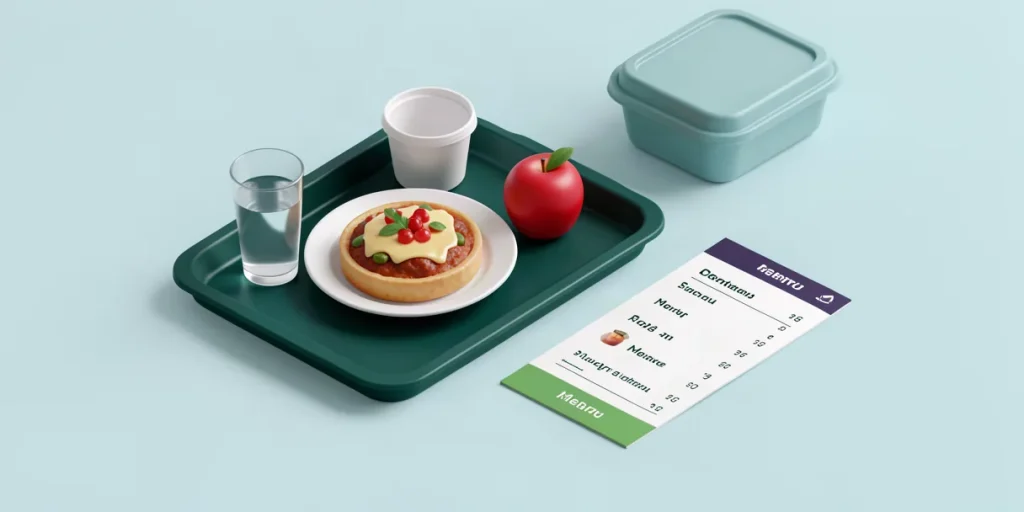
School meals are about more than just the menu: food safety, preparation conditions, and an option that suits the child all matter, whether that’s a hot lunch, the cafeteria snack bar, or food from home. To make an informed choice, parents need to understand what the school offers, how benefits and dietary restrictions are handled, and where to turn with concerns about quality.
This article looks at what to check in a school menu and how to assess whether it meets your child’s needs. For more on schedules, portions, and healthy habits, see “School-Age Children’s Diet: Schedules, Portions, and Healthy Habits”; for a comparison of hot lunches, the snack bar, and food from home, see “What Should Your Child Eat at School: A Hot Lunch, the Snack Bar, or Food from Home?” Practical questions about menus, quality control, and parent accounts are covered in “School Meals: How Menus, Benefits, and Quality Control Work” and “School Meal Account: How to Log In, Check the Menu, and Pay for School Lunches.”
| Option | What to check | Important limitation |
|---|---|---|
| Hot lunch | Menu and serving time | Whether the ingredients suit the child |
| Snack bar | Range and ingredients of the food | A purchase does not necessarily replace lunch |
| Food from home | School rules and storage | Storage conditions need to be considered |
- 5–7 number of sections in this article; editorial structure, not a regulation
- 3–5 number of questions in this article’s FAQ; editorial structure, not a regulation
- 120–160 search description length in characters as requested; an editorial requirement, not a school-meal metric
How Are School Meals Organized, and Who Handles Questions?
The school organizes meals: it sets the meal schedule, provides the menu, and monitors quality, while the specific arrangements depend on the school and local rules. So if you have questions about menu ingredients, food service, or how lunches are organized, start by contacting the school and finding out who is responsible for meals and where to direct your inquiry.
Where to Turn and What to Check
If meal information is available through an electronic service, check which system the school uses and whether your child’s details are correct; otherwise, the menu or payment information may be displayed inaccurately. For details on what the parent account offers and how to log in, see “School Meal Account: How to Log In, Check the Menu, and Pay for School Lunches.”
The school meal service and the route for requesting help may vary, so ask the school which channel is appropriate for your question: the staff member responsible for meals or the electronic system. For more on how the service works and where to send inquiries, see “Pitaniye Org: How the School Meal Service Works and Where to Get Help.”
What Should You Check in School Menus and Food?
Check the school menu for three things: whether the published menu matches what your child is actually served, where updates are posted, and whether the dishes’ ingredients are listed. Ask the school where it publishes the current menu—on a noticeboard or in a section of its website—and how it notifies families about substitutions.
How to Assess the Food and Menu
- Food ingredients and quality. A dish’s name alone is not enough: find out what ingredients it contains and whether they meet the requirements. The criteria are covered in detail in “Food Products for School Menus: Requirements for Ingredients and Quality.”
- The overall diet. Don’t judge the quality of your child’s diet by a single lunch or dish. Look at the menu as a whole and take your child’s usual routine into account, including what they eat before and after school.
- Menus, benefits, and quality control. These are related but separate issues: the published menu shows what is planned, benefits concern eligibility and access to meals, and quality control means checking the food and dishes. Their relationship is discussed in more detail in “School Meals: How Menus, Benefits, and Quality Control Work.”
If the food actually served differs from the published menu, ask the school why and how it notifies families about substitutions. This lets you check the current menu, food ingredients, and meal arrangements separately, without drawing conclusions based on a single dish.
How Should You Account for Age, Schedule, and Portion Size?
Compare the school schedule with your child’s age, usual routine, and how much they actually eat: an early start and a long stretch without food can affect appetite. A blanket rule to “finish everything” takes neither individual habits nor portion size into account; it’s more useful to notice what your child chooses and how much of their school breakfast or lunch is left.
Assess the school menu across the school week rather than by a single breakfast or lunch: one dish doesn’t show how varied the overall diet is. As you review it, note the ingredients and how often dishes repeat, and compare meal times with the class schedule. For more on routines, portions, and healthy habits, see “School-Age Children’s Diet: Schedules, Portions, and Healthy Habits.”
Sports and Increasing Calorie Intake
If your child plays sports intensively or needs to increase their calorie intake, don’t apply weight-gain advice to school lunches without considering their age and health. Such changes require an individual approach, not an automatic increase in the cafeteria portion; practical guidance is available in “Eating to Gain Weight: How to Increase Calories Safely.”
What Should You Choose: a Hot Lunch, the Snack Bar, or Food from Home?
For most students, choose a hot lunch if your child is comfortable with the dishes on the school menu; the snack bar or food from home may be a better fit when they meet your child’s needs more closely. Before choosing, check the lunch ingredients, serving time, and whether your child eats the portion offered.
- Hot lunch: a prepared meal from the school menu; check its ingredients, serving time, and whether it suits your child.
- Snack bar: find out what food is available and whether buying something there replaces a full meal or just provides a snack.
- Food from home: lets you accommodate your child’s preferences or restrictions; check in advance how to store it and what school rules apply.
When choosing between the options, compare the school menu and snack bar selection with what your child actually eats; for food from home, assess storage conditions and school requirements separately. A detailed comparison and selection criteria are provided in “What Should Your Child Eat at School: A Hot Lunch, the Snack Bar, or Food from Home?”
How Can You Check Payments, Benefits, and Account Access?
You can check payments, benefits, and account access in the account for the service the school uses. If these features are available, check the menu, charges, and transaction history. Also make sure the account shows the right child and the current meal period; this can help you spot an account-setting or payment-record error.
If the Charges Don’t Match
If you find a discrepancy, save the date and details of the specific transaction, then ask the school or service’s support team how it can be checked. For help with parent access and account settings, see “School Meal Account: What Parents Should Check and How to Set Up Access.”
Benefits, restrictions, and notifications settings are covered in “Children’s Meals in the Parent Account: Setting Up Benefits, Restrictions, and Notifications.” If your question concerns a disputed charge, see “School Meal Account: How to Check Charges and Resolve Disputes” and compare the transaction-history entry with the saved date and payment details.
What If the School Menu Doesn’t Suit Your Child?
If the school menu doesn’t suit your child, agree on a safe alternative with the administration in advance. If there are medical restrictions, ask what documents are required and how to formalize the arrangement. A verbal request isn’t enough: find out what the process is at your school and give the staff member responsible the information about any contraindications.
What to Check Before Meals Begin
The same menu doesn’t mean every dish is suitable for every child. Ask for the ingredients in advance and find out what substitutions the school can offer. Also check how the agreed option will be served, so your child doesn’t mistake it for the regular lunch.
- Medical restrictions: what documents are required and who to discuss meals with.
- Ingredients and substitutions: what the dishes are made with and what alternatives are available.
- Snack bar: don’t assume it automatically replaces a full lunch—find out what can be bought there.
- Food from home: don’t send perishable food until you’ve checked the school’s storage conditions.
If your child is ill, the school menu is no substitute for medical advice. A gentle diet after food poisoning and a diet for diarrhea in adults are separate topics covered in “What to Eat and Drink After Food Poisoning During Recovery” and “Diet for Diarrhea in Adults: Hydration and Gentle Foods.”
Frequently Asked Questions
Where can I find the school menu?
What should I do if money was charged for a meal my child didn’t eat?
Can I give my child food from home?
Who should I tell about a dish that isn’t suitable?
Key Takeaways
- Compare the school menu with the dishes actually served.
- For questions about benefits, check the settings in the parent account separately.
- When choosing between a hot lunch, the snack bar, and food from home, consider ingredients and storage conditions.
- If your child has medical restrictions, ask the school in advance how to arrange suitable meals.
