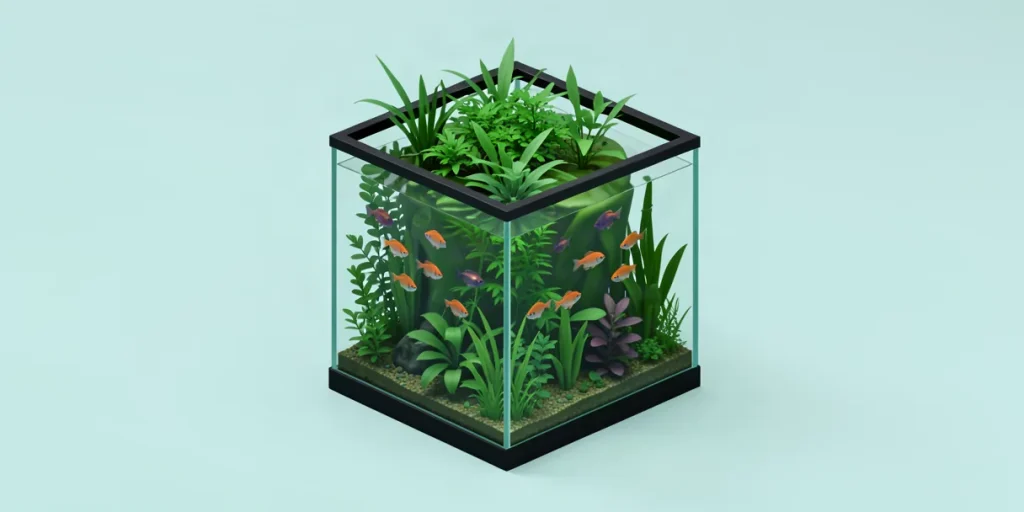
Why Aquarium Plants Are Important for Fish Health
Aquarium plants play a key role in maintaining a healthy environment for fish. They provide oxygen through photosynthesis, help stabilize the water’s chemical composition, and create natural hiding spots for your pets.
Without plants, ammonia and nitrate levels in the water can quickly rise, which is toxic to fish. According to research from the Marine Biology Institute of Saint Petersburg, having plants reduces nitrate concentration in the aquarium by 30–50% within a week with regular care.
Additionally, plants reduce stress in fish, which positively affects their immune system and lifespan — on average increasing it by 15–20% compared to aquariums without vegetation.
Types of Aquarium Plants and Their Role in the Ecosystem
Main Categories of Plants
- Floating plants: duckweed (Lemna minor), salvinia (Salvinia natans) — filter water and lower nitrate levels.
- Rhizome plants: Amazon sword (Echinodorus bleheri), cryptcoryne (Cryptocoryne wendtii) — improve oxygen balance and provide shelter.
- Stem plants: cabomba (Cabomba caroliniana), hygrophila (Hygrophila difformis) — fast-growing and absorb excess nutrients.
Comparison of Popular Species
| Species | Growth per Month (cm) | Lighting Requirements (lux) | Price for 10 pcs. (₽) | Optimal Temperature (°C) |
|---|---|---|---|---|
| Duckweed | 2-3 | 500-1500 | 300 | 18-28 |
| Amazon Sword | 4-6 | 1500-3000 | 700 | 22-28 |
| Cabomba | 5-7 | 2000-4000 | 450 | 20-26 |
| Cryptocoryne | 3-4 | 800-1500 | 500 | 22-28 |
How Plants Maintain the Aquarium Ecosystem Balance
Aquarium plants participate in the biological cycle: they absorb carbon dioxide and release oxygen through photosynthesis. This is a vital process that provides fish with oxygen.
Moreover, plant roots serve as a habitat for beneficial bacteria that break down harmful substances such as ammonia and nitrites. In planted aquariums, ammonia concentration usually does not exceed 0.02 mg/l, which is significantly lower than the maximum allowable level of 0.05 mg/l for most freshwater fish.
Plants’ absorption of excess nitrates prevents their accumulation, reducing the risk of algal blooms and improving water clarity.
Basic Rules for Caring for Aquarium Plants
Lighting
For most plants, optimal lighting ranges from 1500 to 3000 lux. For example, Aquael Leddy Smart 30 lamps provide 2500 lux and are suitable for Amazon swords and cryptocorynes.
Fertilization and Nutrients
Plants require micro- and macronutrients. Seachem Flourish fertilizers contain essential iron, potassium, and trace elements, recommended for weekly dosing at 5 ml per 100 liters of water.
Pruning and Transplanting
Regular trimming stimulates growth and prevents overcrowding. For example, cabomba should be trimmed every 10–14 days.
Temperature and Water Quality
The optimal temperature for most aquarium plants is 22–28 °C. It is important to maintain a stable pH between 6.5 and 7.5 and water hardness around 5–12 dGH.
Common Problems and Their Solutions
Yellow or Transparent Leaves
This is most often a sign of iron deficiency or insufficient light. It is recommended to increase lighting intensity or add iron-containing fertilizers such as Seachem Flourish Iron.
Algae Growth
Excess nitrates and phosphates stimulate algae growth. Effective control includes regular water changes (at least 20% weekly) and adding floating plants like duckweed or salvinia, which compete with algae for nutrients.
Root Rot
A common cause is overwatering the substrate and poor lighting. It is recommended to use quality substrate such as ADA’s Aqua Soil Amazonia and provide sufficient lighting for at least 10 hours a day.
Frequently Asked Questions
How often should water be changed in a planted aquarium?
Can artificial plants be used instead of live ones?
Which plants are suitable for beginner aquarists?
What lighting is optimal for aquarium plants?
Key Takeaways
- Aquarium plants reduce toxin levels in water by 30–50% and improve oxygen exchange.
- Optimal lighting is 1500–3000 lux, with water temperature between 22 and 28 °C.
- Regular fertilization with Seachem Flourish supports plant health.
- Attention to pruning and care conditions helps prevent common problems.
- Planted aquariums reduce fish stress and increase their lifespan by 15–20%.
Choosing and caring for aquarium plants properly is the key to a healthy and stable ecosystem where fish feel comfortable and live long. Investing in quality lighting, fertilizers, and substrate, along with following basic care rules, will help even beginner aquarists create a harmonious underwater world.