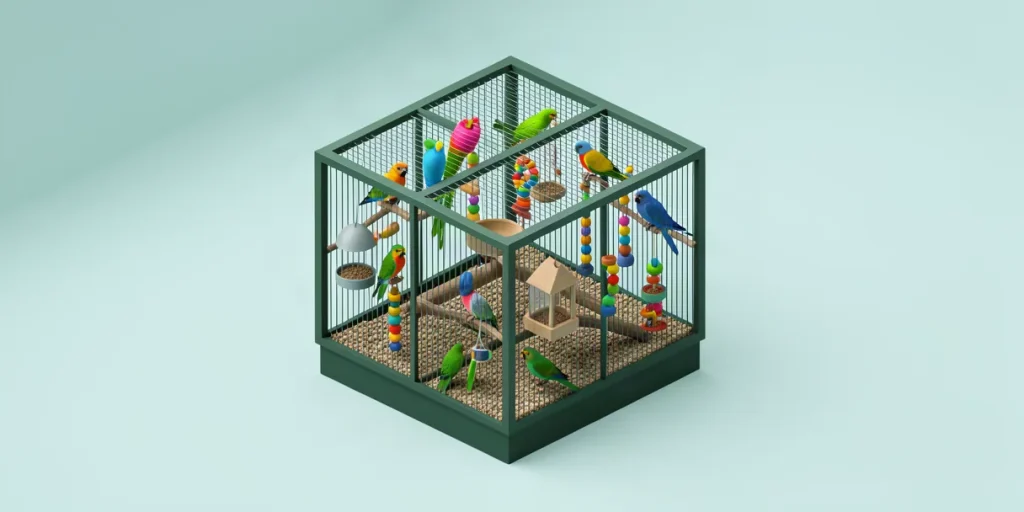
A pet bird’s health depends on more than one “universal” food or cage size: budgerigars, African grey parrots, canaries, and finches need different conditions. Below are practical guidelines for housing, nutrition, prevention, and recognizing warning signs. Check specific requirements against the species and the advice of an avian veterinarian: birds often hide signs of illness, so a noticeable decline may require urgent attention.
- Annually — a sensible guideline for a preventive checkup for a clinically healthy adult bird; the vet sets the schedule for young, elderly, and chronically ill pets.
- 30 days — a practical quarantine period for a new bird in a separate room, away from the resident flock.
- 10% of body weight — a reason to contact a vet promptly if weight loss is confirmed; even a smaller loss can be significant in a small bird.
- An uninterrupted night — most pet birds need a consistent, dark, quiet period for sleep; the exact duration should suit the species and the household routine.
Creating a Comfortable Habitat
The cage should allow the bird to spread its wings, move around freely, and fly between perches; it should not be the bird’s only place for activity. For species that fly a lot, cage length matters more than decorative height. Choose bar spacing that prevents the bird from getting its head through: wide gaps are dangerous for small species, while large birds need sturdy bars and secure locks. Don’t choose housing based on a single chart for “all parrots”: a budgerigar and a macaw differ in size and beak strength.
Place the cage in a living area where your pet can see people, but not in a busy passageway, a draft, or direct midday sun. The kitchen is a poor choice: overheated PTFE-based nonstick coatings can release fumes that are deadly to birds; smoke, aerosols, scented oils, and cleaning-product fumes are also hazardous. Don’t place the cage near a radiator or an open window. A thermometer and hygrometer can help you monitor conditions, but 20–25 °C and 40–60% humidity are only general guidelines, not standards for every species.
Use several stable perches of different diameters, made from safe, untreated wood. Identical smooth plastic perches increase the risk of strain on the feet; sandpaper covers can injure the soles. Inspect toys and feeders regularly: frayed rope, loops, rusty metal, and small parts are dangerous. Remove droppings and other mess daily, wash bowls and water dishes with hot water, and clean the cage on a regular schedule. Use disinfectant only as directed, first removing the bird from the room and then rinsing away any residue thoroughly.
Balanced Nutrition
Choose a diet based on the bird’s species, age, activity level, reproductive status, and health. For many parrots, a seed mix alone is too high in fat and nutritionally unbalanced; a gradual transition to a complete extruded diet may be appropriate, but change the menu slowly and monitor the bird’s weight. Food labeled “for exotic birds” is not necessarily suitable for every species. Canaries, finches, lorikeets, and large parrots have different needs, so ask a vet with avian expertise about the ingredients.
Many parrots’ diets include suitable vegetables, leafy greens, and small amounts of fruit. Wash produce thoroughly, remove spoiled leftovers, and don’t leave moist food in a warm place for long. Seeds and nuts are usually best offered as limited treats or rewards rather than as the main part of the diet. Clean drinking water should always be available. Give calcium, vitamin D3, and other supplements only when indicated: an excess of fat-soluble vitamins can also be dangerous. A UV lamp does not replace a properly chosen diet and must meet the species’ requirements; avoid using one without professional guidance.
Don’t offer your bird avocado, chocolate, caffeine, alcohol, very salty food, or moldy products. Remove pits and seeds from certain fruits, including apples. If a bird refuses a new food, don’t leave it hungry in the hope that it will “give in”: it may not recognize the unfamiliar food. Weigh your pet on gram scales at the same time each day, for example in the morning before feeding, and keep a record. A sudden change in weight is a reason to discuss the diet and the bird’s health with a vet.
Regular Health Checks
Arrange an initial checkup after acquiring a bird, then plan preventive visits roughly once a year. An avian veterinarian will assess weight and body condition, beak, feet, skin, feathers, and droppings, and may order tests if indicated. How often a bird needs checkups depends on its age, species, and medical history. Don’t give antiparasitic drugs or vitamins “just in case”: a product that is safe for one species and dose may harm another bird.
At home, watch for changes in your particular pet’s normal behavior. Keep track of appetite, water intake, vocalizations, breathing, activity, droppings, and weight. Warning signs include sitting on the bottom of the cage, fluffed-up feathers, closed eyes during the day, labored breathing, discharge from the nose or eyes, vomiting, blood, a sudden fall from a perch, and refusal to eat. Don’t leave a bird without help for long: breathing problems, injury, bleeding, or sudden weakness require urgent veterinary assessment.
If your bird’s condition changes, call the clinic before setting out and confirm that they see birds. Stay calm, transport your pet in a secure carrier with a nonslip floor, and protect it from cold and overheating. Don’t force water or medication into its beak: if swallowing is impaired, liquid can enter the airways. Photos of droppings, weight records, and a list of what the bird has eaten in the past 24 hours will help the vet, but they are no substitute for an examination.
Disease Prevention
Keep a new bird in quarantine for at least 30 days in a separate room, with its own bowls and equipment. Care for your resident pets first, then the newcomer; wash your hands after contact. Quarantine does not guarantee that a bird is free of infection, so discuss a checkup and any necessary tests with your vet before introducing it to the flock. Don’t bring a bird home from a market or show and put it straight in with your other birds, even if it seems active.
Wash feeders and water dishes daily, remove moist food leftovers, and change the cage lining before droppings build up. Choose a cleaning product suitable for use around birds, follow the stated concentration and contact time, and then ventilate the room. Don’t spray disinfectant near your pet. Regular cleaning reduces contamination but does not replace treatment for a diagnosed infection.
Maintain a predictable light schedule: put your bird to bed in a quiet, dim room, and don’t leave the lights on all night. The general rule of “10–12 hours of light” does not suit every species: photoperiod depends on species, season, and reproductive behavior. If you use a UVB lamp, follow guidance on distance, lifespan, and the manufacturer’s instructions; an ordinary light bulb does not necessarily provide the right spectrum. Don’t aim a lamp at the cage without giving the bird a way to move into the shade.
Physical Activity and Socialization
Safe flight and movement help maintain muscle tone and a healthy body weight. Arrange flight time in a closed room: shut windows and doors, turn off ceiling fans, and remove hot drinks, open flames, open containers of water, and other animals. Cover mirrors and large glass surfaces or mark them clearly so the bird won’t fly into an invisible barrier. Don’t take your pet outdoors without a secure carrier or a properly introduced harness.
Offer toys made from safe materials: paper to shred, wooden pieces of a suitable thickness, and food puzzles. Check them for loose loops, sharp edges, and parts that could come off; rotate a few items at a time to keep things interesting. Don’t leave a bird unsupervised with a toy it has started chewing into small, dangerous fragments. A mirror is no substitute for live interaction and can trigger compulsive behavior in some birds.
Interaction should be voluntary: short sessions that reward safe behavior are better than chasing and forcibly restraining a bird. Birds of the same species can differ in temperament and need for contact. Don’t get a second bird as an automatic “cure for loneliness”: first consider compatibility, quarantine, available space, and whether you can keep the animals separately. If birds are fighting, separate them and consult a behavior specialist.
The Psychological Needs of Exotic Birds
Birds need more than food and a clean cage: they also need opportunities to forage, chew, explore objects, rest, and choose how close to be to people. You can offer part of the daily portion in a puzzle feeder or hide it in clean paper, if the bird already knows how to use this method safely. Introduce new items gradually: an unfamiliar toy may frighten your pet at first, so put it near the cage rather than forcing the bird to interact with it.
Provide a sheltered place to rest and sleep without turning the cage into a cramped, poorly ventilated hideaway. A steady routine, a calm voice, and avoiding sudden movements can help reduce stress. Don’t cover the cage with thick fabric if it restricts airflow or makes the bird anxious. If persistent screaming, feather plucking, or aggression occurs, first ask a vet to rule out pain or illness, then review sleep, diet, lighting, activity, and interactions with people. Punishment and shouting usually make the problem worse.
Care Considerations for Different Bird Species
The word “exotic” covers birds with very different needs. Budgerigars need daily activity and a varied environment; African greys particularly need stimulation and predictable interaction; canaries and finches differ in diet and social organization. Lorikeets are adapted to nectar-based foods, not the usual diet of a seed-eating parrot. So don’t transfer feeding and lighting recommendations from one species to another.
Consider a bird’s size and beak strength when choosing a cage, latches, perches, and toys. Sturdy equipment is especially important for large parrots, while gaps between bars that are too wide are dangerous for small birds. Temperature and humidity preferences also depend on species, age, and health. Measure conditions near the bird’s living area, but don’t try to create “tropical” conditions without expert advice: dampness and poor ventilation can lead to hygiene problems.
Don’t trim the beak or claws yourself: an improper trim can cause pain, bleeding, and tissue damage. Changes in beak shape, scaling, limping, or sores on the soles need veterinary assessment. Before buying a bird, find out about the species’ expected lifespan, noise levels, diet, and veterinary care. A large parrot, for example, may live for decades, so choosing one can affect a family’s routine for the long term.
What It Means to Be a Responsible Exotic Bird Owner
Before buying a bird, make sure you can provide a suitable cage, a complete diet, daily enrichment, and care from a vet who sees birds. Check the pet’s origin and the documents required to legally own that particular species. Some species are subject to international trade restrictions and requirements to verify their origin; whether the rules apply depends on the species, country, and circumstances of purchase. Don’t buy a bird if the seller cannot clearly explain its origin and housing history.
Plan a budget not only for food and toys but also for a carrier, annual checkups, and possible emergency care. Find the nearest clinic before a problem arises and note its opening hours. Before a vacation, arrange in advance for someone who knows how to handle a bird safely, follow its routine, and recognize signs of deterioration. Leaving a pet with an unprepared sitter can lead to escape, injury, or feeding mistakes.
A responsible owner observes their pet, doesn’t use medication without veterinary instructions, and seeks help when behavior or health changes. Regular cleaning, a safe room setup, and respect for the bird’s need for rest are also important. The more closely care is tailored to the species and the individual animal’s condition, the easier it is to spot a problem before it becomes critical.
Frequently Asked Questions
How do I choose a cage?
Choose one to suit the bird’s species and size: your pet should be able to spread its wings freely and move between perches, and the gaps between bars should not let it get its head through. Cage length matters for flying species; also consider the strength of the latches and how easy the cage is to clean every day.
How often should I take my bird to the vet?
A preventive checkup is usually scheduled about once a year for a healthy adult bird. After purchase, in cases of chronic illness, in old age, or if the bird’s condition changes, an avian veterinarian should set the schedule.
What should I do if my bird looks sick?
If your bird has labored breathing, is bleeding or injured, is suddenly very weak, or refuses food, contact a veterinary clinic immediately. Don’t give human medication or force water into its beak. Ask how to transport the bird and bring records of its weight, appetite, and any changes in its droppings.
How can I provide physical activity?
Offer safe flight time in a closed room, perches of different diameters, and food puzzles. Before the bird flies, shut windows and doors, turn off the fan, and remove hot liquids and other pets.
What diet is suitable for an exotic bird?
The menu depends on the species: the diets of a seed-eating canary, a parrot, and a nectar-eating lorikeet are not interchangeable. Discuss complete feed, vegetables, and suitable treats with a vet; use vitamin and mineral supplements only when indicated.
Should I isolate a new bird?
Yes. A practical guideline is at least 30 days in a separate room, with separate equipment and good hygiene. Before introducing the bird to the flock, discuss a checkup and tests with your vet.
Comparing Basic Needs
| Task | Practical guideline | What to consider |
|---|---|---|
| Preventive checkup | About 1 time per year for a healthy adult bird | A visit may be needed sooner in case of illness, in old age, or after acquisition. |
| Quarantining a newcomer | At least 30 days separately | Separate room, bowls, and equipment; agree on the duration and tests with a vet. |
| Monitoring weight | Regular weighing at the same time | A loss of about 10% of body weight is a reason to contact the clinic; smaller changes matter in small birds. |
| Room climate | 20–25 °C and 40–60% humidity — a general, not universal, guideline | Avoid drafts, overheating, sudden changes, and poor ventilation. |
| Diet | Based on species and health | Seed mixes, pellets, and supplements are not interchangeable without assessing their ingredients and the bird’s needs. |
Key Takeaways
- Choose the cage, diet, and climate for the particular species, not for the general category of “exotic bird.”
- For a healthy adult bird, a preventive checkup about once a year is a useful guideline; quarantine a new bird for at least 30 days.
- Weighing your bird on gram scales helps you spot changes before they become obvious in its behavior.
- Safe flight, food puzzles, consistent sleep, and voluntary interaction support physical and psychological well-being.
- Labored breathing, injury, bleeding, or suddenly refusing food requires urgent advice from an avian veterinarian.