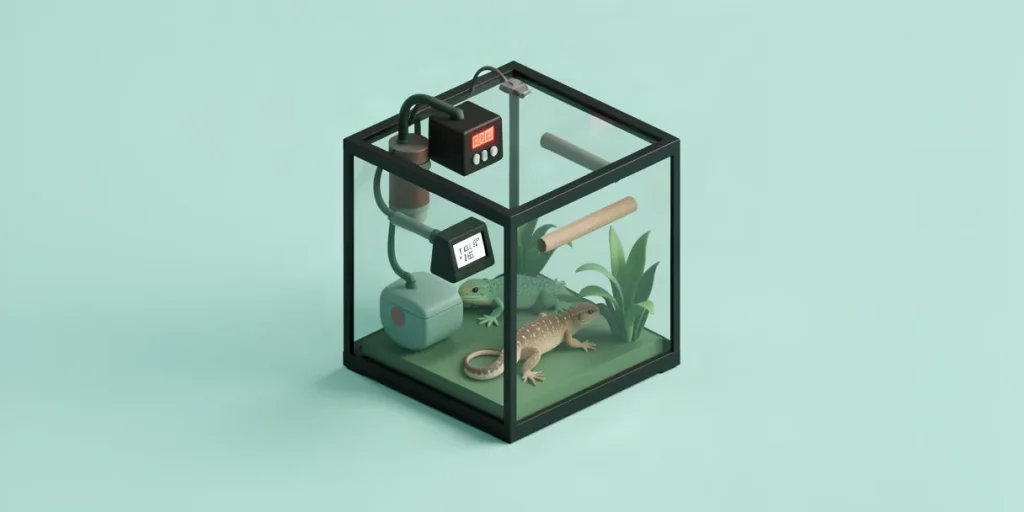
Introduction: Why Microclimate Matters Above All
Reptiles are cold-blooded animals that rely entirely on their environment to sustain life. Incorrect temperature and humidity in a terrarium can cause stress, illness, and even death. In 2026, research confirms that managing the microclimate is fundamental to preventing diseases in snakes, lizards, and turtles. Owners must know not only the ideal conditions but also how to maintain them with the right equipment and monitoring.
Optimal Temperature Ranges for Different Species
Temperature affects metabolism, digestion, and immunity in reptiles. Different species require strictly defined temperature ranges:
Temperature Zones
- Tropical lizards (e.g., green iguana) — 28–32°C during the day, 24–26°C at night
- Temperate-zone snakes (e.g., corn snake) — ideally 26–30°C, with a basking spot up to 33°C
- Desert reptiles (e.g., leopard gecko) — daytime temperature up to 35°C, nighttime no lower than 20°C
Deviating from these ranges leads to reduced appetite, slowed metabolism, and weakened immunity. For example, prolonged exposure below 20°C causes respiratory infections in iguanas.
Technical Solutions for Temperature Maintenance
Modern heaters, such as ReptiHeat heating mats or Exo Terra infrared lamps, allow precise temperature settings. The average cost for a setup suitable for a 60×40 cm terrarium is 3500–4500 ₽. For monitoring, a digital thermometer with a hygrometer—like the TFA Dostmann 30.3047 model priced around 1200 ₽—is essential.
| Species | Daytime Temp, °C | Nighttime Temp, °C | Basking Spot, °C |
|---|---|---|---|
| Green Iguana | 28–32 | 24–26 | 35 |
| Corn Snake | 26–30 | 22–24 | 33 |
| Leopard Gecko | 30–35 | 20–22 | 38 |
Humidity and Its Role in Reptile Health
Air humidity affects skin condition, respiratory health, and shedding processes. Each reptile species has its own optimal humidity level:
- Tropical species — 60–80%
- Desert species — 20–40%
- Central Asian snakes — 40–60%
Low humidity causes dry skin, difficulty shedding, and bacterial infections. Excessive humidity promotes fungal diseases and respiratory issues.
Humidity Control and Moisturizing Methods
Automatic humidifiers like the Exo Terra Monsoon (around 7000 ₽) and simple misting devices like MistKing are used to maintain humidity. TFA Dostmann hygrometers offer moisture level accuracy within 5%.
Microclimate and Common Diseases
One of the main causes of illness in pet reptiles is improper microclimate management. Common conditions include:
- Respiratory infections — caused by chilling and high humidity
- Digestive problems — linked to incorrect temperature
- Skin diseases and shedding difficulties — due to improper humidity levels
For example, snakes kept below 22°C have a significantly higher risk of respiratory bacterial infections. Desert species exposed to humidity over 80% may develop skin fungus.
Signs and Prevention
Key symptoms include lethargy, refusal to eat, vomiting, and skin redness. Prevention involves monitoring the microclimate and regular cleaning of the terrarium.
Monitoring and Maintaining the Microclimate: Best Practices
For effective temperature and humidity control, comprehensive monitoring systems are recommended, such as the ReptiPro 2026 with smartphone connectivity. The average price is 9000 ₽.
Installation and Setup Tips
- Place thermometers in both warm and cool zones of the terrarium
- Use timers to switch heating devices on and off
- Regularly check hygrometers and humidifiers
- Implement distinct day and night lighting and temperature cycles
Frequently Asked Questions
How often should temperature and humidity be measured in the terrarium?
Can ordinary household humidifiers be used?
How can I tell if my reptile is stressed due to the microclimate?
Is it possible to keep reptiles without UV lamps?
Key Takeaways
- Temperature must strictly match the species’ needs, ranging between 20–35°C.
- Air humidity is crucial for skin and respiratory health, with optimal levels from 20% to 80%.
- Improper microclimate is the main cause of diseases and stress in pet reptiles.
- Using specialized equipment and regular monitoring reduces the risk of illness.
- UV exposure is a mandatory part of care to maintain metabolic processes.
Maintaining optimal temperature and humidity in a terrarium is the cornerstone of reptile health and longevity. In 2026, owners have access to a wide range of equipment to create a comfortable microclimate. Careful attention and control will help avoid common problems and ensure a long, active life for your pet.
Sources
- umvet.by — «How to Keep Reptiles at Home?»
- avzvet.ru — «Most Common Snake Diseases: How to Identify and Treat»
- nashi-kroliki.com — «Reptile Care: Important Questions — Our Rabbits»
- glavnoehvost.by — «Reptile Stress: Causes, Consequences, Prevention»