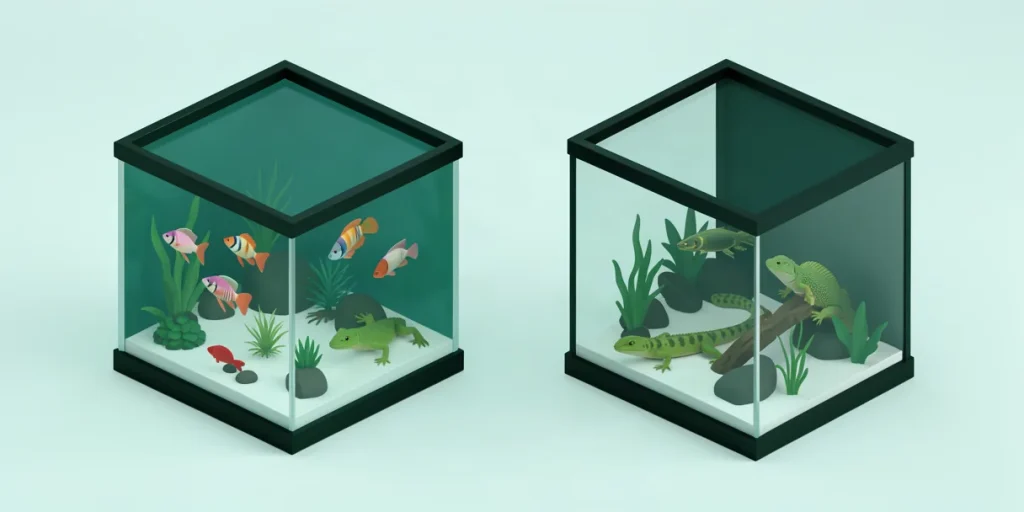
“Exotic pet” is not a single category with one set of care rules. A bearded dragon, budgerigar, giant African land snail and pygmy hedgehog differ in their temperature needs, diet, behavior and access to veterinary care. Before buying one, find out its exact scientific name, adult size and lifespan, equipment requirements and any legal restrictions. Don’t use pet-store conditions as a guide: a temporary display enclosure doesn’t show what an animal needs at home.
The safe order of steps is simple: first find a veterinarian who actually treats that species, then prepare and check its housing, and only after that bring the pet home. Below are practical guidelines for different groups of animals. Temperature and humidity figures are examples, not universal standards: always check the exact requirements for the species and age in question.
Understanding the Natural Habitat
In the wild, an animal chooses a place with suitable warmth, humidity, light and shelter. In captivity, the owner should offer it choices rather than maintain one average reading throughout the enclosure. For example, bearded dragons need a temperature gradient: the basking area is usually around 38–42 °C, while the cool side is about 24–29 °C. Nighttime temperatures depend on the room and species-specific recommendations. A tropical arboreal gecko has different needs; you can’t transfer one terrarium’s settings to another.
Measure conditions with instruments, not your hand. Place a digital thermometer near the basking area and another on the cool side, and position a hygrometer in an area the animal uses. An infrared thermometer is useful for checking surface temperatures. Humidity also varies by species and by area of the terrarium: generally dry air can coexist with a humid shedding hide. Record readings in the morning and evening for the first 1–2 weeks after setting everything up.
UVB radiation is essential for many diurnal reptiles to metabolize calcium, but glass and most plastic lids significantly block ultraviolet light. Choose a lamp based on the species, the distance from the animal and the manufacturer’s instructions; an Arcadia or Zoo Med lamp does not guarantee the right dose by itself. Use a timer to maintain a consistent photoperiod, and mark the installation and replacement dates on a calendar. Check veterinary and specialist guidance to find out whether a nocturnal species needs a UVB lamp and what exposure level is safe.
Set up the enclosure to support natural behaviors such as climbing, burrowing, swimming, hiding or foraging. A tortoise and an arboreal snake cannot have the same substrate and layout. Choose materials without sharp edges or resin and avoid particles that are easy to swallow. Discuss questionable substrates with a veterinarian, since some materials can cause an intestinal blockage if ingested.
- 38–42 °C guide temperature for a bearded dragon’s basking area; check the species and age
- 24–29 °C example temperature for the cool side of a bearded dragon’s terrarium
- 2 measuring points minimum for monitoring the temperature gradient: at the basking area and on the cool side
Feeding Exotic Animals Properly
Diet depends on the species, age, season and physiological condition. You can’t create a generic “reptile diet”: a plant-eating iguana doesn’t need insects as the basis of its diet, while an insect-eating gecko can’t be fed a bowl of leafy greens instead of feeder insects. Seeds are often too high in calories to be a parrot’s only food. A complete commercial food, such as Harrison’s pellets or another diet, should be chosen according to the species and veterinary advice, not the brightness of the packaging.
Before buying a pet, write down a specific menu and make sure you can obtain the food regularly. Insect-eating reptiles need appropriately sized crickets, roaches or other feeder insects, as well as proper gut-loading before feeding and calcium supplements according to the species-specific plan. Insects from the garden may have been exposed to pesticides, while wild-caught insects may carry parasites. Don’t offer live prey noticeably wider than the animal’s head unless specialist guidance says otherwise.
Choose a varied selection of leafy greens and vegetables for herbivorous reptiles, taking the calcium-to-phosphorus ratio into account; fruit shouldn’t automatically become the main part of the diet. Rodents need a species-appropriate diet: guinea pigs need dietary vitamin C, and rabbits need constant access to hay. However, rabbits aren’t considered exotic in terms of needing a diet unlike that of carnivorous domestic pets. Don’t apply feeding advice for one small mammal to another.
Weigh out a small portion and record appetite, leftovers and body weight. Scales with 1 g increments are useful for small birds and rodents; larger animals need scales with an appropriate capacity. Don’t add vitamin complexes or calcium “just in case”: excess supplements can also be dangerous. When changing food, make the transition gradually unless a veterinarian has prescribed a therapeutic diet or an urgent switch.
Fresh water should always be available unless the species’ biology calls for a special watering method. Wash bowls daily with hot water and a pet-safe detergent, then rinse thoroughly. If a pet stops eating, don’t try to force-feed it without veterinary instructions: possible causes include being too cold, shedding, pregnancy, stress or illness, and each calls for a different approach.
Creating a Comfortable Living Environment
Choose the size and setup of the enclosure for the animal’s adult size, not its current age. Make sure it can turn around, spread its wings, stretch, climb or swim as appropriate for its species. There is no universal “minimum terrarium for exotic pets”: before buying, check the recommendations of a specialist veterinarian or recognized organization for that particular species. A plastic transport container is not a substitute for permanent housing.
Reptiles need reliable ventilation, a temperature gradient, hides in both warm and cool areas, and a lid the animal can’t open. Connect the heat source to a thermostat with the sensor in the right location to reduce the risk of overheating and burns. Don’t use a heat rock in place of a controlled heat source. Keep wires and lamps out of reach so the animal can’t bite them or get them wet.
Design an aquarium around the adult size and needs of the species. Choose a filter according to the tank volume and bioload, but remember that a filter alone doesn’t make the water safe. Cycle the tank before adding fish, and use tests to check ammonia, nitrite and nitrate; ammonia and nitrite should remain at zero in a mature system. Don’t replace all the water without a reason: sudden changes in temperature and water chemistry can harm fish. If possible, quarantine new fish separately in a quarantine tank.
Hides must be stable and safe: don’t position a heavy rock where it could collapse if the animal burrows. Birds need suitable perches of different diameters and a safe place to fly; ground-dwelling species need a dry hide and appropriate substrate. Don’t use scented aerosols, smoke or cleaning-product fumes near birds: their respiratory systems are especially sensitive to air pollutants.
| Parameter | Practical guideline | How to check |
|---|---|---|
| Bearded dragon temperature | Basking area around 38–42 °C; cool area around 24–29 °C | Two digital thermometers and an infrared surface-temperature reading |
| Water in a mature aquarium | Ammonia 0 mg/L, nitrite 0 mg/L | Water tests; assess nitrate based on the species and system |
| Photoperiod | Set according to the species and its natural cycle | Timer and lamp manufacturer’s schedule; don’t estimate UVB by eye |
Regular Veterinary Checkups
Find a veterinarian before acquiring a pet. Ask which species they personally treat, whether they have diagnostic equipment and where they refer complex cases. The claim “we treat all animals” doesn’t prove experience with reptiles, birds or amphibians. In Russia, you can check a clinic’s profile and reviews, but the vet’s specific experience and availability for emergencies matter more when choosing.
The interval between preventive visits depends on the species, age and health. Healthy adult animals are often scheduled for a checkup at least once a year, while a veterinarian may recommend more frequent visits for young, elderly or chronically ill pets. There is no single vaccination schedule for all exotic animals: the vaccines needed and whether tests are required depend on the species, region and risks. Don’t vaccinate according to a dog or cat schedule unless a specialist advises it.
Before the appointment, prepare records of temperature and humidity, photos of the enclosure, a list of foods and supplements, dates of behavioral changes and body weight. Transport birds and small mammals in a secure, ventilated carrier. Keep reptiles at an appropriate temperature during the journey, without placing them directly on a hot pack. Call the clinic ahead of time to ask about transport and testing requirements.
Exotic animals may hide signs of illness. Contact a veterinarian urgently if your pet is struggling to breathe, has lost its balance, has suffered a burn, can’t lay eggs or pass stool, is bleeding or has become suddenly weak. In reptiles, assess refusal to eat alongside temperature and season; a noticeable drop in activity in a bird may be reason not to wait several days. Don’t give human medication or delay care in favor of home treatment.
Species-Specific Care Requirements
Care should suit the animal’s biology, not the owner’s convenience. Snakes don’t need to be bathed on a schedule unless there’s a specific reason; provide a suitable shedding hide and clean water. If shedding happens in pieces, first check humidity and whether a hide is available, but don’t pull stuck skin off by force—especially around the eyes or tip of the tail. See a veterinarian if incomplete shedding keeps happening.
Regularly check birds and rodents for the condition of their beaks, claws, teeth and feathers. Don’t let the cage become a reason to trim a beak or teeth yourself: improper trimming can cause injury, bleeding and pain. Avoid using cookware with damaged nonstick coatings around birds, and don’t overheat nonstick cookware: the fumes can be fatal. Discuss diet, environmental enrichment and access to safe toys with a veterinarian experienced in birds.
Install a UV lamp at the distance specified by the manufacturer, taking any mesh and reflector into account. Arcadia and Zoo Med models vary in their specifications; the brand name is no substitute for measurement and following the instructions. Use a timer to switch the lamp on, and count its service life from the installation date. Don’t look directly at a UV source or let the animal come into contact with it.
Clean in a way that prevents detergent residue from getting into food, water or substrate. Remove soiled substrate as needed, wash bowls regularly and maintain the aquarium filter according to the instructions without destroying beneficial bacteria by replacing all the filter media. Choose a disinfectant intended for the purpose and rinse it off thoroughly; a veterinarian should provide the cleaning protocol for an infectious disease.
Interaction and Socialization
Not every exotic animal needs frequent contact with people. For many reptiles, a predictable routine and the ability to hide matter more than petting. Parrots need safe daily interaction and activities, and hand-taming should be introduced gradually. A guinea pig may get used to being handled, but being picked up suddenly from above often feels like an attack. Learn the signs of fear for the species before trying to handle your pet.
Start with short, calm sessions at the same time each day, and stop if the animal tries to escape, freezes, hisses, bites or breathes heavily. Don’t pull a pet out of its hide for interaction or use punishment. Positive reinforcement works well for training birds and some mammals: offer a small reward when the animal voluntarily approaches or enters its carrier. For a reptile, calmly stepping onto a scale may be a more useful goal than performing tricks.
Introduce pets to one another only under supervision and with physical separation. A predator can injure an animal it seems familiar with; contact between a dog or cat and a bird, rodent or reptile cannot be considered safe just because there haven’t been any incidents before. Quarantine new animals separately, and don’t share equipment between pets without disinfecting it.
Potential Problems and How to Address Them
Poor conditions often show up before an obvious illness. Incorrect heating and insufficient UVB can contribute to calcium metabolism disorders in reptiles; ammonia and nitrite in aquarium water are dangerous to fish even when the water looks clear; and a monotonous diet can lead to deficiencies in birds. If a problem arises, measure conditions with instruments, check the equipment and contact a specialist veterinarian. Don’t try to diagnose and treat your pet based on a photo or advice from a general chat group.
Keep a simple log of the date, weight, appetite, droppings, shedding or egg-laying, temperature and humidity. For aquariums, add water-test results. A log can help you spot gradual weight loss or unstable heating sooner than a single observation. If you have several pets, keep separate records and don’t move feeders, water or substrate between quarantine groups.
Save the clinic’s phone number and directions in advance, and find out whether it is open at night and treats your species. A first-aid kit may include clean gauze, disposable gloves and a carrier, but there is no universal first-aid protocol for exotic animals. If your pet is injured, don’t apply alcohol, essential oils or ointments without veterinary advice; if it has a burn, don’t cool it with ice. Call the clinic and follow its instructions until your pet is seen.
Assess reduced appetite in light of the species and circumstances, but sudden refusal to eat, weight loss, unusual droppings, discharge, a tilted head or difficulty breathing warrant a consultation. Don’t wait for several symptoms to appear at once: a small animal can deteriorate quickly. The veterinarian will determine whether tests, X-rays, a fecal examination or changes to the animal’s environment are needed.
Legal Considerations for Keeping Exotic Animals
Before buying, check whether keeping the specific species is legal and what documents prove its lawful origin. In Russia, relevant legislation includes Federal Law No. 498-FZ “On the Responsible Treatment of Animals” of December 27, 2018; Federal Law No. 52-FZ “On Wildlife” of April 24, 1995; and Government Decree No. 795 of June 22, 2019, which approved the list of animals prohibited from being kept. Check the current versions of the rules and whether they apply to the specific species: the label “exotic” does not determine an animal’s legal status by itself.
For internationally regulated species, check the requirements of the CITES Convention and the documents covering the animal’s origin, transport and import. The fact that an animal is for sale doesn’t prove its origin is lawful. Ask the seller for documents and a receipt, check the species’ scientific name, and confirm transport rules and regional restrictions. Protected and dangerous species may be subject to additional requirements; don’t rely on a seller’s verbal promise that “no permit is needed.”
Owners are responsible for the safety of people and other animals, proper living conditions and preventing escapes. Before buying, also find out who will care for your pet when you’re away and whether a clinic can see it in an emergency. If the rules change, rely on official legal texts and guidance from the competent authorities, not publications from previous years. If in doubt, check requirements with your regional veterinary service or a lawyer.
Frequently Asked Questions
Which exotic animals can be kept at home?
How often should I take my pet to the vet?
What should I do if my pet won’t eat?
How should I set up a reptile terrarium?
Can I keep an exotic pet with a cat or dog?
Key Takeaways
- Before buying, identify the exact species, check legal restrictions under Federal Law No. 498-FZ and Government Decree No. 795, and find a veterinarian who treats that animal.
- Prepare the enclosure first and check it with instruments: a bearded dragon, for example, needs a temperature gradient, while a mature aquarium needs zero ammonia and nitrite readings.
- Choose food, supplements, lighting and cleaning methods according to the species’ biology; don’t use human medication or one-size-fits-all protocols.
- Record weight, appetite and environmental conditions, and contact a specialist veterinarian promptly if your pet’s condition worsens suddenly.
Sources
Federal Law No. 498-FZ “On the Responsible Treatment of Animals” of December 27, 2018; Federal Law No. 52-FZ “On Wildlife” of April 24, 1995; Government Decree No. 795 of June 22, 2019; materials from the CITES Convention; veterinary guidance from the Association of Reptile and Amphibian Veterinarians (ARAV), Association of Avian Veterinarians (AAV) and Association of Exotic Mammal Veterinarians (AEMV); equipment instructions from Arcadia and Zoo Med.