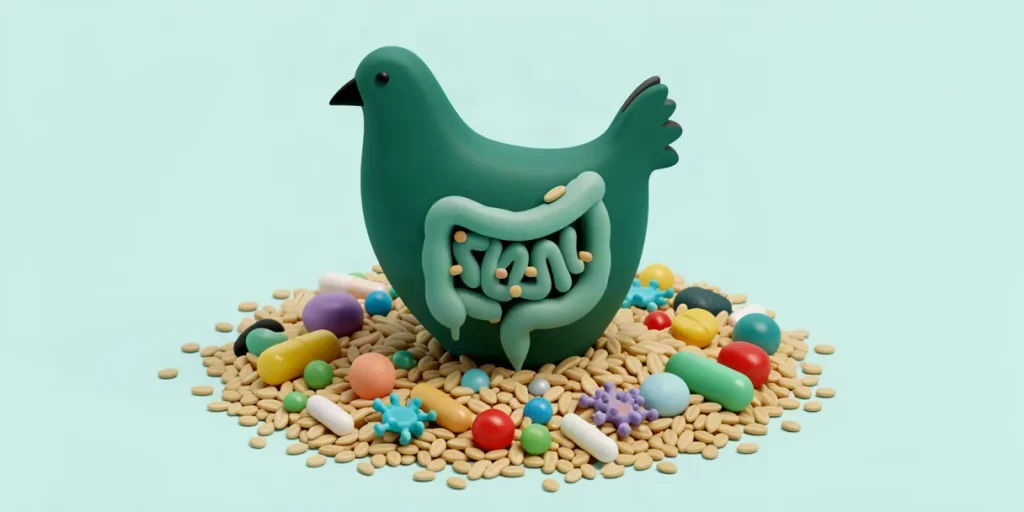
How Does Feed Quality Affect Digestion in Domestic Birds?
Feed quality directly determines the efficiency of digestion in domestic birds through the presence of balanced nutrients and biologically active components. Birds have a short digestive tract where digestion processes occur quickly, so the feed must be easily digestible and rich in essential enzymes.
For example, feeds with high protein content (at least 18-22% for laying hens) promote increased enzyme production and improved nutrient absorption. The inclusion of probiotics, such as Bacillus subtilis, stimulates intestinal microflora, which helps better food breakdown and reduces the risk of dyspepsia.
Main Components That Improve Digestion
- Animal-derived proteins (fish meal, meat and bone meal)
- Fiber in the range of 3-5% to normalize intestinal motility
- Probiotics and prebiotics to support microflora
- Mineral supplements, especially calcium and phosphorus
- Enzyme preparations (amylase, protease)
| Protein Source | Digestibility, % | Average Price per kg, ₽ |
|---|---|---|
| Fish Meal | 85 | 150 |
| Soya (meal) | 75 | 90 |
| Meat and Bone Meal | 80 | 120 |
- 18-22% optimal protein level in feed for laying hens
- 3-5% recommended fiber content
- 150 ₽/kg average price of fish meal on the Russian market (2026)
Does Feed Quality Affect Birds’ Immunity and How?
Feeds rich in vitamins, trace elements, and probiotics significantly strengthen the immune system of domestic birds, reducing disease incidence and improving vaccination effectiveness. For instance, supplementing vitamin A and zinc enhances the mucosal barrier function, while probiotics support local gut immunity.
According to 2026 research data, birds fed with feed containing Bacillus subtilis probiotics showed 30% higher survival rates after vaccination against infectious diseases.
Key Immunomodulators in Feeds
- Vitamins A and E
- Minerals: zinc, selenium
- Probiotics (Bacillus subtilis, Lactobacillus spp.)
- Omega-3 fatty acids
| Bird Group | Survival Rate, % | Probiotic Use |
|---|---|---|
| Control (no probiotics) | 70 | No |
| With Probiotics | 91 | Yes |
- 30% increase in survival with probiotic feeding
- 50-80 ₽/kg cost of premixes with vitamins and minerals
Which Types of Feed Are Best for Different Domestic Bird Species?
Feed quality and composition should consider the biological characteristics of each bird species. For laying hens, a balance of calcium and protein is crucial; for turkeys, a high level of energy and amino acids; for ducks, elevated fat content and B vitamins.
For example, in 2026, popular ready-made compound feeds on the Russian market include «Ptitsevod-Expert» and «AgroKorm Premium,» tailored for different breeds and growth stages, priced from 45 to 70 ₽ per kg.
Feed Recommendations for Main Bird Species
- Laying Hens: compound feeds with 18-20% protein and 3.5% calcium
- Turkeys: feeds with 22-24% protein and amino acid additives
- Ducks: high-energy feeds with 5-7% fat
- Geese: compound feeds with increased fiber and vitamins
| Product | Usage Purpose | Protein, % | Price, ₽/kg |
|---|---|---|---|
| Ptitsevod-Expert | Laying Hens | 19 | 48 |
| AgroKorm Premium | Turkeys | 23 | 65 |
| Utkyn Dom | Ducks | 20 | 55 |
- 45-70 ₽/kg price range for bird feeds
- 22-24% protein content in turkey feeds
How to Determine Feed Quality Before Purchase?
Determining feed quality requires analyzing ingredient composition, ingredient origin, and certification. In 2026, the mandatory standard in Russia is GOST for compound feeds, which regulates minimum protein, vitamin, and mineral contents.
High-quality feed packaging should display a full ingredient breakdown, production date, expiration date, and manufacturer information. It is also important to ensure the absence of artificial colorants and preservatives, which negatively affect digestion and immunity.
Criteria for Assessing Feed Quality
- Compliance with GOST 32517-2013 (compound feeds for birds)
- Percentage content of main nutrients (protein, fat, fiber)
- Presence of probiotics and vitamins
- Absence of chemical additives and allergens
- Production date no older than 3 months
What Digestive and Immune Problems Arise from Low-Quality Feeds?
Low-quality feeds lacking sufficient proteins, vitamins, and minerals, and containing toxins and anti-nutritional factors, lead to impaired digestion, reduced nutrient absorption, and weakened immune protection.
This manifests as dyspepsia, diarrhea, decreased egg production, and heightened susceptibility to infections. The average duration of illness under such conditions can be 5-10 days, significantly reducing bird productivity.
Typical Symptoms and Consequences
- Diarrhea and decreased appetite
- Weight loss and productivity decline
- Increased mortality during epidemics
- Worsening quality of eggs and meat
- 5-10 days average duration of digestive diseases from poor feed
- Up to 30% productivity decrease under poor feeding conditions
Frequently Asked Questions
How often should the type of feed for domestic birds be changed?
Is it possible to feed birds only natural products without compound feeds?
Which supplements are most effective for supporting bird immunity?
How to check for probiotics in feed?
Key Takeaways
- Feeds with 18-22% protein and probiotics improve digestion in domestic birds.
- Vitamins A, E and minerals (zinc, selenium) are critical for strong immunity.
- Feed choice should consider bird species and development stage.
- Compliance with GOST and composition verification ensure feed quality.
- Low-quality feeds cause digestive disorders and reduce productivity by up to 30%.
In conclusion, feed quality is a key factor affecting the health and immunity of domestic birds. Balanced nutrition that takes into account the physiological traits of birds, ensuring essential nutrients and biologically active additives, enhances food digestibility, strengthens immune defenses, and minimizes disease risk. For bird owners in 2026, it is important to rely on trusted products with proper certifications and composition to ensure optimal productivity and well-being of their pets.
Sources
- scienceforum.ru — “Features of Digestive Physiology of Domestic Birds (Literature Review) — Student Scientific Forum”
- fruitinfo.biz — “Effective Vaccination of Domestic Birds: Laboratory Tests Confirm Immunity — news fruitinfo.biz”
- fishretail.ru — “Effective Vaccination of Domestic Birds: Laboratory Tests Confirm Immunity — news fishretail.ru”
- drinkinfo.ru — “Effective Vaccination of Domestic Birds: Laboratory Tests Confirm Immunity — news drinkinfo.ru”
- Sport Life — “Benefits of Sauerkraut: Impact on Digestion, Immunity, and Weight”