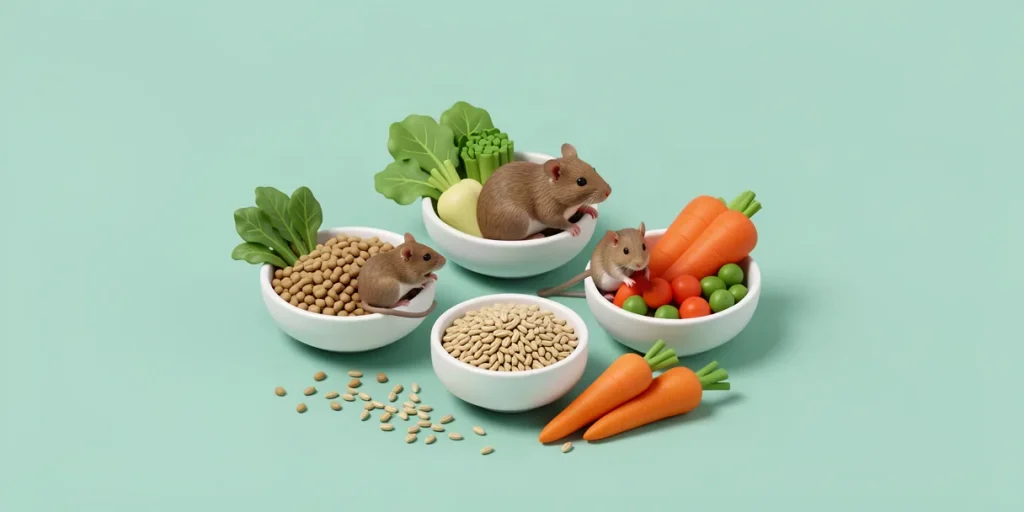
Pet rodents require a balanced diet combining commercial feed, fresh vegetables and fruits, and grains to ensure their health and activity. The main goal is to provide the right balance of vitamins, minerals, and fiber to prevent deficiencies and meet the natural needs of these pets.
What Components Should Be Included in the Diet of Pet Rodents?
The foundation of pet rodents’ nutrition consists of quality commercial feeds that supply a basic set of vitamins and minerals. Additionally, it is important to include fresh vegetables and fruits, as well as grains and porridges, especially for rats.
Key Dietary Components
- Commercial feeds: balanced mixes from brands like “Beethoven” or “MasterZoo,” priced from 250 to 600 rubles per kilogram.
- Fresh vegetables and fruits: carrots, zucchini, apples, pears — sources of vitamins and fiber.
- Grains and porridges: wheat, oats, barley, millet, either soaked or cooked as porridge, especially for pet rats.
| Component | Function | Recommended Amount | Example Product |
|---|---|---|---|
| Commercial feeds | Vitamins, minerals, proteins | 60-70% of daily diet | “Beethoven” pellets, 350 ₽/kg |
| Fresh vegetables and fruits | Fiber, vitamins | 10-15% of diet | Carrots, apples |
| Grains and porridges | Carbohydrates, energy | 15-20% of diet (for rats) | Oats, millet porridge |
Why Is Fiber Important and How to Provide It?
Fiber promotes proper digestive function in rodents and helps prevent obesity. The primary sources of fiber are hay, fresh vegetables, and coarse feed.
Fiber Sources for Rodents
- Alfalfa and timothy hay — essential for guinea pigs and rabbits.
- Fresh vegetables high in fiber: cabbage, broccoli, cucumbers.
- Dry feeds enriched with bran and flax seeds.
Regular fiber intake supports a healthy gut microbiome and prevents constipation, which is especially critical for rodents with sensitive digestion.
- 70% — portion of commercial feed in a balanced diet
- 15% — recommended amount of fresh vegetables and fruits
- 20% — portion of grains and porridges for pet rats
How to Properly Introduce Grains and Porridges into a Rat’s Diet?
Grains and porridges provide energy for pet rats, but it’s important to observe correct proportions and preparation methods.
Feeding Recommendations for Grains
- Use a mix of wheat, oats, barley, millet, and rye.
- Soak or scald the grains the day before to improve digestion.
- Avoid overfeeding to prevent obesity and digestive issues.
Rats prefer porridges made from these grains because they are easier to digest and help maintain the pet’s activity levels.
Which Vitamins and Minerals Are Especially Important for Pet Rodents?
B vitamins, vitamin C, calcium, and vitamin D play key roles in rodent health. Guinea pigs require regular vitamin C intake since they cannot synthesize it themselves.
Main Vitamin Needs
- Vitamin C: fresh vegetables and specialized supplements, such as drops from “VetClinic,” costing about 500 ₽ per package.
- Vitamin D: synthesized under ultraviolet light, so rodents need natural or artificial UV lamps for at least 10 minutes daily.
- Calcium: hay, oats, and mineral stones for rodents.
How to Ensure Physical Activity and Environmental Enrichment for Rodents?
Physical activity supports heart, muscle health, and the psychological well-being of rodents. Ultraviolet radiation helps synthesize vitamin D, enhancing calcium absorption.
Methods to Energize Your Pets
- Install running wheels 15-20 cm in diameter for hamsters and rats.
- Provide play tunnels and mazes made of wood or plastic.
- Use UV lamps (specialized models like Exo Terra Repti-Glo, around 1200 ₽), offering 10-15 minutes of exposure daily.
Frequently Asked Questions
Can rodents be fed dairy products?
How often should a rodent’s diet be changed?
Is it necessary to give vitamins additionally?
Which vegetables should be avoided?
Key Takeaways
- Quality commercial feed should form the basis of rodents’ diets, covering their basic needs.
- Fresh vegetables and fruits provide vitamins and fiber but should not exceed 15% of the diet.
- Grains and porridges are important for rats, especially when properly prepared.
- Vitamin C is essential for guinea pigs; vitamin D is supplied through ultraviolet exposure.
- Physical activity and environmental enrichment significantly impact overall health and lifespan.
The diet of pet rodents must be carefully balanced considering their biological needs and species. In 2026, the market offers quality commercial feeds and vitamin supplements that allow providing pets with complete nutrition. Proper feeding combined with an active lifestyle and controlled living conditions is the key to the health and happiness of your little friends.
Sources
- petshop.ru — “How to Provide Pet Rodents with Healthy, Happy Lives”
- Vet Clinic “Center” — “Feeding Pet Rats: What They Eat, Proper Diet, What Not to Feed”
- bethowen.ru — “Rodent Nutrition: How to Feed Your Pet — Beethoven”
- glavnoehvost.by — “Top 10 Mistakes in Keeping Decorative Rodents — Review”
- masterzoo.ua — “Online Pet Store MasterZoo”