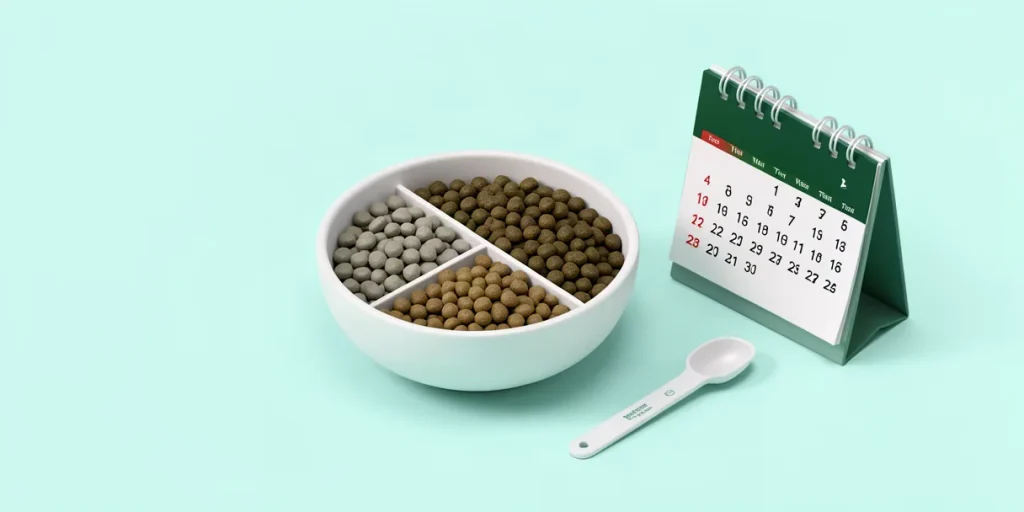
It’s best to switch your pet to a new food gradually, mixing it with their usual food and slowly increasing the proportion of the new food. This gives your pet time to get used to a different taste and ingredients, while helping you notice how they respond to the change.
There are many reasons to change a pet’s diet, but an abrupt switch can lead to food refusal or digestive upset. This article explains how to make the transition and what changes in your pet’s health to watch for.
| Stage | Old food | New food |
|---|---|---|
| Days 1–2 | 75% | 25% |
| Days 3–4 | 50% | 50% |
| Days 5–6 | 25% | 75% |
| From day 7 | 0% | 100% |
- 7 days approximate duration of the basic transition plan
- 25% share of new food at the first stage
- 50% share of new food midway through the plan
- 75% share of new food before the full switch
How do you switch your pet to a new food in 7 days?
Switching your pet to a new food takes 7 days: gradually adjust the proportions of the old and new diets, and move to 100% new food from day 7 only if your pet’s appetite, stool, and overall condition remain unchanged.
Proportions of the usual serving
Calculate the percentages based on your pet’s usual serving rather than increasing the total amount of food: for the first 2 days, give 75% old food and 25% new food; on days 3–4, give 50% of each. On days 5–6, keep 25% of the old diet and increase the new food to 75%.
- Days 1–2: 75% usual food and 25% new food.
- Days 3–4: equal proportions—50% old food and 50% new.
- Days 5–6: 25% old food and 75% new.
- From day 7: 100% new food, if your pet’s appetite, stool, and overall condition remain unchanged.
Each stage lasts 2 days, except for the final switch to the new diet. If your pet’s appetite, stool, or overall condition changes by day 7, don’t switch completely to the new food: keep the current mix and assess your pet’s condition.
What should you monitor while changing your pet’s diet?
While changing your pet’s diet, monitor their appetite, vomiting, and the frequency and consistency of their stool. Compare these with your pet’s usual condition over a typical period, rather than looking only at one day’s signs. This makes it easier to spot a persistent change instead of mistaking a one-off variation for a reaction to the food.
A transition diary
In a transition diary, record the proportion of new food, the date of each change, and your observations of your pet. These notes can help you link a reaction to a specific step—for example, determine whether vomiting occurred or stool changed after you increased the proportion of the new diet. Don’t introduce new treats during this period; otherwise, it will be harder to identify a possible cause of any digestive upset.
- Appetite: note whether your pet ate their usual serving or left some behind.
- Vomiting: record whether it occurred and whether it coincided with the latest diet change.
- Stool: note its frequency and consistency, and compare them with what’s usual for your pet.
- Proportion of new food: record it along with the date so you can track the changes in order.
Check the daily serving against the instructions for the specific food you’re switching to: the same volume of different products’ kibble doesn’t necessarily contain the same number of calories. So don’t automatically use the same scoop measure for the new food as for the old.
When should you slow down or postpone the switch?
It’s best to slow down or postpone the switch if your pet’s stool changes or vomiting begins after a new portion, if your pet is about to move or travel, or if you’re changing a prescribed veterinary diet without consulting your veterinarian. If a reaction occurs after you increase the proportion of new food, stop and return to the last ratio your pet tolerated well.
Changing food at the same time as your pet’s routine is disrupted is a bad combination: don’t start the transition during a move, trip, or other change to their schedule. Wait until conditions are more stable so you don’t add another stressor and can better understand what may be causing your pet’s reaction.
When slowing down isn’t enough
Don’t switch a veterinary-prescribed therapeutic food to another therapeutic diet on your own: first discuss both the change and a suitable alternative with your veterinarian. Food refusal, repeated vomiting, or lethargy are reasons to seek veterinary care, not simply to continue the transition more slowly.
Which signs mean you should talk to a veterinarian?
Contact your veterinarian if your pet vomits repeatedly, has persistent diarrhea, is markedly lethargic, or refuses food. Blood in the stool or vomit is a reason to stop the planned food transition and seek a professional assessment. Don’t continue the switch while trying to determine the cause of symptoms on your own.
A single episode of vomiting or diarrhea doesn’t, by itself, prove that the new food doesn’t suit your pet. Assess the reaction in light of your pet’s overall condition and feeding history: it’s important to know when the symptoms began and whether they coincided with a change in diet.
What to tell the veterinarian
Prepare details about the transition so your veterinarian can assess the sequence of changes. Give the names of the old and new foods, the dates of the switch, and the approximate proportions of each in the bowl; also describe which symptoms occurred and whether they’re ongoing.
- Food: the names of the old and new diets.
- Transition: the start date and the dates when the proportions in the bowl changed.
- Condition: whether vomiting recurred, how long the diarrhea has lasted, and whether there’s blood, lethargy, or food refusal.
Why doesn’t a 7-day plan work for every pet?
Limitations of a general plan
A seven-day plan for switching to a new food is a practical guide, not a guarantee that your pet will tolerate the change without a reaction: some animals need a slower transition. So the seven-day schedule shouldn’t be treated as a mandatory timeframe for every dog or cat.
During the transition, measure the old and new foods separately: if you simply pour the new food on top of the old, you won’t know the actual proportions, and the switch may end up being abrupt. This also makes it harder to assess how well your pet is tolerating the change—you won’t know which part of the new diet may have caused an adverse reaction.
- Refusal to eat the new food: don’t replace the uneaten portion with lots of treats—this changes the diet and makes it harder to assess how your pet is tolerating the new food itself.
- Chronic health problems or a veterinary diet: agree on a transition plan with a veterinary professional. A general chart doesn’t replace individual instructions in these circumstances.
Key takeaways
- Seven-day plan: 25%, 50%, 75%, then 100% new food.
- Don’t increase the proportion of the new diet if your pet’s stool or appetite changes.
- Repeated vomiting, blood, marked lethargy, and food refusal require veterinary attention.
- Change a therapeutic diet only after consulting a professional.
Frequently asked questions
How many days should it take to switch a pet to a new food?
What should I do if my pet’s stool changes after trying a new food?
Can I switch to a new food in one day?
Should I mix therapeutic food with regular food?
