To set up an aquarium at home, choose a suitable size and equipment, prepare the water, and wait for the biological balance to establish. Add fish gradually, not as soon as the tank is filled.
A home aquarium needs care, but getting started is easier if you plan the location, inhabitants and maintenance in advance. Here, we’ll look at how to choose a tank and equipment, prepare the aquarium and avoid adding fish too soon.
| Option | What is known about its volume | What to check before choosing |
|---|---|---|
| Nano aquarium | Up to 30—50 l | Whether the volume suits the fish you have chosen |
| Small home aquarium | Example — 24 l | The number and type of inhabitants |
| Medium-sized aquarium | Example — 46 l | The fish’s care requirements |
| Larger home aquarium | Example — 190 l | Where it will be placed and what equipment is suitable |
- up to 30—50 l volume used to describe a nano aquarium
- 190 l the volume of one of the home aquariums cited as an example
- 46 l the volume of one of the home aquariums cited as an example
- 24 l the volume of one of the home aquariums cited as an example
- about 20% once a week a guideline for regular partial water changes
How do you choose an aquarium’s size and shape?
Choose an aquarium’s size and shape based on the number and type of fish: there is no one size that suits every combination of inhabitants.
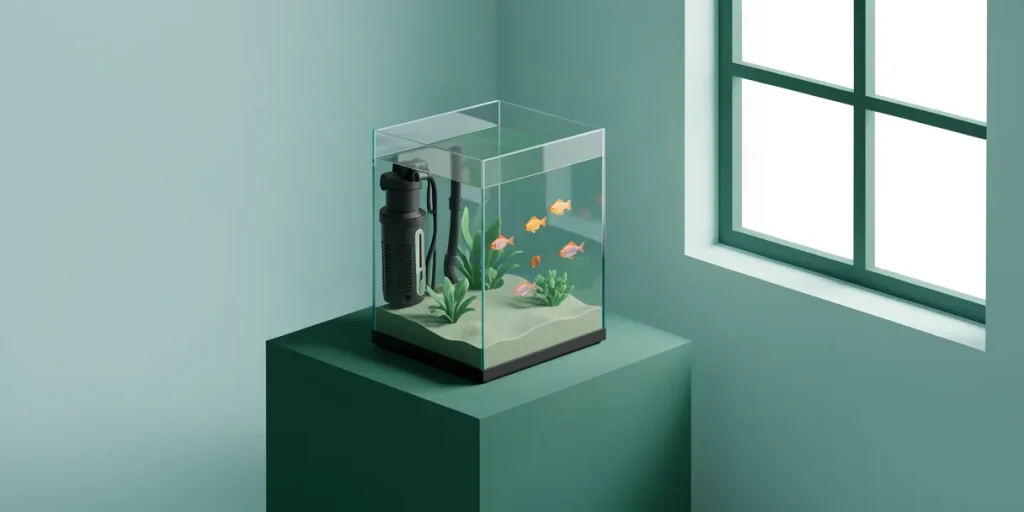
- Nano aquarium — a small aquarium with a volume of up to 30—50 l, most often cube-shaped. Its small size does not make stable water conditions any less important.
- 190, 46 and 24 l — aquariums of these sizes were set up in one home. They are examples of different formats, not recommendations for specific fish.
Before buying, choose your inhabitants first, then check whether the aquarium’s volume is right for them. Consider both the type of fish and how many you plan to keep.
Where should you put an aquarium so the fish aren’t disturbed?
Place the aquarium in a quiet spot, on a level, sturdy surface, away from direct sunlight and drafts.
Constant activity around the aquarium can disturb fish, so avoid a passageway or a spot near a door. The stand must be stable: a wobbly or sloping surface is unsuitable.
Before setting up the aquarium, check that the surface can support its weight when full. It should remain level once the tank is filled—a tilt or sag means you need to move it.
What equipment do you need before getting started?
You’ll need a filter and equipment suited to the tank’s volume and the types of fish you plan to keep. Add fish only after assembling the aquarium and installing the necessary equipment.
A filter removes impurities from the water. When choosing one, consider the aquarium’s volume and the needs of your future fish, not just how the device looks next to the tank.
Plan where the filter will go and make sure you can reach it: it will need regular maintenance and cleaning. If it is wedged between the wall and the aquarium, upkeep will be inconvenient.
- Filter: choose one to suit the aquarium’s volume and the fish you have selected.
- Room for equipment: leave enough access to the filter for maintenance.
- Ready for fish: first assemble the aquarium and install the necessary equipment, then add the fish.
How do you start an aquarium once it’s set up?
Once the aquarium is in place, make sure it sits on a level, sturdy surface, prepare the equipment and connect the filter before adding fish.
The filter removes mechanical and organic impurities from the water. Before starting the aquarium, check that the filter is working and that the chosen spot is protected from direct sunlight and drafts.
First decide which types of fish will live in the aquarium. Care requirements depend on the inhabitants: before adding them, check that the water conditions and aquarium volume suit their needs.
Plan for snails and other inhabitants in advance, too: conditions that suit fish may not suit them. Check the requirements of each species before buying.
Care after adding fish
Setting up an aquarium doesn’t end when the fish arrive. To keep the water clean and stable, change part of it regularly and clean the filter. Monitor the water and equipment, and if anything changes, check the requirements of your inhabitants.
How do you keep the water clean and stable?
Keep aquarium water clean and stable with regular partial water changes, filter cleaning and observation of the fish. A useful guideline is to change about 20% of the water once a week.
Change some of the water regularly: a one-off water change is no substitute for ongoing care. Keep an eye on the aquarium’s cleanliness and water stability, not just its appearance.
The filter needs to be cleaned so it can continue to purify the water. After maintenance, note what you did and when: this makes it easier to spot changes and stick to a regular care routine.
Watch the fish after changing the water or cleaning the filter. Make a note of any noticeable changes in their condition—this can help you spot a potential problem in time.
When are a small aquarium or the chosen location unsuitable?
A small aquarium is unsuitable if its volume does not match the number and type of fish, or if the chosen location makes it difficult to maintain the right conditions and service the equipment.
- Volume: a nano aquarium of up to 30—50 l is not suitable for every situation. First decide which fish will live in the aquarium and how many there will be, then choose a tank.
- Location: a quiet spot should not be in direct sunlight or a draft. If you can’t find a suitable place, choose a different spot before setting up the aquarium.
- Access to the filter: the filter needs regular cleaning. Leave enough room to reach it and remove it for maintenance; if access is awkward, aquarium care will be harder.
Having a tank set up does not mean it is ready for fish. Before buying them, check that the aquarium’s volume suits their needs and that you can provide suitable conditions in the chosen location.
Frequently asked questions
How much water should you change in a home aquarium?
What is a nano aquarium?
Can you put an aquarium by a window?
How do you know what size aquarium to choose for your fish?
Sources
- ferplastrus.ru — “How to Choose the Ideal Aquarium?”
- growboom.ru — “How to Set Up an Aquarium Quickly”
- funfish.ru — “How to Set Up an Aquarium: Tips for Beginners — Funfish”
- lemurrr.ru — “How to Properly Set Up an Aquarium for the First Time”
- 4lapy.ru — “My First Aquarium — Read the Four Paws Blog”