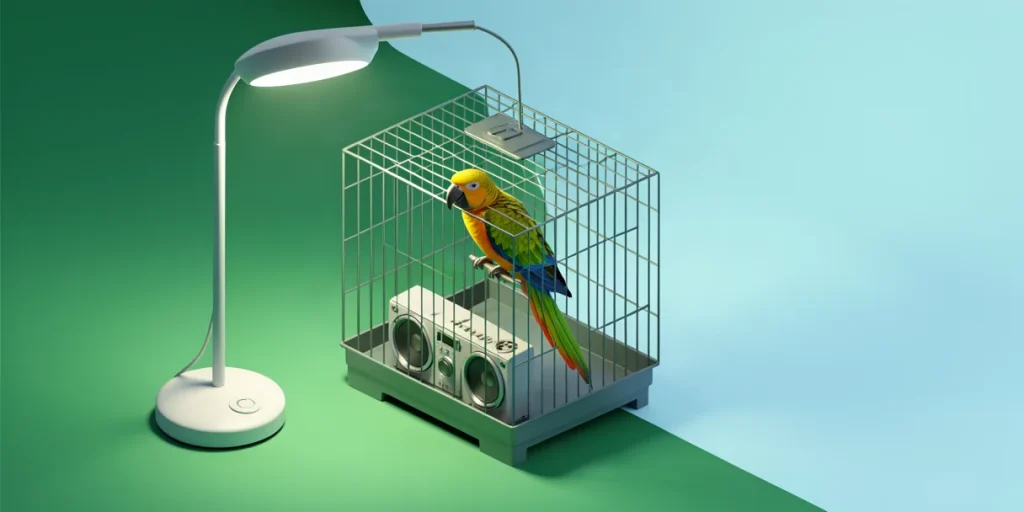
Lighting and sound environments play a key role in shaping pet birds’ behavior, influencing their activity, emotional state, and overall health. The right light schedule and comfortable sounds help birds feel calmer and stimulate natural instincts.
Bird owners often underestimate the importance of environmental factors such as light intensity and duration, as well as indoor noise levels. Studying the effects of lighting and sound on pet birds’ behavior allows creating optimal conditions for their care, improving quality of life and preventing stress.
In this article, we will explore how various light and sound parameters affect birds, what behavioral changes may occur under their influence, and share practical advice on organizing a comfortable environment for your pets.
| Lighting Type | Color Temperature (K) | Price (RUB) | Usage Recommendations |
|---|---|---|---|
| LED Lamps Philips Hue White and Color Ambiance | 5000–6500 | about 4000 per set | Adjustable color temperature, suitable for daytime regime |
| Exo Terra Repti-Glo 10.0 Lamps | 6500 | 1500–2000 each | Used for reptiles, suitable for birds if positioned correctly |
| Incandescent Lamps | 2700 | from 100 each | Not recommended due to low color temperature |
| Fluorescent Lamps | 4000–4500 | from 300 each | Commonly used but may cause flicker and stress |
- 60 dB maximum allowable noise level for birds
- 10–12 hours recommended length of daylight
- 5000–6500 K optimal color temperature of lighting
What Type of Lighting Is Optimal for Pet Birds?
The optimal lighting for pet birds is a daylight spectrum with a color temperature between 5000 and 6500 K, which supports their biorhythms and promotes normal activity. This light regime is especially important for budgerigars and canaries, helping to avoid stress and maintain health.
Spectrum and Duration of Lighting
To create suitable lighting conditions, experts recommend using daylight lamps with a cool spectrum. Exo Terra Repti-Glo 10.0 lamps, originally designed for reptiles, are well-suited for birds as well; their price ranges from 1500 to 2000 rubles each, making them an affordable option for home use. The Russian Zoo-Psychological Center noted in 2025 that the daylight duration should be 10 to 12 hours to ensure full activity and reduce stress levels in birds.
- Color temperature: 5000–6500 K;
- Recommended lighting duration: 10–12 hours per day;
- Price of Exo Terra Repti-Glo 10.0 lamps: around 1500–2000 rubles;
- Recommendations on schedule: according to the Russian Zoo-Psychological Center (2025).
How Does the Sound Environment Affect Birds’ Emotional State?
Noise Level
The sound environment significantly influences the emotional state of pet birds, directly affecting their behavior and mood. Budgerigars exposed to noise levels above 60 dB show signs of anxiety and aggression, as confirmed by a 2024 study from the VNI Ornithology Institute. Excessive noise causes stress and reduces birds’ quality of life, impairing social interaction and activity.
Beneficial Sounds
Musical compositions with frequency ranges between 500 and 2000 Hz and volume not exceeding 50 dB positively affect canaries by stimulating their activity and improving emotional tone. Additionally, using specialized sound devices like the PetSafe Sound Conditioner, priced between 3000 and 4000 rubles, helps reduce aggressive behavior in pet birds by creating a comfortable auditory environment.
- Noise threshold of 60 dB is critical for budgerigars; levels above this may cause stress;
- Optimal music volume: no higher than 50 dB, frequencies 500–2000 Hz;
- Price of PetSafe Sound Conditioner: from 3000 to 4000 RUB for aggression management.
What Negative Effects Can Improper Lighting and Noise Cause?
Improper lighting and high noise levels in pet birds lead to serious negative consequences, including decreased appetite, depression, sleep disturbances, and aggressive behavior. Lamps with color temperatures below 3000 K and noise above 70 dB have particularly strong impacts on their health and psychological state.
Health and Behavioral Consequences
Unsuitable lighting, such as lamps with a color temperature below 3000 K, reduces birds’ activity and appetite, as shown by studies from the MSU Poultry Laboratory in 2025. Birds under such conditions exhibit signs of depression and weakened immunity, which can lead to frequent illnesses and a shorter lifespan. To prevent these problems, it is recommended to use lamps with a color temperature between 4000 and 6500 K, which stimulate natural biorhythms.
Continuous noise above 70 dB, identified in observations by the Animal Ecology Institute of the Russian Academy of Sciences (2024), causes sleep disruption and increased aggression in pet birds. This manifests in frequent conflicts between birds and reduced reproductive activity. To mitigate these effects, noise levels should be limited by using sound-absorbing materials and creating quiet zones indoors.
- Lighting color temperature: below 3000 K has negative effects; 4000 to 6500 K is optimal;
- Noise level: above 70 dB provokes aggression and sleep disturbances;
- Research sources: MSU Poultry Laboratory (2025), Animal Ecology Institute RAS (2024).
How to Properly Organize Lighting and Sound Environment at Home?
For proper organization of lighting and sound environment at home, it is important to use LED lamps with adjustable color temperature and maintain a stable light regime of 10–12 hours per day, as well as create a sound background with volume not exceeding 50 dB using special audio recordings designed for birds.
Practical Recommendations
- Lighting: Philips Hue White and Color Ambiance LED lamps, priced around 4000 rubles per set, allow smooth adjustment of color and light intensity, helping to simulate natural conditions.
- Light cycle: maintain a schedule of 10–12 hours of light and 12–14 hours of darkness, adjusting seasonally so birds keep natural biorhythms and avoid stress.
- Sound environment: MP3 players with recordings of natural sounds or special compositions for pet birds create a comfortable background at volumes up to 50 dB, preventing irritation and promoting calmness.
Regularly adjusting the lighting schedule to seasonal changes helps birds maintain a normal activity and rest cycle. A sound environment created with carefully selected audio recordings reduces anxiety and improves overall pet bird behavior.
When Can Lighting and Sound Not Improve Birds’ Behavior?
Lighting and sound cannot improve birds’ behavior if serious illnesses are present or if living conditions violate their basic needs. For example, in cases of bird stress or respiratory infections, changing external factors will not replace necessary veterinary care and medical treatment.
Limitations in Application
If a budgerigar is kept in a cage smaller than 60×40×50 cm, even ideal lighting and sound parameters will not enhance its psychological comfort or behavioral stability. In such cases, space restriction is the primary stress factor. According to standards from the Association of Lovebirds and Parakeet Enthusiasts (ALA), the minimum cage volume for a budgerigar should be no less than 30 liters, corresponding to these dimensions.
- For bird stress, a treatment course costing 500 to 1500 rubles per package may be necessary, including anti-inflammatory and antibacterial medications.
- Minimum cage size for budgerigars is 60×40×50 cm; failure to meet this reduces the effectiveness of any behavioral corrections.
Thus, comfortable lighting and sound accompaniment are only part of comprehensive care. Without addressing illnesses and providing adequate space, they cannot fundamentally improve pet birds’ behavior and health.
Frequently Asked Questions
What lighting level is needed for a budgerigar?
Can regular incandescent lamps be used for bird lighting?
What is the maximum noise level allowed for pet birds?
How often should the sound background be changed for birds?
Key Takeaways
- Optimal lighting: 5000–6500 K and 10–12 hours daily
- Noise above 60 dB harms birds’ emotional state
- Using Philips Hue LED lamps allows flexible light adjustment
- PetSafe sound devices reduce aggression in pet birds
- Cage size and health limitations affect environment effectiveness