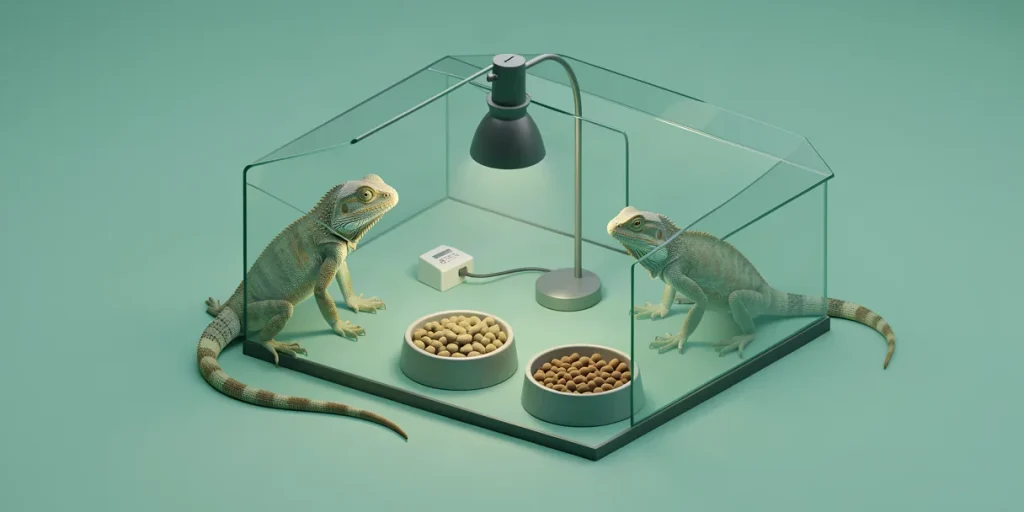
A bearded dragon is a good fit if you can provide a spacious terrarium and accommodate its active daytime schedule; a gecko may suit you better if you prefer observing a smaller lizard and can meet the needs of its particular species.
But “gecko” is a broad term for animals with different care requirements, so the name alone isn’t enough to make a choice. This article compares bearded dragons and geckos in terms of care, diet, and terrarium requirements. Before buying, find out what the specific species you’re interested in needs.
| Criterion | Bearded dragon | Leopard gecko |
|---|---|---|
| Scientific name | Pogona vitticeps | Eublepharis macularius |
| What to consider when choosing | Different morphs; suitable for beginners | Popularity; relatively simple care |
| Heat control | Requires a basking spot and temperature monitoring | Requires a basking spot and temperature monitoring |
| Size | Depends on the individual animal | From 15 to 25 cm, depending on the species |
- 31-32 градусов typical thermostat setting range for the basking spot
- от 15 до 25 см leopard gecko’s total body length, depending on the species
How do bearded dragons and leopard geckos differ in temperament and lifestyle?
Bearded dragons and leopard geckos differ mainly in when they’re best observed: bearded dragons are active during the day, while leopard geckos are a better fit for people who want to watch their lizard in the evening.
The bearded dragon (Pogona vitticeps) and leopard gecko (Eublepharis macularius) are popular lizards for home terrariums. Bearded dragons are valued for their range of morphs—variations in color and appearance—and are considered a suitable choice for beginners. Leopard geckos are also popular and are known to be relatively easy to care for.
- Bearded dragon: choose one if you’d rather observe your pet during the day.
- Leopard gecko: consider one if an evening activity schedule suits you.
How sociable a lizard is depends on the individual
Calling a lizard “tame” doesn’t guarantee it will willingly interact with you. There’s no reliable way to compare the sociability of individual bearded dragons and leopard geckos: each lizard’s behavior depends on how accustomed it is to people and how it’s handled.
When choosing, consider your schedule and whether you’re prepared to patiently get your pet used to human presence, rather than relying only on the species’ general reputation.
How can you set up heating and get the temperature right?
To heat the terrarium, create a warm basking spot with a thermostat and measure the temperature separately in different areas. This lets your pet choose between a warm zone and a cooler one.
Basking spot and temperature monitoring
The thermostat for the basking spot is usually set within a range of 31-32 degrees. This is a guide for the warm spot only, not a ready-made setting for the entire terrarium: check the temperature in other zones separately.
- Heat mat creates a warm area; a USB model can also be used.
- Heat cable is another heating option.
- Thermostat helps you choose and maintain the desired level of warmth; check the setting against thermometer readings.
- Digital thermometer lets you monitor the temperature, while an infrared thermometer can quickly measure it at a selected spot.
Before buying a bearded dragon or gecko, check that you can position the equipment so the terrarium has both a warm zone and a cooler area. Measure the temperature in both zones, not just next to the heater.
What should you know about geckos before choosing a terrarium?
Before choosing a terrarium, first identify the gecko species and the animal’s age: these determine the space and humidity it needs. Leopard geckos and crested geckos have different requirements, so don’t assume one universal terrarium will suit both.
A leopard gecko’s total body length ranges from 15 to 25 cm, depending on the species. Keep this range in mind when choosing hides and planning open space: your pet should fit inside its hide and have room to move around.
Hides and open space
Choose sturdy hides for a leopard gecko’s terrarium. Inspect a ready-made reptile cave on the inside: a smooth surface lowers the risk of injury if the gecko brushes against it.
- Leopard gecko: take its body length into account and choose hides the animal can fit into comfortably.
- Crested gecko (Rhacodactylus ciliatus): don’t treat it as an interchangeable alternative to a leopard gecko; check the species’ habitat requirements before choosing a terrarium.
- Terrarium size and humidity: check both against recommendations for the specific species and the animal’s age.
Crested geckos are popular, but their popularity alone doesn’t mean they can live in an environment set up for a leopard gecko. Before buying a terrarium, check the needs of the animal you’ve chosen and make sure the hides and space meet them.
Which is easier to feed and care for every day?
A leopard gecko may be easier to feed and care for if you want a popular lizard that’s relatively easy to keep; a bearded dragon may suit an owner willing to research its diet and heating needs separately.
Leopard geckos and bearded dragons have different dietary needs, so don’t choose an animal until you’ve found out what food its species accepts and whether you can buy it regularly. Food availability matters just as much as choosing an appropriate diet.
- Bearded dragon. Before buying, learn about its species-specific diet and heating setup. For daily care, check that the thermostat is working and read the thermometer; make sure there’s water and that the hides are clean.
- Leopard gecko. It’s often chosen as a popular lizard that’s relatively easy to care for. Still, find out in advance what food it needs and whether you can buy it consistently.
- Crested gecko. Its unusual appearance may appeal to you, but you’ll need to research its diet and care requirements separately. The care routine for a leopard gecko doesn’t automatically work for a crested gecko.
What to check before buying
For the lizard you’ve chosen, find out two practical things in advance: what it eats and what conditions it needs. Then make sure the right food is consistently available and that a thermostat, thermometer, water, and clean hides can be part of your daily care routine.
Why is there no one-size-fits-all winner?
There’s no universal winner: choose a bearded dragon or gecko based on whether you can provide the specific animal with suitable conditions and daily care.
- Bearded dragon: being described as “suitable for beginners” doesn’t mean you can skip setting up the terrarium properly. Without a thermostat and temperature monitoring, the basking spot’s temperature hasn’t been verified.
- Gecko: color, morph, and an impressive photo don’t tell you whether the animal’s everyday care is right for you. First find out what conditions and diet the particular species needs.
- Leopard gecko: the stated length range may apply to different species. On its own, it doesn’t determine the terrarium size you’ll need: take the specific species and its needs into account.
Comparing species can help narrow your choices, but it doesn’t replace checking the individual pet. Before buying, find out where the animal came from, what it eats, and how it’s kept. If the seller can’t answer these questions, ask for the information first, then decide whether the pet is right for you.
Frequently asked questions
Which is better for a beginner—a bearded dragon or a leopard gecko?
Can you use a heat mat for heating?
How long do leopard geckos get?
Is a crested gecko the same kind of pet as a leopard gecko?
Key takeaways
- The leopard gecko, Eublepharis macularius, is known for its popularity and relatively simple care.
- The bearded dragon, Pogona vitticeps, appeals to keepers with its range of morphs and is suitable for beginners.
- A heat mat or heat cable with a thermostat and temperature monitoring can be used for the basking spot.
- Leopard gecko length depends on the species and ranges from 15 to 25 cm.
Sources
- planetexotic.ru — “Buy lizards at the Planeta Exotiki pet store”
- m.ogolosha.ua — “Pet lizard, exotic gecko or leopard gecko — Female: 1,600 UAH — animals, reptiles in Kyiv on Ogolosha”
- hvost.news — “Crested gecko: care, diet, and husbandry”
- ogolosha.ua — “Pet lizard, exotic gecko or leopard gecko — Female: 1,600 UAH — animals, reptiles in Kyiv on Ogolosha”
- ru.infoanimales.net — “Crested gecko: characteristics, care, breeding, and habitat — InfoAnimales”