Introduction: How Reptile Keeping Has Evolved
Keeping reptiles at home has come a long way — from the primitive attempts of ancient civilizations to today’s high-tech systems that ensure the health and comfort of pets. Already in 2026, owners can choose from a wide range of specialized terrariums and equipment, greatly simplifying the care of exotic animals. But how exactly did these approaches develop? Understanding this will explain why modern standards are what they are today.
Historical Stage: Ancient Practices and Early Attempts at Keeping
The earliest evidence of reptile keeping dates back to Ancient Egypt — around 3000 BCE. Egyptians kept crocodiles and lizards in sacred ponds and temples, providing minimal conditions for survival. In the Roman Empire (1st century CE), the first records of caring for turtles as pets appeared, although this was more symbolic than genuine concern for the animal’s wellbeing.
Key Points from Ancient Periods
- 3000 BCE — Egypt: keeping crocodiles in sacred ponds
- 1st century CE — Rome: earliest mentions of pet turtles
- Lack of specialized equipment and knowledge about temperature regulation
At that time, reptile keeping was based on simple natural conditions and beliefs, which did not provide proper care or extend the pets’ lifespans.
The Middle Ages and Renaissance: The First Scientific Observations
Between the 12th and 16th centuries, attempts were made to study reptiles more systematically. European scientists and naturalists like Conrad Gessner (1516–1565) began describing species and noting their ecological traits. During this period, the first primitive terrariums appeared — glass containers with soil and plants used for observation.
Main Achievements of This Period
- 1541 — publication of Conrad Gessner’s «Historiae animalium» with detailed descriptions of reptiles
- First glass terrariums in Europe, costing between 50 and 150 florins (equivalent to about $150–450 today)
- Awareness of the need to control temperature, though practical solutions were limited
Despite limitations, medieval scholars laid the foundation of knowledge that later enabled the development of more effective husbandry methods.
20th Century: The Emergence of Specialized Equipment and Veterinary Care
In the 20th century, reptile care advanced significantly. Starting in the 1930s, the first specialized heating lamps and ultraviolet light sources appeared, such as Arcadia D3+ UVB lamps, which help replicate natural sunlight necessary for vitamin D3 synthesis.
Technologies and Standards of the 20th Century
- 1935 — invention of infrared heating lamps for terrariums
- 1970s — mass production of terrariums with humidity and temperature control (Exo Terra models priced from $150 to $400)
- 1989 — discovery of the necessity of ultraviolet lighting for reptiles
| Model | Dimensions, cm | Price, ₽ | Features |
|---|---|---|---|
| Exo Terra Glass Habitat 45x45x60 | 45x45x60 | 11 500 | UV lamp, humidity control |
| Zoo Med Repti Habitat 60x45x45 | 60x45x45 | 10 200 | Heater, ventilation |
| Habistat Premium 90x45x45 | 90x45x45 | 15 000 | Automatic temperature control |
These improvements significantly reduced reptile mortality, increased their activity levels, and improved reproductive outcomes in domestic settings.
Modern Practices of Keeping in 2026
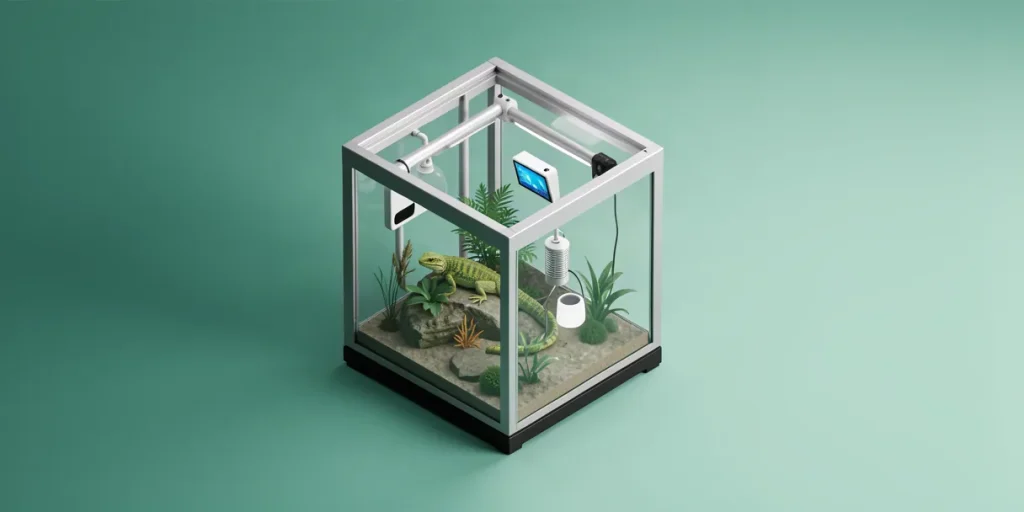
Today in 2026, reptile keeping is a complex process involving biotechnology, smart equipment, and care standards. According to the Russian Union of Exotic Animal Producers and Specialists (SPSEZ), about 65% of owners use smart thermostats and automatic watering systems, minimizing pet stress and optimizing the microclimate.
Top Technologies and Products
- ReptiZone Smart Thermo smart thermostat — priced from 7,000 ₽, temperature accuracy ±0.5°C
- Arcadia Pro T5 12% UVB lamps with a lifespan up to 12,000 hours
- Hydrofog 2026 automatic humidification systems, costing around 15,000 ₽
These solutions create conditions as close to natural habitats as possible, greatly extending and enhancing the quality of life of exotic pets.
Legislation and Standards for Reptile Keeping in Russia
In 2026, regulations on exotic pet keeping in Russia have become stricter. Federal Law No. 105-FZ of 2023 sets requirements for housing conditions, as well as documentation confirming the legality of reptile acquisition.
Main Provisions of Law No. 105-FZ
- Mandatory registration of all reptile species from the moment of purchase
- Minimum terrarium dimensions (at least 60x40x40 cm for medium-sized species)
- Equipment requirements: UV lighting, temperature maintenance between 24°C and 32°C
Violations result in fines ranging from 5,000 to 50,000 ₽ and confiscation of the pet. These measures aim to preserve biodiversity and protect animals from cruelty.
Frequently Asked Questions
What conditions are needed to keep a chameleon in an apartment?
How often should UV lighting lamps be replaced?
Is it possible to keep reptiles without automatic climate control systems?
What documents are needed for legal ownership of exotic reptiles in Russia?
Key Takeaways
- Reptile keeping has evolved from ritual practices to high-tech systems.
- Modern equipment provides precise climate and lighting control.
- Russia’s 2023 legislation regulates conditions and requires pet registration.
- Use of smart temperature and humidity control systems improves reptiles’ quality of life.
- Regular replacement of UV lamps is essential for pet health.
In summary, the evolution of reptile care demonstrates how science and technology can provide better wellbeing for exotic animals in home environments. Owners should follow modern standards and technologies to ensure their pets live long and happy lives in 2026.