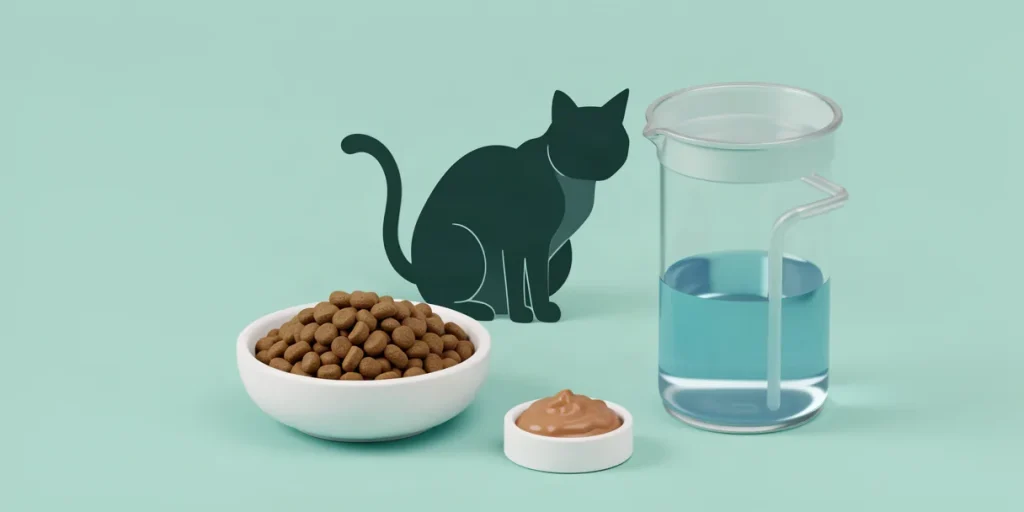
Senior cats need food that helps maintain muscle and a healthy weight. Choose a diet based on your cat’s body condition, activity level, and health.
Age alone does not mean a cat needs less protein or fewer calories: requirements vary. When choosing food for a senior cat, look beyond the “senior” label and consider changes in weight and muscle tone.
| Option | What to consider | When it may suit |
|---|---|---|
| Dry food | Measure the portion and make sure water is always available | If the cat enjoys dry food and its portion is easy to control |
| Wet food | Count it as part of the overall diet | If the cat prefers a wet texture |
| Dry and wet food | Do not add wet food on top of a full dry-food allowance | If the owner can include both types in the total portion |
| Food for senior cats | Check the intended use and energy content on the packaging | If the product suits the cat’s age, weight, and health |
- 3852 kcal energy content of Grandin Senior
- 3 kg — 25 g; 4 kg — 40 g; 5 kg — 55 g daily portions of Purina ONE® dry food for adult cats
- 12 g per kilogram of body weight Purina ONE® portion calculation for adult cats weighing 6 kg or more
Who is senior cat food suitable for, and what determines the choice?
Food for senior cats may suit pets whose activity has decreased with age, but age is not the only factor when choosing a diet: consider the cat’s body weight, appetite, and health.
If your cat has become less active, its previous food allowance may contribute to weight gain. Check how much it eats each day: portion control is especially important when activity levels have dropped.
Grandin Senior is intended for cats over 7 years old. The packaging lists an energy content of 3852 kcal; when choosing the food, compare this with the portion recommended for that specific product.
How to choose a diet format and composition
- Dry food: The portion is easy to measure, making it easier to control how much your cat eats.
- Wet food: Take your cat’s preferences and appetite into account.
- Mixed diet: Combine dry and wet food while counting both formats toward the daily portion.
- Purina ONE®: It belongs to the super-premium class. The manufacturer states that the food is developed by veterinary nutritionists and contains essential vitamins and minerals.
Age alone does not call for a sudden change in diet. If your cat’s weight, appetite, or health has changed, first assess these factors and how much it is eating; when choosing a specific diet, follow the recommendations on the packaging.
How can you support muscle without increasing calorie intake?
To support a senior cat’s muscles without encouraging weight gain, do not sharply cut back on food: maintain a complete diet and control the portion.
Composition and digestibility
Choose food for a senior cat that is highly digestible—this is especially important if its appetite or digestion has changed. Protein is needed to maintain muscle, but if your cat has kidney disease, change the amount only under a plan from your veterinarian.
- Portion. Do not remove food from the bowl at random: check how much your cat eats and adjust the portion while maintaining a complete diet.
- Digestibility. If your cat has started eating less or its stools have changed, take this into account when choosing food and discuss the changes with your veterinarian.
- Protein. Do not increase or decrease the amount on your own if your cat has been diagnosed with kidney disease.
- Fiber. Food for senior cats may contain more fiber to support intestinal motility. Use your cat’s stools and appetite to assess how well it tolerates the food.
When changing food, monitor whether your cat is eating as usual and whether its stools have changed. If its appetite worsens or digestion does not return to normal, contact your veterinarian.
How do you control portions if your cat is gaining weight?
To help prevent weight gain, weigh your cat’s daily portion, compare it with the guideline on the packaging, and do not top up the bowl out of habit.
Portion sizes depend on the specific product
For adult cats, the Purina ONE® portion chart lists the following amounts:
- At 3 kg, 25 g of food per day.
- At 4 kg, 40 g of food per day.
- At 5 kg, 55 g of food per day.
- At 6 kg or more, the portion is calculated at 12 g per kilogram of body weight.
These figures apply specifically to the Purina ONE® chart. Do not automatically use them for another food: the daily allowance depends on the product. Nor are they a universal recommendation for senior cats—follow the guidance on the packaging of the diet you choose.
If your cat eats both dry and wet food, include both in the daily portion. Do not add wet food on top of a full dry-food allowance: this would make the actual amount of food exceed the calculated portion.
Measure out a separate daily portion and count every serving, including wet food. If your cat’s weight changes, check the diet against the packaging recommendations again.
How should you combine dry food and water?
You can combine dry and wet food if you measure each portion separately and take your senior cat’s individual needs into account when choosing a diet.
If your cat eats dry food, fresh water should always be available. As a guide for monitoring its drinking, the volume of water consumed should be three times the volume of dry food eaten. This ratio can help you notice whether your cat is drinking enough, but it does not mean you should force it to drink.
Count wet food separately, too: it is part of the overall diet. If your cat starts drinking noticeably more or less, discuss it with your veterinarian—especially if its appetite or general condition has changed at the same time.
When will changing food not help, and when should you consult a veterinarian?
Changing food will not help if a senior cat suddenly loses its appetite, its weight changes, or it refuses its usual food: first, ask a veterinarian to determine the cause.
What not to adjust without a veterinarian
Do not change a therapeutic diet or protein level on your own. The right diet depends on the diagnosis and the cat’s condition: what works for one animal may not work for another.
Purina ONE® belongs to the super-premium class. The manufacturer states that the food is developed by veterinary nutritionists and contains essential vitamins and minerals. These features do not replace an individual nutrition plan if your cat has a health condition.
- Sudden refusal to eat: Do not switch to another brand instead of finding out what is causing the problem.
- Noticeable weight change: Discuss it with your veterinarian before restricting the diet or reducing protein.
- Onions and garlic: Do not give them to your cat—they can cause serious health problems.
- Alcohol and nuts: Do not offer them to your pet; these foods can also be harmful.
If your cat stops eating its usual food, note exactly what has changed and tell your veterinarian; do not switch it to a therapeutic diet until the cause is known.
Frequently asked questions
Does every cat need to switch to food labeled Senior?
Can you mix dry and wet food?
How can you tell if your cat is getting too much food?
What should you do if your senior cat has started eating less?
Key takeaways
- Choose food based on your cat’s weight, appetite, and health—not age alone.
- Measure dry food; the portions in the Purina ONE® chart are not universal for other products.
- For mixed feeding, include both dry and wet food in the total portion.
- Do not change protein levels or a therapeutic diet without consulting a veterinarian.
- Keep onions, garlic, alcohol, and nuts out of your cat’s reach.
Sources
- proplan.ru — “Benefits of mixed feeding for adult cats”
- Zapovednik — “What should you not feed a cat? A list of prohibited and permitted foods”
- rbc.ru — “Responsible for those we have tamed: 5 mistakes in pet nutrition”
- vet.4lapy.ru — “Obesity in cats: how to treat it and what to feed — Home”
- Purina ONE® — “Feeding guidelines for cats on dry food”