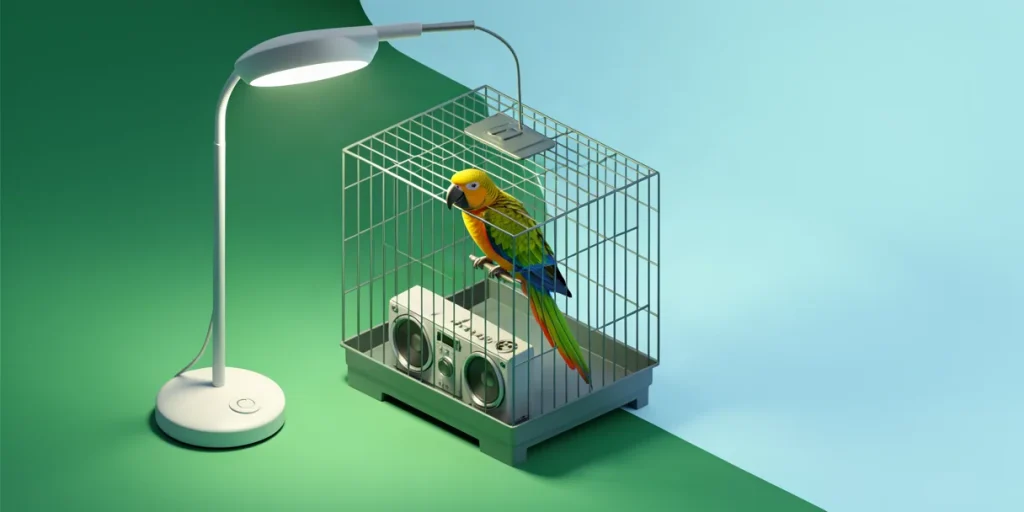
Lighting and the sound environment play a key role in shaping pet birds’ behavior, affecting their activity, emotional state, and overall health. The right light schedule and comfortable sounds help birds feel calmer and encourage their natural instincts.
Bird owners often underestimate the importance of their pets’ surroundings, including the intensity and duration of light and the noise level in the room. Understanding how lighting and the sound environment affect pet birds’ behavior makes it possible to create optimal living conditions, improving their quality of life and helping prevent stressful situations.
In this article, we’ll look at how different light and sound parameters affect birds, what behavioral changes they may cause, and share practical tips for creating a comfortable environment for your pets.
What type of lighting is best for pet birds?
The best lighting for pet birds is daylight-spectrum light with a color temperature of 5000–6500 K, which supports their biorhythms and normal activity. This lighting schedule is especially important for budgerigars and canaries, helping prevent stress and support their health.
Light spectrum and duration
To create suitable lighting conditions, experts recommend using cool-spectrum daylight bulbs. Exo Terra Repti-Glo 10.0 bulbs, originally designed for reptiles, are also suitable for birds. They cost between 1500–2000 rubles each, making them an affordable option for home use. In 2025, the Russian Center for Animal Psychology noted that the day length should be 10 to 12 hours to support normal activity and reduce stress in birds.
- Color temperature: 5000–6500 K;
- Recommended lighting duration: 10–12 hours a day;
- Schedule recommendation: according to the Russian Center for Animal Psychology (2025).
How does the sound environment affect birds’ emotional well-being?
Noise level
The sound environment has a significant effect on pet birds’ emotional well-being, directly influencing their behavior and mood. Budgerigars show signs of anxiety and aggression when noise levels exceed 60 dB, according to research by the All-Russian Research Institute of Bird Zoology (2024). Excessive noise causes stress and reduces birds’ quality of life, impairing their social interactions and activity levels.
Beneficial sounds
Music in the 500–2000 Hz frequency range, played at no more than 50 dB, has a positive effect on canaries, stimulating their activity and improving their mood. Specialized sound devices, such as the PetSafe Sound Conditioner, which costs 3000 to 4000 rubles, can also help reduce aggression in pet birds by creating a comfortable sound environment.
- A noise level of 60 dB is critical for budgerigars; levels above this may cause stress;
- The optimal volume for music is no more than 50 dB, at frequencies of 500–2000 Hz;
What negative effects can improper lighting and noise cause?
Improper lighting and high noise levels can have serious negative effects on pet birds, including reduced appetite, depression, sleep disturbances, and aggressive behavior. Bulbs with a color temperature below 3000 K and noise above 70 dB have a particularly pronounced effect on their health and psychological well-being.
Effects on health and behavior
Unsuitable lighting—for example, bulbs with a color temperature below 3000 K—reduces birds’ activity and appetite, as confirmed by research from the poultry science laboratory at Moscow State University (2025). Birds kept under these conditions show signs of depression and weakened immunity, which can lead to frequent illnesses and a shorter lifespan. To prevent these problems, use fixtures with a color temperature of 4000 to 6500 K, which support birds’ natural biorhythms.
Constant noise above 70 dB, documented in observations by ornithologists at the Russian Academy of Sciences’ Institute of Animal Ecology (2024), causes sleep disturbances and increased aggression in pet birds. This can lead to frequent conflicts between birds and reduced reproductive activity. To reduce these effects, keep noise levels down by using sound-absorbing materials and creating quiet areas in the room.
- Lighting color temperature: below 3000 K – negative effect; 4000 to 6500 K – optimal range;
- Noise level: above 70 dB can trigger aggression and sleep disturbances;
- Research: Moscow State University poultry science laboratory (2025), Russian Academy of Sciences’ Institute of Animal Ecology (2024).
How can you set up lighting and a sound environment at home?
To create a suitable lighting and sound environment at home, use LED bulbs with adjustable color temperature and maintain a consistent lighting schedule of 10–12 hours a day. Also create a soundscape at no more than 50 dB using special audio recordings for birds.
Practical recommendations
- Lighting cycle: Maintain a schedule of 10–12 hours of light and 12–14 hours of darkness, adjusting it to the season so birds can keep their natural biorhythms and avoid stress.
- Sound environment: MP3 players with recordings of nature sounds or special compositions for pet birds can create a comfortable background at volumes up to 50 dB, which won’t irritate them and can help them feel calm.
Regularly adjusting the lighting schedule to seasonal changes helps birds maintain a normal cycle of activity and rest. A sound environment created with carefully chosen audio recordings can reduce anxiety and improve pet birds’ overall behavior.
When can lighting and the sound environment not improve birds’ behavior?
Lighting and the sound environment cannot improve birds’ behavior if they have serious illnesses or are kept in conditions that fail to meet their basic needs. For example, when a bird is stressed or has a respiratory infection, changing its surroundings cannot replace necessary veterinary care and medication.
Limitations
If a budgerigar is kept in a cage smaller than 60×40×50 cm, even ideal lighting and sound conditions will not improve its psychological comfort or behavioral stability. In such cases, lack of space becomes the main source of stress. According to the standards of the Association of Parrot Lovers (ALA), a budgerigar’s cage must have a minimum volume of 30 liters, which corresponds to the dimensions given above.
- Minimum cage size for a budgerigar — 60×40×50 cm; failing to meet this standard reduces the effectiveness of any behavioral interventions.
Comfortable lighting and sound are therefore only part of comprehensive care. Without treating illnesses and providing adequate space, they cannot fundamentally improve pet birds’ behavior and health.
Frequently asked questions
What light level does a budgerigar need?
Can regular incandescent bulbs be used to light birds’ enclosures?
What is the maximum acceptable noise level for pet birds?
How often should you change the sound recordings for birds?
Key takeaways
- Optimal lighting is 5000–6500 K for 10–12 hours a day
- Noise above 60 dB is harmful to birds’ emotional well-being
- Philips Hue LED bulbs allow flexible lighting adjustments
- PetSafe sound devices reduce aggression in pet birds
- Cage size and health limitations affect how effective environmental changes can be