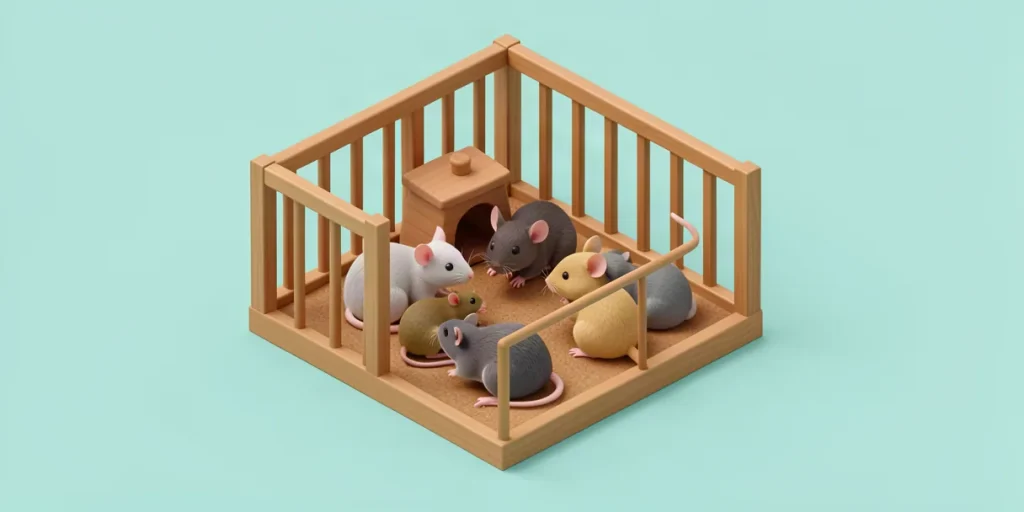
Why Is Socializing Pet Rodents Important?
Socializing pet rodents helps reduce stress and aggression, improving their behavior when interacting with humans and other animals. Socialized rodents adapt more easily to their environment, become more active, and are more receptive to training.
For example, guinea pigs that receive regular human interaction show a 30% reduction in stress reactions compared to isolated individuals, according to research from the University of Wisconsin (2026).
How to Understand Rodent Behavior at Home?
Rodent behavior reflects their emotional state and level of socialization. Activity levels, grooming habits, and interactions with objects or companions indicate the animal’s health and comfort.
Key Behavioral Signs:
- Grooming and fur care — a good indicator of health.
- Playfulness and exploratory behavior — signs of confidence and absence of stress.
- Hissing or aggression — signals discomfort or fear.
Keeping a behavior journal, noting active times and reactions to different stimuli, can help accurately understand your rodent’s behavior.
What Socialization Methods Are Effective for Pet Rodents?
Rodent socialization is built on gradual and regular interaction with humans and other pets. The key is to avoid sudden movements and maintain a calm environment.
Effective Socialization Methods:
- Daily hand interaction sessions lasting 10–15 minutes.
- Using treats to create positive associations.
- Housing only compatible species together to prevent conflicts.
Specialized pet stores in Moscow offer socialization kits, such as the «Comfort Pet Interaction Kit» by ZooCare, priced from 1200 ₽.
How Does Human Interaction Affect Rodent Behavior?
Regular, positive human interaction reduces anxiety and builds trust in rodents. These animals respond to their owner’s voice, are more willing to engage, and show increased activity.
A study by the Institute of Zoology of the Russian Academy of Sciences (2026) found that rats exposed to daily interaction performed simple commands 40% more often and exhibited less aggression.
What Species-Specific Socialization Features Should Be Considered?
Different rodent species have unique social traits that influence how they should be raised and housed.
Socialization by Species:
- Guinea Pigs: Require living in pairs or groups; solitary housing causes stress.
- Hamsters: Mostly territorial; prefer to live alone.
- Rats: Social animals that need at least one companion.
Behavioral differences require adapting socialization methods and housing conditions accordingly.
| Species | Sociality | Optimal Number of Individuals | Average Lifespan, years | Recommended Cage Price, ₽ |
|---|---|---|---|---|
| Guinea Pig | High | 2-4 | 4-6 | 3500-7000 |
| Hamster | Low (solitary) | 1 | 2-3 | 1500-4000 |
| Rat | High | 2-5 | 2-4 | 3000-6000 |
When and How to Introduce New Rodents to an Existing Group?
Introducing new rodents to an established group requires gradual adjustment to minimize conflicts.
Introduction Steps:
- Keep them separated for 7-10 days, allowing scent exchange through a mesh divider.
- Supervised joint meetings lasting 10-15 minutes, gradually increasing the duration.
- Monitor behavior carefully for signs of aggression or stress.
Veterinarians recommend using pheromone sprays to reduce aggression when introducing new individuals.
- 30% reduction in stress symptoms with proper socialization
- 10-15 minutes of daily interaction to build trust
- 2-4 individuals is the optimal number of rodents for cohabitation
Frequently Asked Questions
Is it possible to keep different rodent species together?
How long does rodent socialization take?
How can I tell if my rodent is stressed?
What treats are suitable for training rodents?
Key Takeaways
- Regular interaction reduces stress and improves rodent behavior.
- Socialization methods should consider species-specific traits.
- Proper introduction of new individuals prevents conflicts.
- Observing behavior helps detect problems early.
Socializing pet rodents is a crucial factor in their health and comfort, requiring a thoughtful approach and patience. Understanding their behavior and interacting correctly creates the conditions for a long and harmonious life at home.