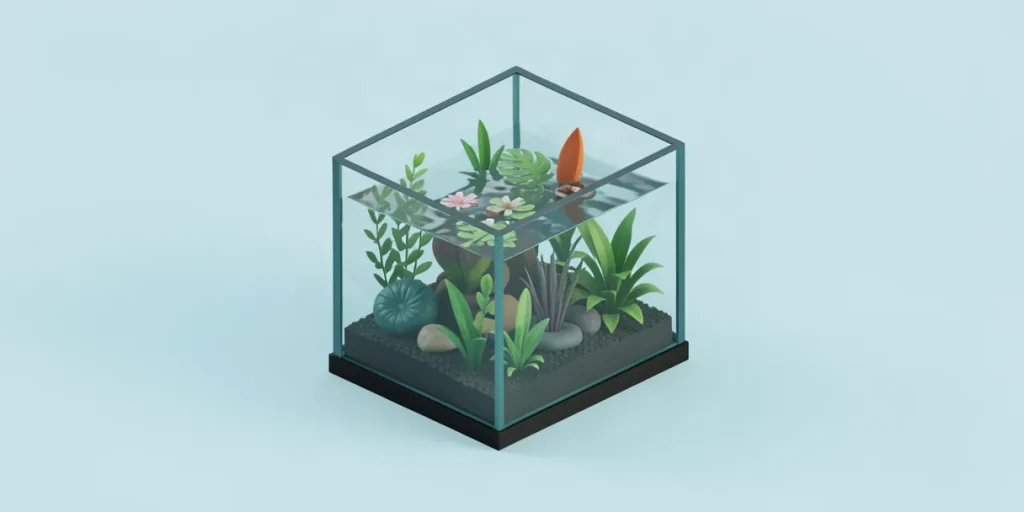
Aquarium plants come in various types—floating, attached, and rooted—and play a crucial role in maintaining the ecosystem by providing oxygen, filtering water, and offering shelter for aquarium inhabitants. Choosing and caring for them properly promotes stability and the health of the aquatic environment.
Understanding the types of aquarium plants helps create a harmonious and sustainable underwater space. Plants not only decorate the aquarium but also perform important biological functions, affecting water quality and the well-being of fish and other aquatic animals. This article reviews the main types of plants and their significance for the aquarium ecosystem.
The diversity of aquarium plants allows for selecting optimal options for any conditions and inhabitants. Knowing their characteristics and roles enables aquarium owners to create more natural and balanced aquatic ecosystems, reducing the need for chemical treatments and ensuring long-term aquarium health.
| Plant Type | Example | Price (₽) | Care Features |
|---|---|---|---|
| Epiphytic | Java Moss | 150–300 per 10 g | Attached to décor, does not require substrate |
| Rooted | Cryptocoryne | about 250 per seedling | Needs nutrient-rich substrate and fertilizers |
| Floating | Hornwort | 100–200 per bunch | Does not need substrate, provides aeration |
| Stem | Elodea | up to 300 per plant | Fast-growing, requires intense lighting |
- 50% nitrate absorption by aquarium plants
- 8–12 mg/l oxygen produced by plants during daylight hours
- 22–28 °C optimal temperature for most aquarium plants
- 3–12 dGH water hardness for successful plant growth
- 1500–3500 ₽ average budget for plants in a 60-liter aquarium
What Are the Main Types of Aquarium Plants and How to Distinguish Them?
Classification by Attachment Method
Aquarium plants are divided into four main types depending on how they are anchored and their growth conditions: epiphytic, submerged rooted, floating, and herbaceous stem plants. Epiphytic plants, like Java moss (Taxiphyllum barbieri), grow on driftwood and stones, don’t need substrate, and cost 150–300 rubles per 10 g bunch. Submerged rooted plants, such as Cryptocoryne (Cryptocoryne wendtii), require nutrient-rich substrate and cost about 250 rubles per seedling. Floating plants, like hornwort (Ceratophyllum demersum), don’t need substrate, help aerate water, and sell for 100–200 rubles per bunch. Herbaceous stem plants, such as elodea (Elodea canadensis), grow quickly and can absorb up to 30% of nitrates from the water within a week.
Role in the Aquarium Ecosystem
Each plant type plays a unique role in maintaining aquarium balance. Epiphytic plants provide extra surface area for beneficial microorganisms, improving biofiltration. Submerged rooted plants stabilize the substrate and serve as shelter for fish. Floating plants contribute to oxygen saturation and limit algae growth by shading. Fast-growing herbaceous stem plants like elodea actively absorb excess nitrates, reducing toxicity risks for inhabitants.
- Epiphytic Java moss – 150–300 ₽ per 10 g
- Submerged Cryptocoryne – about 250 ₽ per seedling
- Floating Hornwort – 100–200 ₽ per bunch
- Herbaceous Elodea – absorbs up to 30% nitrates in 7 days
How Do Aquarium Plants Affect Water Quality and Biological Balance?
Aquarium plants play a key role in improving water quality and maintaining biological balance by actively absorbing excess nitrates and phosphates, creating an environment for beneficial bacteria, and supplying oxygen essential for aquatic life.
Absorption of Harmful Substances
Plants can absorb up to 50% of excess nitrates and phosphates, significantly reducing the risk of water bloom and deterioration in quality, according to data from the Biological Institute of the Russian Academy of Sciences (2024). These processes help maintain chemical balance by preventing the buildup of toxins. Additionally, the root systems enhance biofiltration, creating favorable conditions for colonies of beneficial bacteria that reduce ammonia levels to a safe 0.02 mg/l, which is critical for the health of fish and invertebrates.
Oxygen Saturation and Biofiltration
During daylight, plants produce oxygen concentrations ranging from 8 to 12 mg/l at an average planting density of 50–70 plants per square meter, ensuring sufficient water oxygenation. This supports fish respiration and improves biofiltration, thereby reducing harmful substances in the aquarium. Plants also provide shelter that lowers stress in inhabitants and boosts their immunity, which is vital for a stable and healthy ecosystem.
- Absorption of nitrates and phosphates: up to 50%
- Oxygen production: 8–12 mg/l at 50–70 plants/m²
- Safe ammonia level: no higher than 0.02 mg/l
- Source: Biological Institute of the Russian Academy of Sciences, 2024
What Water and Care Parameters Are Necessary for Different Plant Types?
Temperature and Chemical Parameters
Optimal water parameters for aquarium plants vary by species, but most popular plants require temperatures between 22–28°C and water hardness from 3 to 12 dGH. For example, Cryptocoryne and Java moss thrive at 22–28°C, while Elodea tolerates temperatures up to 30°C, important to consider when keeping them together.
Water hardness regulates the availability of minerals essential for plant growth. Levels between 3 and 12 dGH suit most species, including Anubias, Vallisneria, and Hygrophila. Excessively high or low hardness slows photosynthesis and worsens leaf condition.
Lighting and Fertilization
For proper photosynthesis, aquarium plants need light with a color temperature around 6500K and power about 0.5 W per liter of water. LED Philips Aqua 6500K lighting promotes efficient growth without overheating, with the lamp costing approximately 1500 rubles. Regular fertilization with Seachem Flourish, priced from 700 rubles per 100 ml, enhances color saturation and accelerates plant development.
- Water temperature: 22–28°C (Cryptocoryne, Java moss), up to 30°C (Elodea)
- Water hardness: 3–12 dGH
- Lighting: LED Philips Aqua 6500K, 0.5 W/l, price ≈1500 ₽
- Fertilizer: Seachem Flourish, from 700 ₽ per 100 ml
When and Why Might the Use of Aquarium Plants Be Limited or Undesirable?
Risks of Excessive Planting
Using aquarium plants may be limited in small tanks up to 20 liters, because excessive greenery can cause oxygen concentrations to drop below the critical level of 5 mg/l at night, which is dangerous for fish and invertebrates. This is especially true for dense plantings where nighttime respiration worsens oxygen deficiency. Floating species like hornwort can heavily shade lower water layers, reducing the growth of submerged stem plants and disrupting ecosystem balance.
Care Mistakes and Compatibility Issues
Some aquarium plants, such as Cryptocoryne, are sensitive to sudden temperature fluctuations over 5°C per day, which causes rotting and pathogen spread in the aquarium. Incorrect fertilizer choices can result in nitrate accumulation above 50 mg/l, a level unsafe for fish according to sanitary standards, leading to water quality decline. When selecting fertilizers, it is best to choose trusted brands like Dennerle, which provide balanced nutrition without nitrate oversaturation.
- Minimum aquarium volume for dense planting — 30 liters
- Maximum daily temperature fluctuation for Cryptocoryne — 5°C
- Permissible nitrate level in water — no more than 50 mg/l
- Floating plants (hornwort) should cover no more than 30% of the water surface
How to Choose Plants for a Specific Aquarium Type and Budget?
Selection by Difficulty Level
Plant choice depends directly on the owner’s experience and care complexity. For beginners, hardy species like Java moss and Elodea are optimal, costing no more than 300 rubles per plant. These plants adapt easily to various conditions and don’t require complex lighting or fertilization. For biotope aquariums, more demanding but visually striking Cryptocorynes and Anubias, priced from 250 to 500 rubles per seedling, are recommended; they create a natural environment and require moderate care.
Financial Considerations
When choosing plants, it’s important to consider the overall aquarium budget. For a standard 60-liter aquarium, the plant purchase cost typically ranges from 1500 to 3500 rubles. It’s advisable to buy from reliable suppliers, such as AquaPro, operating since 2018 and guaranteeing seedling quality. This helps avoid plant diseases and losses, reducing extra costs for replacements.
- Price of Java moss and Elodea — up to 300 rubles per plant
- Cost of Cryptocorynes and Anubias — from 250 to 500 rubles per seedling
- Total plant budget for a 60-liter aquarium — 1500–3500 rubles
- Reliable supplier — AquaPro, active since 2018
Frequently Asked Questions
Is it possible to have an aquarium without plants?
How often should aquarium plants be fertilized?
Which plants are best suited for beginner aquarists?
Key Takeaways
- Different plant types perform unique functions in the ecosystem
- Aquarium plants significantly improve water quality and maintain biological balance
- Proper water parameters and care are critical for plant health
- Excessive planting and care mistakes can harm the aquarium
- Plant selection depends on aquarium type and budget