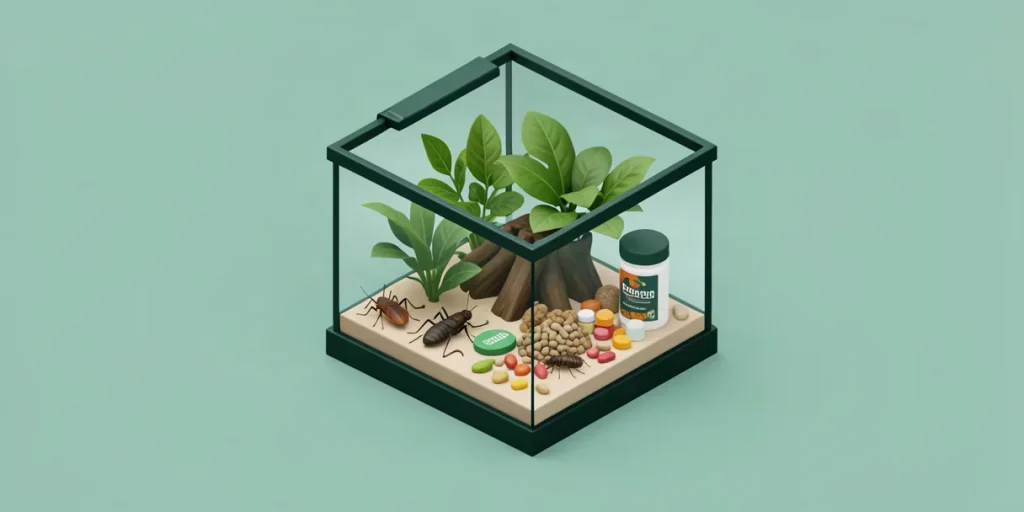
Introduction: Why a Balanced Diet Is Vital for Reptiles
Properly organized nutrition is the foundation of health and longevity for pet reptiles. A lack of vitamins, minerals, or an incorrect balance of macronutrients leads to diseases, weakened immunity, and a shorter lifespan. In 2026, veterinary medicine recommends maintaining a balanced diet that includes not only live food but also specific vitamin and mineral supplements. On average, a complete dietary transition takes 30–45 days to allow the body to adapt without stress.
Main Components of a Reptile’s Diet
A reptile’s diet consists of proteins, fats, carbohydrates, vitamins, and minerals. Each component must be in a certain balance depending on the species and age of the animal.
Proteins and Live Food
For most insectivorous and predatory reptiles, proteins are a key source of energy and building material. In 2026, the following feeder insects and small vertebrates are recommended:
- Dubia roaches (price from 80 ₽ per 100 pcs) – an excellent protein source and low-calorie food;
- Mealworms (about 150 ₽ per 50 pcs) – rich in fats, suitable for animals with high energy expenditure;
- Small mice and rats (from 250 ₽ per individual) – for large predatory snakes and lizards.
The protein portion should make up 40% to 60% of the diet depending on the species.
Plant-Based Components
For herbivorous and omnivorous reptiles such as iguanas or turtles, plant food is essential. In 2026, seasonal leafy vegetables and grasses are recommended, considering their nitrogen compound content:
- Savoy cabbage – up to 30% of the diet;
- Dandelion leaves – a natural source of calcium and vitamins;
- Fresh young acacia and maple branches – for variety.
It is important to note that greenhouse vegetables contain elevated levels of nitrogenous substances harmful to reptiles, so preference should be given to fresh and seasonal feeds.
| Feed | Protein (%) | Calcium (mg/100g) | Price (₽ per 100 g) |
|---|---|---|---|
| Dubia roaches | 55 | 50 | 80 |
| Mealworms | 47 | 15 | 150 |
| Dandelion leaf | 20 | 220 | 0 (gathered) |
| Savoy cabbage | 18 | 150 | 30 |
Vitamins and Minerals: The Key to Disease Prevention
Vitamin D3, calcium, and phosphorus are the main nutrients for maintaining bones and preventing metabolic disorders in reptiles. In 2026, veterinarians recommend using specialized supplements, such as “ReptiCal D3” by ExoTerra, costing about 700 ₽ per 100 g, which lasts for 6 months with regular use.
The Role of Vitamin D3 and Calcium
Vitamin D3 is essential for calcium absorption, which should be about 1.5–2% of the reptile’s body weight in the diet. A deficiency of D3 leads to rickets development, as confirmed by studies from the Herpetology Institute of Moscow State University, where 75% of reptiles with vitamin deficiency suffered from bone tissue disorders.
Mineral Supplements and Their Features
- Calcium powders with vitamin D3 – the basis of prevention;
- Mineral blocks with magnesium and phosphorus – for reptiles during shedding periods;
- Mineral solutions for supplementation in drinking water – an additional source of microelements.
The correct combination of minerals and vitamins reduces disease risks and improves immunity.
The Role of Variety in the Diet and Seasonal Features
Variety in food improves nutrient absorption and stimulates natural reptile behaviors. In 2026, specialists recommend changing the assortment of feeds every 2–3 weeks, including both animal and plant components.
Seasonal Recommendations
Seasonality affects the quality of plant-based feeds. In winter, preference is given to frozen or dried grasses with added vitamin complexes; in summer – fresh leaves and grasses collected from ecologically clean areas.
- Spring-Summer: fresh dandelions, clover, young branches;
- Autumn-Winter: dried grasses, cabbage, vitamin supplements.
This reduces risks of nitrogen compound overdoses and provides balanced nutrition year-round.
Practical Tips for Feeding and Quality Control
Feeding reptiles requires regular monitoring of the pet’s condition and feed quality. In 2026, the average price for feed quality analysis at a veterinary laboratory is 1500 ₽, justified for owners of rare or expensive species.
Control and Recommendations
- Check feed freshness daily;
- Clean and disinfect the terrarium at least once every 14 days using safe agents;
- Use dispensers and feeders to avoid overfeeding;
- Keep a feeding diary recording types and amounts of food.
Following these rules minimizes disease risks and prolongs the reptile’s life.
Frequently Asked Questions
How often should a reptile’s diet be changed?
Can reptiles be fed only live food?
How to identify vitamin D3 deficiency in a reptile?
Is it necessary to use mineral supplements constantly?
Key Takeaways
- A reptile’s diet should contain 40–60% protein from live food and 20–30% plant components for omnivorous species.
- Vitamin D3 and calcium are essential for bone health and rickets prevention.
- Seasonality of feeds affects the choice and quality of plant-based food.
- Regular monitoring of feed quality and living conditions minimizes disease risks.
- Diet variety stimulates natural behavior and improves nutrient absorption.
A balanced reptile diet is not just a set of foods but a comprehensive system considering species needs, age, season, and feed quality. In 2026, using specialized vitamin-mineral supplements and regularly monitoring the pet’s condition significantly extends lifespan and improves quality of life. Careful attention to nutrition is the key to your reptile’s health.