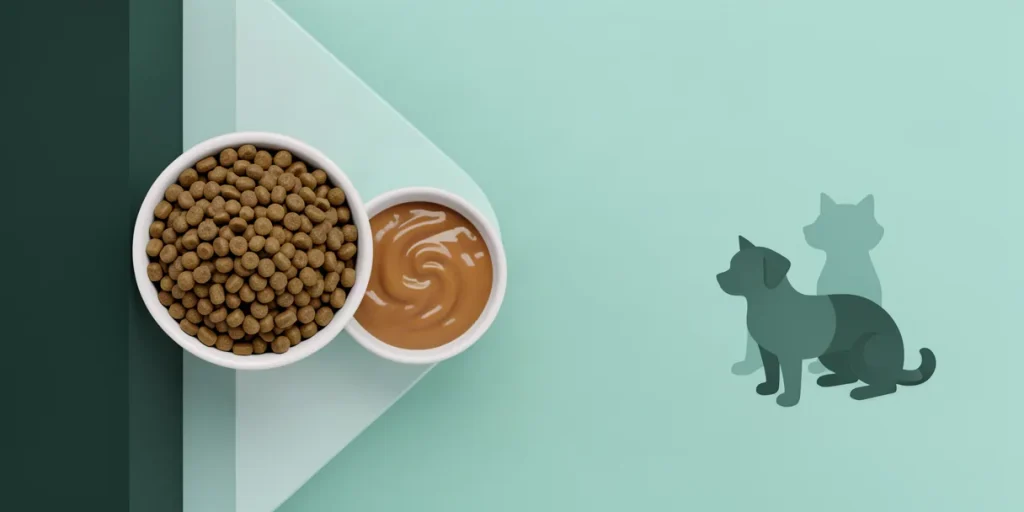
When pets of different species live in the same home, each needs a separate diet suited to its needs. Feed them separately and don’t let them finish food from one another’s bowls.
Cat food, dog food, and food for other pets are not interchangeable: their nutritional needs differ. A safe diet therefore starts with the right food, and bowls and supplies should be stored where animals can’t get to one another’s food.
This article explains how to organize feeding in a multi-pet home, reduce the risk of accidental mistakes, and maintain a consistent feeding routine.
| Check | What to confirm | How to organize it |
|---|---|---|
| Animal species | Which animal the food is intended for | Use a separate bowl for each pet |
| Age and activity level | Whether the recommendation on the package applies | Adjust the portion to the individual pet |
| Dietary restrictions | Whether the diet has any special requirements | Agree on a plan with a veterinary professional |
| Home-prepared food | Shopping, storage, and food safety | Keep raw ingredients away from bowls and surfaces |
- 18% increase in the number of pets in Moscow in 2023 compared with 2020
- 2,98 млн number of cats in Moscow in 2023
- 260 г в сутки example daily amount of food for a moderately active adult animal weighing 15 kg
- 320 ккал на 100 г calorie content of the food in the example with a daily portion of 260 g
Why are separate bowls especially important in a multi-pet home?
Separate bowls help you keep track of who ate which food and prevent pets from pushing one another away from their meals. Start by assigning a bowl to each pet: cat and dog food aren’t interchangeable just because both animals show interest in the same food.
In Moscow, there were 18% more pets in 2023 than in 2020. Moscow had 2,98 млн cats in 2023—20% more than in 2020. If several pets live in your home, put their bowls in different places and feed them separately. That makes it easier to see who ate their own portion and who got into someone else’s.
Separate feeding is especially useful if one pet guards food or pushes another away: separate feeding spots reduce competition at mealtimes. Keep an eye on each portion and pick up the bowls after feeding. This makes it easier to spot attempts to swap food and maintain a clear routine for cats and dogs.
How should you account for each animal’s species, age, and dietary restrictions?
To choose a safe diet, make a separate note for each cat, dog, or exotic pet recording its species, age, activity level, and any dietary restrictions. Choose food and portions based on that individual pet’s needs: you can’t automatically apply a cat’s diet to a dog or, for example, a reptile.
Before feeding, check what the product is intended for and read the package recommendations. Take into account the species and age the food is designed for, and don’t use one animal’s feeding guideline for another. In a multi-pet home, this helps prevent accidental diet mix-ups; feed pets separately if they can get to one another’s bowls.
Consider more than just the food
Assessing nutrition means looking at the animal’s condition, its diet, how feeding is organized, and environmental factors. When reviewing a feeding plan, consider not only what’s in the bowl but also the pet’s activity, feeding conditions, and any changes in its well-being.
If your pet’s health changes or you’re unsure whether its diet is appropriate, discuss the plan with a veterinary professional. Don’t try to address the issue by offering food from another pet’s bowl: another animal’s food and portion don’t become suitable just because they’re available.
How can you check portions without applying one animal’s feeding guideline to another?
Check the feeding guideline on the package of the specific food, then adjust it to the individual pet’s body weight and activity level. In the Pro Plan example, a moderately active adult animal weighing 15 kg needs 260 g of food per day if the food provides 320 kcal per 100 g.
These 260 g apply only to the specified weight, activity level, and food calorie content. This is not a guideline for a cat, puppy, or pet that eats a different product. Check the new food’s own feeding chart, and don’t transfer the Pro Plan example’s calculation to it.
How to track each animal’s portion
In a multi-pet home, keep a record of how much each pet eats: when they share access to bowls, it’s impossible to reliably determine an individual animal’s actual portion. Feed pets separately and compare how much they eat with the guideline on their food’s package. This makes it easier to notice if one pet finishes another’s food or leaves some of its own.
How can you organize feeding when pets share a kitchen?
If a cat and dog share a kitchen, place their bowls in different spots and feed them in turns or under supervision. That way, one pet can’t eat the other’s portion. Keep dry and wet food separate, too—animals with different needs shouldn’t have access to a shared meal.
Before mixing dry food with canned food, check that both products are suitable for that particular pet. You can bring canned food to room temperature ahead of time; serve wet food in a separate, clean bowl that the other pet can’t reach.
After each meal, remove leftovers and wash the bowls so food isn’t shared between a cat and a dog or other animals on different diets. If the pets eat at the same time, watch both bowls until they’re finished, then pick them up right away. This makes it easier to spot if one pet reaches for another’s portion.
When can a home-prepared diet and shared feeding pose a risk?
A home-prepared diet and shared feeding can pose a risk when the owner can’t prepare ingredients safely or keep track of which pet received the right food and portion. A home-prepared menu requires planning ahead for shopping, storage, and preparation of all ingredients. Extra care with hygiene is particularly important when handling raw meat and fish, which may be associated with parasitic and viral infections. Keep raw ingredients away from bowls and kitchen surfaces; wash them after preparation before using them for ready-to-eat food.
Separate bowls mean separate monitoring
A shared bowl isn’t suitable for pets that have been assigned different foods or portions: there’s no reliable way to track who ate what or how much. Feed pets separately and remove leftovers before letting another pet near the food.
- Home-prepared diet: Plan how you’ll shop for, store, and prepare each ingredient, and follow good hygiene when handling raw meat and fish.
- Different foods or portions: Use separate bowls and feed pets in turns to keep track of each animal’s diet.
Don’t mix foods or change the menu just to make shared feeding more convenient. If your pet has individual dietary restrictions, discuss your options with a veterinary professional: food that suits one animal may not meet another’s needs.
What should you prepare to feed your pets in an emergency?
For emergencies, prepare a separate supply of each pet’s usual food, water, and any medication it needs. If your home includes a cat, a dog, and other animals, account for each pet’s diet: one pet’s food shouldn’t be treated as a substitute for another’s.
Store food and medication in waterproof containers, away from household chemicals and raw meat. Label each container with the animal’s name and the food’s name. That makes it easier to avoid mix-ups when you need to feed your pets quickly.
Check periodically that you have suitable food for every animal and that the food and medication are still usable. Replace food before it expires, and after replenishing supplies, make sure the contents match the label on the container.
Key takeaways
- Feed cats and dogs separately, and give each pet its own bowl.
- Account for each animal’s species, age, activity level, and dietary restrictions; don’t apply one diet’s guideline to another.
- The example of 260 g per day applies to an animal weighing 15 kg and food providing 320 kcal per 100 g.
- For a home-prepared diet, plan how to prepare the food and follow good hygiene when handling raw meat and fish.
- Keep a supply of food, water, and any necessary medication for each pet in a waterproof container.
Frequently asked questions
Can cats and dogs eat from the same bowl?
Can you mix dry food with canned food?
Does the example portion of 260 g apply to every pet?
What’s important to consider with a home-prepared diet?
Sources
- artemida33.ru — “Nutrition or How to Make Your Pet’s Life Better”
- purina.ru — “What and How to Feed Your Dog Properly: The Ideal Diet for Your Pet”
- wsava.org — “WSAVA Nutritional Assessment Guidelines-2011”
- Ready.gov — “Make a Plan for Your Pets”
- waltham.com — “The Human-Animal Bond”