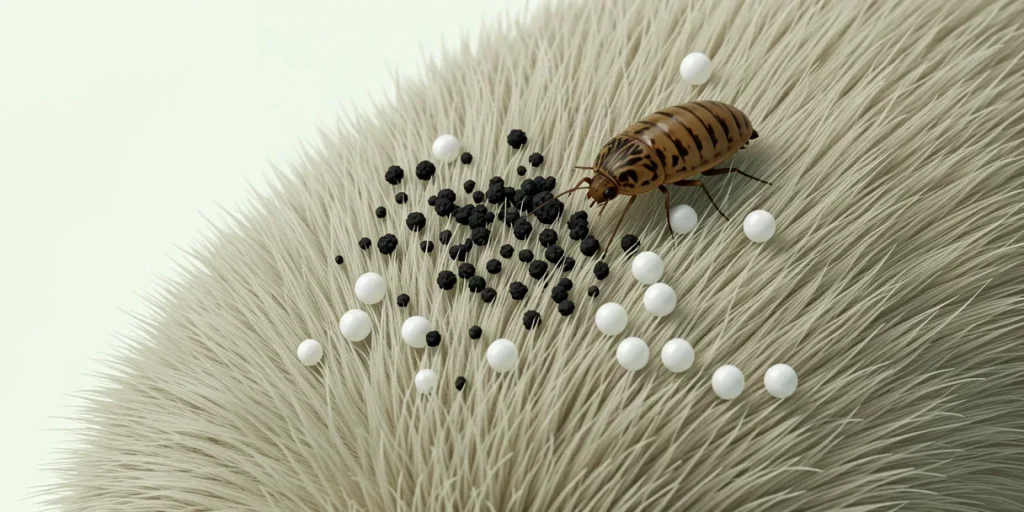
Flea infestation in a ferret can cause itching, redness, and scratching. If you notice signs of an infestation, take your pet to a veterinarian, who can confirm the cause of the itching and choose a safe treatment for your ferret. Do not use products made for cats or dogs unless prescribed.
Itching does not always mean your ferret has fleas, and treating the animal alone may not be enough: parasites and their eggs may remain in the environment. Let’s look at the signs to watch for, what to do if you suspect a flea infestation, and why treatment should be discussed with a specialist.
| What to check | Fleas | Tick bite |
|---|---|---|
| Visible sign | Jumping insects 1–3 mm long | A single attached parasite |
| Evidence | White eggs, dark specks | The tick bite itself |
| Possible symptoms | Itching, skin irritation, allergic reaction | Fever, weakness, loss of appetite |
| When to see a veterinarian | If itching is severe or the animal’s condition worsens | If concerning symptoms appear during the 2–3-week observation period |
- 1–3 mm The stated size of dark, jumping insects that may be visible in the coat during a flea infestation
- 2–3 weeks The period to monitor an animal after a tick has been removed
- 2–3 weeks How long it is important to monitor a ferret’s condition after a tick bite
What is flea infestation, and what are its signs in ferrets?
Flea infestation in a ferret can cause severe itching and skin irritation. Repeated bites may sometimes trigger an allergic reaction, while ongoing discomfort can lead to restless sleep and irritability.
How to spot fleas in the coat
Fleas are dark, jumping insects 1–3 mm long. Look for them in your ferret’s coat, along with tiny white eggs. Dark specks on the skin or among the fur may be flea droppings: if you wet them, they turn red.
Itching and irritation alone do not confirm a flea infestation, so look for the insects, eggs, and specks. However, not seeing any fleas does not rule out a problem: examine the coat carefully, especially if your ferret scratches often, sleeps poorly, or has become irritable.
How can you tell flea signs from a tick bite and other causes of itching?
Signs of fleas in a ferret include jumping insects 1–3 mm long, white eggs, and darkening specks in the coat. A tick, by contrast, appears as a single parasite attached to the skin. Itching alone does not prove a flea infestation: skin irritation may be the cause, and making a diagnosis based only on appearance without an examination is unreliable.
- Fleas: Check your ferret’s coat for insects 1–3 mm long, white eggs, and dark specks.
- Tick: Look for a single attached parasite on the skin or among the fur; a tick bite does not mean your ferret has fleas.
- Other causes of itching: Skin irritation can also cause scratching, so this symptom alone is not enough to conclude that your ferret has a flea infestation.
When does a tick bite require veterinary care?
After a tick bite, sudden fever, weakness, loss of appetite, and a rapid heartbeat or breathing rate are cause for concern in a ferret. Pale or white gums are also a warning sign: if you notice any of these changes, contact a veterinarian rather than assuming they are due only to itching or fleas.
What should you do if you find fleas in your ferret’s coat?
If you find fleas on your ferret, examine its coat, note any changes in behavior, and contact a veterinarian before treatment: the right product must be chosen for the individual animal.
What to check in the coat
Examine your ferret in good light, parting the fur, especially where you notice itching or skin irritation. Look for jumping insects 1–3 mm long, tiny white eggs, and black specks. If the specks turn red when wet with water, be sure to tell the veterinarian.
- Insects: Check for jumping fleas 1–3 mm long in the coat.
- Evidence: Note whether there are white eggs and black specks that turn red when wet with water.
- Your ferret’s condition: Note when the itching began and whether sleep or appetite has changed.
These observations will help the veterinarian assess your ferret’s condition and decide what to do next. Before using any antiparasitic product, contact the veterinarian and check that it is suitable for your ferret specifically; do not start treatment by guesswork.
If severe skin irritation, lethargy, or refusal to eat occurs along with the itching, tell the veterinarian. In this situation, treating the animal on your own is not enough: describe both the skin symptoms and any changes in appetite or activity.
Why shouldn’t you choose a flea treatment yourself?
You should not choose a flea treatment for a ferret on your own: its safety depends on whether the specific product is suitable for this species and whether it is used at the correct dose. The material provided does not name any products, doses, or prices for ferrets, so a product should not be considered suitable simply because it is sold for cats or dogs.
Before treatment, ask your veterinarian three things: whether the chosen product is suitable for a ferret, how to apply it, and when a repeat treatment might be needed. Do not use a cat’s or dog’s treatment plan for a ferret unless a specialist confirms it is appropriate: the animal’s species and the product matter.
Do not combine antiparasitic products or apply another dose before the time specified by your veterinarian. If your ferret seems unwell after treatment or you are concerned about its condition, contact the veterinarian instead of applying another product on your own.
When does a tick bite require urgent care?
A ferret needs urgent veterinary care after a tick bite if concerning symptoms appear: do not wait for the 2–3-week observation period to end. Monitor your pet during this period after the tick has been removed, and contact a veterinarian if its condition worsens.
Which signs mean you should contact a veterinarian?
- General condition: Fever, dehydration, sudden weight loss, lethargy, drowsiness, or apathy.
- Digestion and breathing: Vomiting, diarrhea, coughing, shortness of breath, or tiring quickly.
- Gum color and breathing rate: Pale or white gums together with rapid breathing or a fast heartbeat require attention; do not wait until the observation period is over to call the veterinarian.
In ferrets, it is especially important to notice pale or white gums combined with rapid breathing or a fast heartbeat: these signs may occur after a tick bite. If your ferret’s condition changes at any point during the 2–3 weeks after the tick is removed, contact a veterinarian and say when the parasite was removed and what symptoms you have observed.
When is an at-home check not a substitute for a veterinarian?
Limitations of an at-home examination
An at-home check is not a substitute for veterinary care if the cause of the itching is unclear, signs of an allergic reaction appear, or your ferret feels worse after a tick bite. Itching and skin irritation may accompany a flea infestation, but they do not confirm it on their own: if you have not seen fleas, you cannot confidently attribute similar symptoms to them.
Examining the coat is not a guarantee either: parasites may go unnoticed, and not seeing jumping insects during a single check does not mean there is no cause for the itching. Conversely, finding fleas does not rule out a skin problem at the same time; an allergic reaction needs to be assessed by a veterinarian.
Monitor your ferret for 2–3 weeks after a tick is removed, but do not wait until the end of this period if its condition worsens. Seek veterinary care if any of the following signs appear:
- Fever, lethargy, drowsiness, apathy, or tiring quickly.
- Loss of appetite, dehydration, or sudden weight loss.
- Vomiting, diarrhea, coughing, or shortness of breath.
- A rapid heartbeat or breathing rate, or pale or white gums.
Frequently asked questions
What does flea infestation in a ferret mean?
What do signs of fleas in the coat look like?
Can I treat my ferret with flea medicine made for cats?
How long should I monitor my ferret after a tick is removed?
Key takeaways
- Flea infestation means the ferret has fleas; itching and skin irritation are possible signs.
- Fleas are 1–3 mm long; signs of their presence include white eggs and specks that turn red when wet.
- Choose an antiparasitic product for your ferret with a veterinarian; do not use a dose intended for a cat or dog.
- Monitor your ferret for 2–3 weeks after a tick is removed, and do not ignore concerning symptoms.
Sources
- 4lapy.ru — “When to Start Flea and Tick Prevention”
- t-j.ru — “Can a Cat Pick Up Fleas or Ticks If It Doesn’t…”
- glavnoehvost.by — “Tick Bites in Cats: What Diseases They Cause and Precautions”
- avzvet.ru — “Signs of Fleas in Cats”
- geradez.ru — “How to Tell Whether There Are Fleas in Your Apartment”
