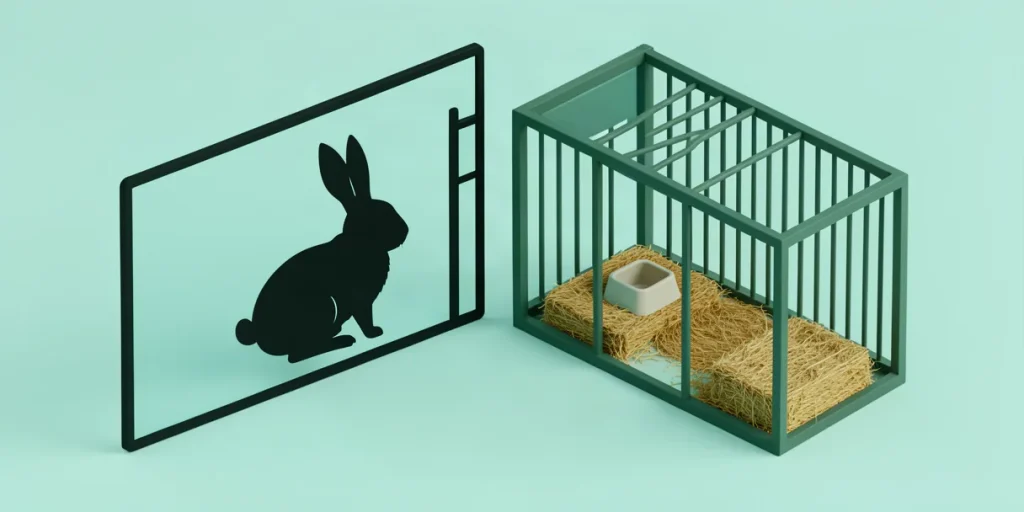
In the film Who Framed Roger Rabbit, Judge Doom framed the hero. Unlike Roger, real rabbits need safe housing, a suitable diet, and daily care.
A rabbit is not a toy or a cartoon character: it needs room to move, hay, and attention to its health. Let’s look at what life is like for pet rabbits and what to consider before bringing one home.
| Consideration | One rabbit | Several rabbits |
|---|---|---|
| Housing | Spacious and secure | There must be enough space for everyone |
| Litter tray | A tray in an accessible spot | Several trays |
| Living together | No introduction to another rabbit needed | A safe introduction and room to separate are necessary |
| Care | Cleanliness, food, and water | The same conditions for each animal |
Who Framed Roger Rabbit?
Roger Rabbit was framed by a character in the film—not by someone responsible for caring for a real rabbit. It’s a question about the plot, not about a pet’s behavior.
Roger is fictional. His comic reactions and life among people don’t show what a rabbit needs at home: a real animal needs suitable housing, cleanliness, food, and water.
The principles of animation
A June 21, 2018, article in MIRF discusses the principles of animation developed by animator Richard Williams. It looks at the film as a work of animation, not as a guide to keeping rabbits.
A March 15, 2017, post on Pikabu discusses three principles of animation in the story of the film. These principles concern bringing a character to life on screen; they shouldn’t be applied to a pet rabbit’s behavior.
In everyday life, focus on the animal’s needs: rabbits need space to move and rest, and if you keep several, separate litter boxes can help. Roger can live by the rules of the film; a real rabbit can’t.
How can you make a rabbit’s home safe?
A pet rabbit needs spacious, secure housing, cleanliness, a moderate temperature, food, and a constant supply of water. Its cage should leave room to rest and move around, and you should set aside a safe area in the room where it can be active.
Housing and bedding
For bedding, choose materials you can replace and wash regularly, or natural compressed cotton matting. When setting up the rabbit’s home, make sure it can move freely and that its activity area is protected from hazards.
- Cage: spacious, with room to rest and move around.
- Bedding: washable fabric or natural compressed cotton matting.
- Water: available at all times; keep the housing clean.
Litter trays for several rabbits
If you have several rabbits, put separate litter trays in different toilet areas. Having multiple trays can help reduce inappropriate urination and territorial behavior.
A March 15, 2017, post on Pikabu discusses three principles of animation in the story of Who Framed Roger Rabbit.
Why is it usually better not to keep a rabbit alone?
It’s usually better to keep a rabbit with a compatible companion: rabbits are social, and living alone may not give them enough interaction.
But living together doesn’t guarantee that the animals will be comfortable. Before housing rabbits together, introduce them safely and provide enough room to rest, move around, and separate if needed. If they’re constantly fighting or one can’t get away from the other, reassess the setup rather than keeping them together for company.
What to consider when keeping a pair
- Space for each rabbit. Make sure they can move freely and rest without pushing each other out.
- Separate toilet areas. If you keep several rabbits, provide multiple litter boxes so each has access to its own spot.
- Room to separate. Make sure the housing has separate resting areas and that the rabbits aren’t forced to stay together all the time.
If you’re planning to keep a pair, first assess the housing and where the litter boxes will go. If there isn’t enough room to rest, move around, and keep resources separate, you’ll need to rethink the setup.
How do you choose a pet rabbit and a breed?
Choose a pet rabbit based on the conditions you can provide. Consider breed only after checking the health, behavior, and usual diet of the individual animal.
Consider the setup before appearance
Before buying a rabbit, consider not only the space for its housing but also an area where it can move around and rest. It needs a clean, spacious area, a moderate temperature, constant access to water, and suitable food. Care must be provided daily, and the food should be easy for you to obtain in a way that suits your routine.
- Space: provide room to move and rest, not just space for the cage.
- Daily care: decide in advance who will take care of cleanliness, food, and water.
- Food: find out where you can regularly buy a suitable diet.
Breed can suggest which traits to compare, but it doesn’t tell you about the health or temperament of that particular rabbit. Assess the individual animal, not just its appearance or breed name.
Before buying, ask the seller or a veterinary professional about the rabbit’s age, health, and usual diet. This information will help you understand what care it needs and how to feed it after the move.
A separate article about lifespan and breeds can help you compare their characteristics. But make your final decision based on the space available, the daily care required, and whether you can provide the rabbit with suitable food.
When are a cage or keeping rabbits together unsuitable?
A cage or shared housing is unsuitable if a rabbit can’t move and rest freely, or if its housing doesn’t provide cleanliness, a suitable temperature, and constant access to water.
A cage shouldn’t be the only place where a pet rabbit spends its time: cramped conditions prevent it from moving normally. If your rabbit lives in a cage, provide a separate, safe area where it can be active and rest.
When to reassess the setup
- Caging rabbits on a private smallholding. This is considered a way to carry out breeding work. It isn’t a one-size-fits-all guide to keeping a pet rabbit: its need to move and rest must also be taken into account.
- Several rabbits in one enclosure. Without separate litter trays, rabbits may urinate in inappropriate places more often and show territorial behavior. Provide several trays.
- Heat, cold, dirt, or lack of water. These conditions don’t meet a rabbit’s basic needs. Check that its housing is clean, not too hot or cold, and that water is always available.
If rabbits share an enclosure, make sure there are several litter trays: one shared tray may not be enough.
Frequently asked questions
Who framed Roger Rabbit?
Can you keep a pet rabbit alone?
What should you use for rabbit bedding?
How do you choose a pet rabbit?
Key takeaways
- Roger is fictional, not a guide to caring for a pet.
- Rabbits need spacious housing, cleanliness, a moderate temperature, food, and water.
- If you keep several rabbits, provide multiple litter trays.
- Caging rabbits on a private smallholding is associated with breeding work; it isn’t universal advice for keeping a rabbit at home.
Sources
- t-j.ru — “How to Keep Rabbits at Home”
- ru.wikihow.com — “How to Keep a Rabbit Outdoors: 10 Steps”
- vhoz.ru — “Rabbits: Proper Housing, Care, and Diet”
- birdexoticsvet.com — “Rabbit Care Guide | Rabbit Vet”
- botanichka.ru — “What’s Better for Keeping Rabbits: Sheds or Cages?”