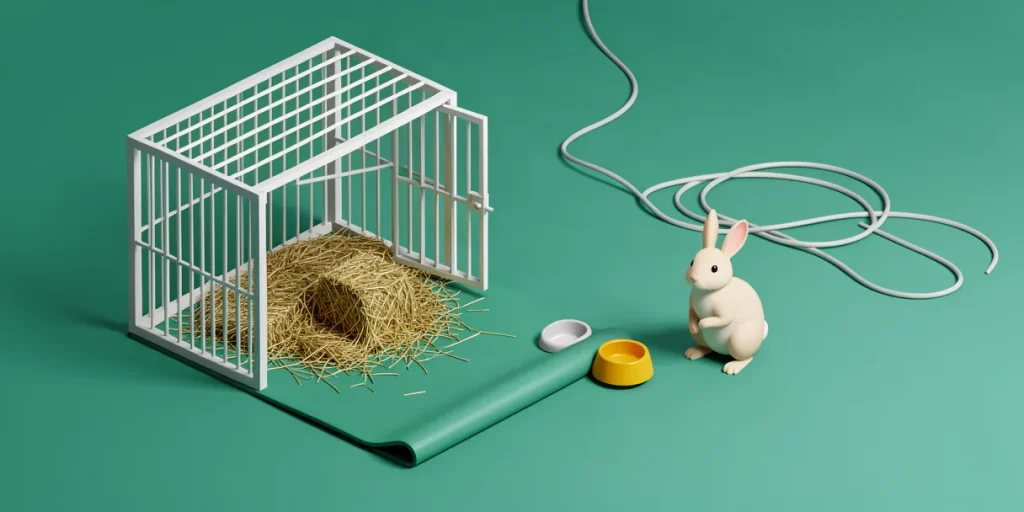
Choose a pet rabbit with its health, temperament, and living conditions in mind. Care for it with a suitable diet, clean and spacious housing, and regular checks on its well-being.
Breed and appearance aren’t the only things to consider: think ahead about whether you can provide a safe space, daily care, and veterinary attention. This article explains what to look for when choosing a rabbit and how to prepare your home for its arrival.
| Task | Suitable option | What to keep in mind |
|---|---|---|
| Floor covering | PVC mat or thick cardboard | A soft surface reduces the risk of irritation to the skin on the paws |
| Water and food | Two bowls, or a bowl and a nipple water bottle | Choose a water bottle with a capacity of 500 ml |
| Bedding and litter | Hay, straw, or wood pellets | Sand can get into the respiratory or digestive system |
| Activity | Tunnel or bridge | Keep an eye on the rabbit while it’s out exploring |
- 500 мл capacity of a nipple water bottle
- не менее 15% fiber content in dry food
- 26-28 см ear length in some rabbits
- 9–11 лет possible lifespan of a pet rabbit
How to choose a pet rabbit
Choose a pet rabbit based on its adult size, breed characteristics, and temperament—not just its appearance. A breed doesn’t guarantee that a rabbit will be sociable.
- Harlequin rabbits stand out from other breeds in appearance; find out in advance how big the particular rabbit is expected to grow.
- Hermelin and lop-eared rabbits also differ in appearance and size. Some rabbits have ears that reach 26-28 cm and lie close to the head.
- Consider the rabbit’s temperament in relation to your home: observe how it reacts to people and familiar sounds, and ask how used to interacting with people it is.
Before buying, find out what the rabbit has been eating and where it’s used to resting. Keep its usual diet at first; avoid making a sudden change to its food.
How to prepare a space for a pet rabbit
Prepare a spacious cage or enclosure where your pet rabbit can move around freely. Cover the floor with soft bedding to reduce the risk of skin irritation and pododermatitis.
- Floor: lay down a PVC mat or a thick layer of cardboard. Hay also works as bedding and can be eaten.
- Water and food: provide a separate bowl for food. For water, use a bowl or a nipple water bottle with a capacity of 500 ml.
- Litter: don’t use sand. The rabbit could inhale or swallow it.
When choosing a cage or enclosure, make sure the rabbit can move around freely and that the floor isn’t left hard and bare. Soft flooring is especially important for the paws: constant contact with a hard surface can contribute to pododermatitis.
What to feed a pet rabbit
Feed your pet rabbit hay that’s always available, along with suitable dry food, and change its fresh water regularly. Hay is the foundation of its daily diet.
When choosing dry food, check the fiber content listed on the packaging: dry food should contain at least 15% fiber. Introduce new food gradually so you can monitor the rabbit’s reaction.
Refresh the water in the bowl or bottle regularly, and wash the container. Don’t let dirt build up on its sides or bottom.
If your rabbit stops eating or its droppings change noticeably, contact a veterinarian.
How to arrange exercise and interaction
Let your pet rabbit out of its cage regularly into a prepared space, and stay nearby. This gives it a chance to explore the room while allowing you to spot potential hazards.
- Electrical cords: block access to them so the rabbit doesn’t start chewing them.
- Furniture: don’t let the rabbit climb somewhere it could fall from.
- Toys: set up a tunnel or bridge so the rabbit can move around and explore.
Handle your rabbit carefully. Never lift it by its ears: support its body so it doesn’t struggle free and fall.
What limitations and risks should you consider?
When keeping a pet rabbit, avoid sudden cold and overheating, cover hard floors with soft flooring, and don’t use sand. Be prepared to care for your pet for many years, too.
- Temperature. Rabbits need a stable temperature: aim for 17°C to 25°C. Don’t put the cage or enclosure somewhere the rabbit will be exposed to sudden temperature changes.
- Bedding. Sand isn’t suitable: if inhaled, it can irritate the respiratory tract; if swallowed, it can cause digestive problems. Hard flooring is also best avoided: constant contact with it can contribute to inflammation of the skin on the paws. Use a soft covering, such as a PVC mat or thick cardboard.
- Long-term commitment. Pet rabbits can live to 9–11 years. They’ll need consistent care and a safe place to live throughout that time.
When should you adjust care, and what should you discuss with a veterinarian?
Adjust your pet rabbit’s care to its age, health, and living conditions, and work with a veterinarian to choose a diet that suits its individual needs.
Discuss neutering, parasite prevention, and vaccination with a veterinarian who treats rabbits. They’ll take the rabbit’s health and living conditions into account.
When to contact a veterinarian
Refusing food, lethargy, or changes in droppings are reasons to contact a veterinarian rather than wait and hope the rabbit gets better on its own.
Before your visit, note what the rabbit eats, how much it drinks, and when the changes began. These observations will help the veterinarian assess your pet’s condition.
Frequently asked questions
Can a pet rabbit live without a cage?
Can sand be used as litter?
How much fiber should dry food contain?
How can I make it safe for my rabbit to explore a room?
Sources
- vetsas.by — “Keeping a pet rabbit at home”
- 4lapy.ru — “A guide to rabbits kept as pets — read the Four Paws blog”
- oncovet.ru — “Pet rabbits: lifespan, diet, care, neutering, treatment”
- alisavet.ru — “Keeping rabbits at home”
- krola.org — “Pet rabbit breeds, care, and expert advice — Pet Rabbits”